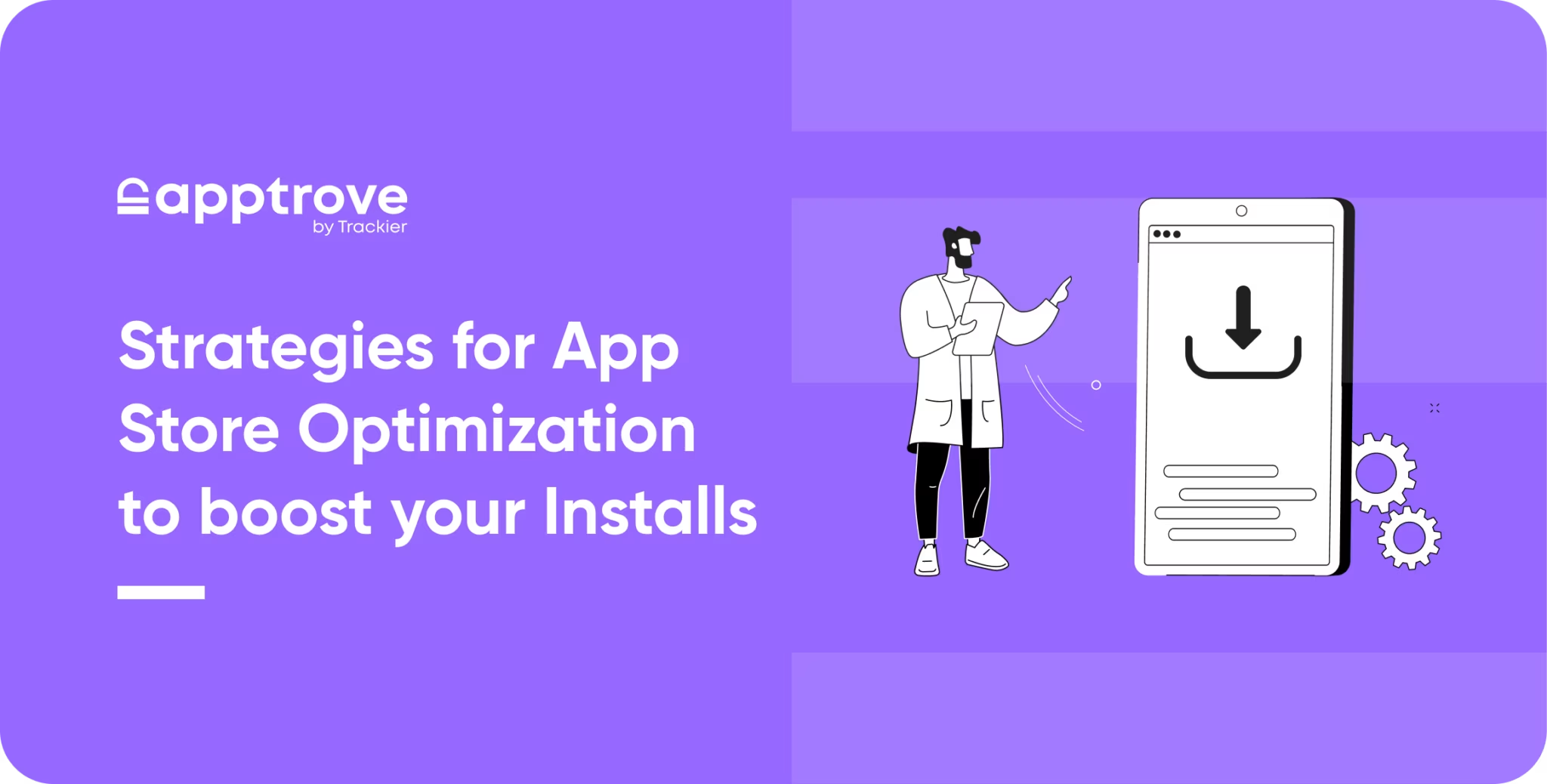
App Store Optimization strategies are essential in today’s crowded marketplace, where over 2.6 million Android apps sit in Google Play and more than 2 million iOS apps compete in Apple’s App Store. With updates like app store optimization iOS 15, developers must adapt their strategies to align with new discovery features and evolving ranking signals.
These are huge and mind-boggling statistics, especially if you’re a developer trying to get your software recognized and convert discovery into meaningful app downloads.
How can you distinguish yourself in a crowded field of competitors? And, how do you beat such tremendous competition, and get your software to rank high in an app store search while still ensuring that it meets the intent of App Store searches? The goal is to employ effective App Store Optimization strategies for both the Google Play and iOS App Stores, this is where platforms like Apptrove support smarter mobile app marketing decisions through data-led visibility insights.
What exactly is App Store Optimization?
In simple words, App Store Optimization is sometimes referred to as Search Engine Optimization for applications (App SEO). App developers must use App Store Optimization strategies to bring their app to the top of app store rankings, similar to the way internet marketers use SEO to improve web discoverability. It may also be thought of as App Store SEO.
The goal of these app store optimization strategies is to make your app easier to find, more appealing to download, and ultimately more successful in driving long-term user engagement and sustainable app monetization.
Unfortunately, the exact logic behind Apple’s and Google’s app store algorithms is not publicly disclosed and changes frequently, but we do know that signals like app analytics, user reviews, and engagement data all influence your app ranking and overall search visibility.
5 App Store Optimization Strategies For Boosting Installs
1. Use Keywords That Are Relevant
It is extremely crucial to conduct keyword research for your target audience before you begin any keyword optimization process.
You’ll need to figure out what phrases users are typing into app store search, how they discover competing products, and which app keywords drive the most organic downloads. Mapping intent-driven terms into your app store keywords helps platforms understand what your app should rank for.
Matching keywords to your consumers’ demands improves app store visibility, while misuse or duplication inside your app metadata can negatively impact app store algorithm signals.
- If you choose terms that are irrelevant to your app, your rating will suffer.
- Use only one version of a term (singular or plural).
- Do not use keywords that involve the term “app” or the brand names of your rivals.
We recommend starting with Google Keyword Planner and progressing to professional ASO tools like Mobile Action and Sensor Tower to support smarter metadata optimization.
2. Investigate Your Competition
Understanding your rivals and performing detailed competitor analysis is critical for any successful organization, but it is extremely critical in App Store Optimization.
Before submitting your app to the marketplace, selecting the right app category impacts both app store trends and discoverability. Categories with high app store rankings and strong demand often come with increased competition.
Consider the following factors while selecting a category:
- the number of competitors
- the number of apps that are regularly updated
- how well-known the category is (in downloads)
After you’ve submitted your app to the app store, you’ll need to keep an eye on the top-performing applications in your selected category. When they add a keyword or alter their information, see whether their app store ranking changes.
Make every effort to rank new keywords before your rivals do. You should also keep an eye on rivals who have a similar goal, app features, or even applications that use the same top keywords as you.
You should be able to narrow down your top rivals to five, according to App Tweak, a competition analysis tool, so you can maintain a consistent ASO practice. This is where understanding real-world app store guidelines also matters, since compliance issues can directly affect approval, exposure, and app store listing quality.
3. Make Sure Your Title and Description are Optimized.
The single most essential information you can utilize to increase downloads is titles, which is why app title optimization and choosing the right app title matters so much.
Concentrate on crafting a title that is less than 25 characters long so that the whole title may be shown on the app’s explore the screen. To promote downloads, a title should be memorable and reflect strong app metadata signals. Your app will be simpler to find if you use your company’s name and top keyword.
Try searching for your app after you’ve decided on a title. Your title isn’t innovative enough if there are thousands of results.
In the first 250 characters of the app description, incorporate as many relevant keywords as possible (without cramming) to support conversion rate optimization. Anything beyond this first explanation necessitates a potential customer’s click to “learn more,” which makes A/B testing of descriptions extremely valuable for improving conversion rate.
4. Use Eye-Catching Icons, Screenshots, and Videos in Your Presentation.
Visually appealing apps may help you stand out in the app store using high-quality visual assets.
Select an app icon that is easily recognizable and memorable for your company, backed by thoughtful app icon design. To avoid any customer misunderstanding, try to utilize different colors than your main rivals.
Don’t scrimp on your screenshots because the bulk of users will glance at them before deciding whether or not to download your app. We urge that you post as many app screenshots as the marketplace allows. Including a video on your app’s landing page may boost downloads by 35%.
This large improvement is due to more than just title (15%) and graphic optimization (30%). Every increase in downloads boosts your search engine results and overall app store rankings.
Upload a video that highlights your app’s most valuable feature, as most users like to search for and download apps in a matter of minutes, especially when promoted via search ads.
5. Create Backlinks
Your app should be actively connected to websites that are related to your app and have authority according to Google’s current algorithm requirements to create the best backlinks.
Backlinks can be text or image-based, with the ALT (Alternative text) tag.
While there is some debate over the usefulness of backlinks in terms of ASO, it is clear that quality over number is the best way to achieve backlink success in broader mobile app marketing and long-term app monetization.
Where App Store Optimization Strategies Go From Here
ASO is evolving with shifts in privacy policies, algorithm updates, and user expectations. Framework changes such as app store optimization iOS 15 features, including improved product pages and testing capabilities, have also reshaped how developers approach visibility and conversion. The future lies in personalization, creative storytelling, deeper localization, full app localization, and advanced analytics to refine App Store Optimization strategies further.
To stay competitive, you’ll need to experiment, adapt, and continuously invest in ASO, not just as a one-time tactic but as an ongoing growth strategy that improves user reviews, app reviews, and app ratings.
Why App Store Optimization Strategies Still Win
This article is intended to help you go further into the many components of ASO so that you may get the most out of your app store optimization strategies. It’s worth bookmarking and returning to when you need data-driven insights on a certain ASO topic driven by your app store analytics.
As an ASO specialist, you should always keep on top of these changes because the App Store and Google Play are always changing with upgrades and new features, including frequent app updates.
We’ll keep this guide up to current so you can rely on it to help you enhance every aspect of your ASO, from stronger app visibility to higher app store ranking across global markets.
We hope you enjoyed it and found it useful as you try to improve your ASO knowledge.
Frequently Asked Questions (FAQs)
1. What is App Store Optimization (ASO)?
App Store Optimization (ASO) is the process of improving an app’s visibility in app stores like Apple App Store and Google Play. It involves optimizing keywords, descriptions, visuals, and reviews to boost rankings and installs.
2. How do app store optimization strategies impact app downloads?
App store optimization strategies directly influence app downloads by improving both discovery and conversion. When your app ranks higher for relevant searches, more users see it. When your title, visuals, and description are optimized, more of those users actually install it. Even a small lift in conversion rate can translate into thousands of additional installs each month for high-traffic keywords.
3. Are app store optimization strategies more important than paid ads?
They serve different purposes, but app store optimization strategies often deliver a higher long-term return than paid ads. Ads can drive fast traffic, but ASO builds sustainable organic visibility. When your app ranks well, it keeps generating installs without paying for every click. The strongest growth engines use paid campaigns to jump-start traction and ASO to make that traction compound over time.
4. How often should app store optimization strategies be updated?
App store optimization strategies should be reviewed every time you release an update or see changes in rankings, downloads, or conversion rates. Apple and Google constantly adjust their algorithms, and user behavior shifts too. Most high-performing apps test and refine their ASO at least once every four to six weeks to stay aligned with market demand and competitor movement.
5. How do app store optimization strategies differ between iOS and Android?
App store optimization strategies differ because Apple’s App Store and Google Play use different ranking signals. Apple relies more on title, subtitle, and keyword fields, while Google Play behaves more like a search engine, scanning descriptions and engagement metrics. Successful ASO means adapting your approach to how each platform evaluates relevance, quality, and user satisfaction.