Using data, statistical analysis, statistics, and machine learning approaches such as regression analysis, decision trees, neural networks, and deep learning, predictive analytics determines the likelihood of future outcomes based on historical big data. The objective is to provide the most accurate prediction of what will happen in the future in addition to understanding what has already occurred through data mining, data science, and data analytics. Let Apptrove make you understand this now.
History of Predictive Analytics and Recent Developments
Although these analytical methods have been around for a while, the time is now for this technology. More businesses are adopting it to boost profits and gain a competitive edge through business intelligence, artificial intelligence, and predictive modeling. Why now?
- Increasing data types and volumes from cloud computing, data warehousing, and connected platforms, as well as increased interest in using customer analytics and customer insights to draw insightful conclusions.
- More user-friendly data visualization software with quicker processing powered by cognitive computing and algorithm development has been introduced.
- The necessity for competitive distinctiveness and tougher economic conditions.
This form of analysis is no longer just the province of statisticians and mathematicians. With the rise of natural language processing, reinforcement learning, and interactive tools, line-of-business specialists and analysts now run predictive modeling without deep technical barriers.
Predictive analytics: What is it?
The practice of modeling data using statistics, machine learning, and data science to produce future projections is known as predictive analysis. Predictive analytics, then, is the outcome of predictive analysis supported by artificial intelligence, supervised learning, and unsupervised learning.
You might wonder how this compares to AI. While closely related, it’s important to note that predictive models often require human oversight, while AI systems such as neural networks and deep learning can function autonomously in such processes.
In the next section, we explore various model types used in this approach.
Types of Predictive Analytics Model
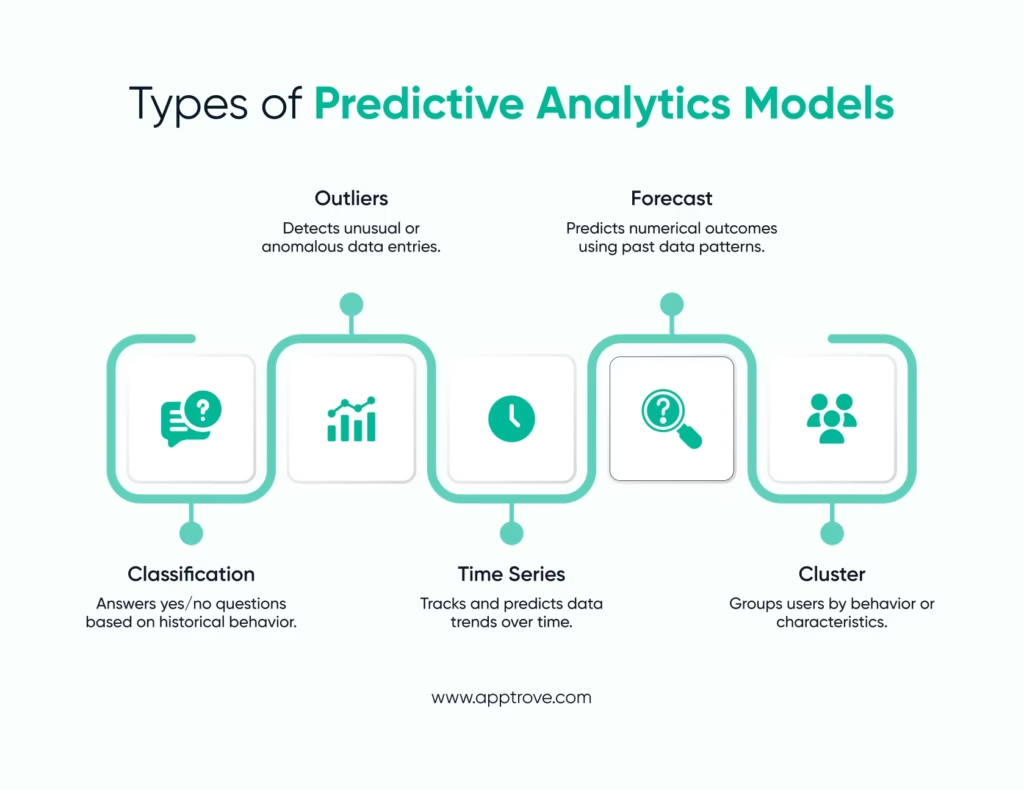
Here are five modeling methods you might want to use in your app marketing. These models use predictive modeling, algorithm development, and data analytics. Although each approach has advantages and disadvantages, you may reuse and modify the algorithms to suit your particular marketing requirements.
So that you can improve and develop new models based on your unique app, we advise using these as a starting point for better customer insights, churn prediction, and fraud detection.
Classification Models
This model uses supervised learning, decision trees, and regression analysis to analyze historical data and generate predictions. It is typically used to answer yes-or-no questions.
- Is this person about to buy something through the app?
- Is the user on the verge of unsubscribing (churn prediction)?
Now, rather than waiting days or weeks to generate predictions about users, marketers could leverage machine learning, artificial intelligence, and predictive modeling within a classification model.
Time Series Models
To recognize and comprehend patterns across time, brands can utilize time series analysis and time series forecasting. The time series model offers marketers insights into seasonality or cyclical behavior and can be used to anticipate prospective changes in data. It is frequently used for data visualization and forecasting.
When it’s possible that past trends didn’t have an impact on future results, marketers frequently rely on time series forecasting. For instance, during the global pandemic’s uncertainty, when patterns were wildly out of the ordinary, many marketers went to this strategy.
Cluster model
A cluster model uses clustering, clustering algorithms, and unsupervised learning to divide users into groups based on shared traits, behavior, or purchasing patterns. Marketers can, for example, set the cluster model algorithms’ parameters to previously made purchases, brand interaction, or any other user data that has given consent.
When marketers are unsure of how to categorize a large number of new incoming users, cluster models are especially helpful for customer analytics, recommendation systems, and behavioral segmentation as they employ predictive analytics to group data with comparable points.
Outliers Model
This model uses anomaly detection to locate dataset entries that are historically out of the ordinary. The outliers model can also be used to identify aberrant data on its own or about other categories. This methodology is especially helpful for fraud detection, cybersecurity monitoring, and transaction analysis, especially in verticals like banking and e-commerce.
Forecast model
A forecast model, which is an extension of the categorization model, is used to calculate the numerical value of fresh data based on old data. It uses regression analysis, time series forecasting, and deep learning to calculate future numeric values such as revenue, installs, or engagement.
One of the most used predictive analytical models is the forecast model because, unlike the categorization model, it can manage numerous factors simultaneously. Even when there are no numerical values in the historical data, this model type can nonetheless produce them. These models power predictive maintenance, budgeting, and performance planning.
The Importance Of Predictive Analytics
This methodology is being used by businesses to find new opportunities and address challenging issues. Modern solutions often rely on robust data analytics, business intelligence, data warehouse tools to store and process the vast datasets required for accurate predictions. The typical uses comprise of the following:
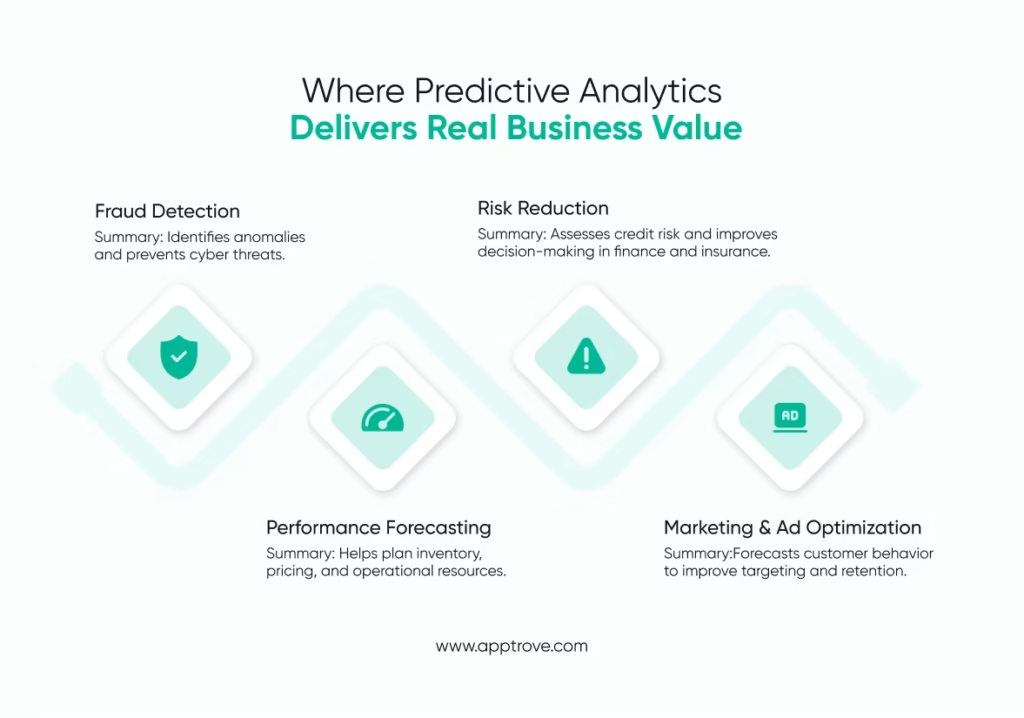
1. Detecting Frauds:
Combining several analytics techniques helps increase pattern recognition and deter illicit activity, strengthening risk management across digital systems. High-performance behavioral analytics monitors all network activity in real-time to look for anomalies that could point to fraud, zero-day vulnerabilities, or advanced persistent threats as cybersecurity concerns escalate.
2. Optimizing Advertising Campaigns:
Predictive analytics is employed to forecast customer behavior or purchases through sentiment analysis, and to encourage cross-selling opportunities. Predictive models assist firms in luring in, keeping, and expanding their most lucrative clients.
3. Improving Performance:
Predictive models are often used by businesses to forecast inventory and manage resources using time series forecasting techniques. Predictive analytics helps airlines to determine ticket prices. To maximize occupancy and boost income, hotels make an effort to anticipate the number of guests for any particular night. Organizations can work more effectively thanks to predictive analytics.
4. Reducing Risk:
Credit ratings are a well-known use of predictive analytics where statistical analysis is used to determine a buyer’s propensity to default on transactions. A predictive model’s calculation of a person’s creditworthiness yields a number known as a credit score. The usage of insurance claims and collections falls under the category of risk.
FAQs
1. What is the end goal of predictive analysis?
Predictive analysis uses historical data, machine learning, and statistical models to predict future outcomes. The overall goal is to provide business/learners with reliable decision making based on known and correct data, rather than guessing.
2. How has predictive analysis changed over time?
Predictive analytics was previously more commonly used by statisticians, and researchers, however due to the digital age, many modern businesses in marketing, finance and otherwise have software or AI tools that allow each discipline to use and implement predictive analysis directly in their decision making regarding strategy and performance.
3. What are some methods of predictive analysis?
Classification algorithms (yes or no), time series analysis (recognizing patterns by timing), clustering analysis (grouping and segmenting similar users), outlier detection (identifying unexpected unusual user patterns), and forecasting (predicting future values).
4. What areas would use predictive analysis the most?
Finance to detect fraud and/or better scoring mechanisms, retail or supply chain apply it to presumed demand for planning purposes as well as targeting customers, hospitals and firms in the “hospitality industry” track consumer outcomes/usage to inform pricing and occupancy, cybersecurity firms utilize or have many uses in of predictive data analytics to identify anomalies.
5. Why should businesses be using predictive analytics?
Predictive analysis can reduces risk and uncertainty, to improve decision making capabilities, and identify opportunities. Predicting the behaviour and/or outcomes of business, it could possibly lead to improved growth (returns), retention and ultimately be in a position for relation long-term growth.