
What are Accelerated Mobile Pages, or AMP?
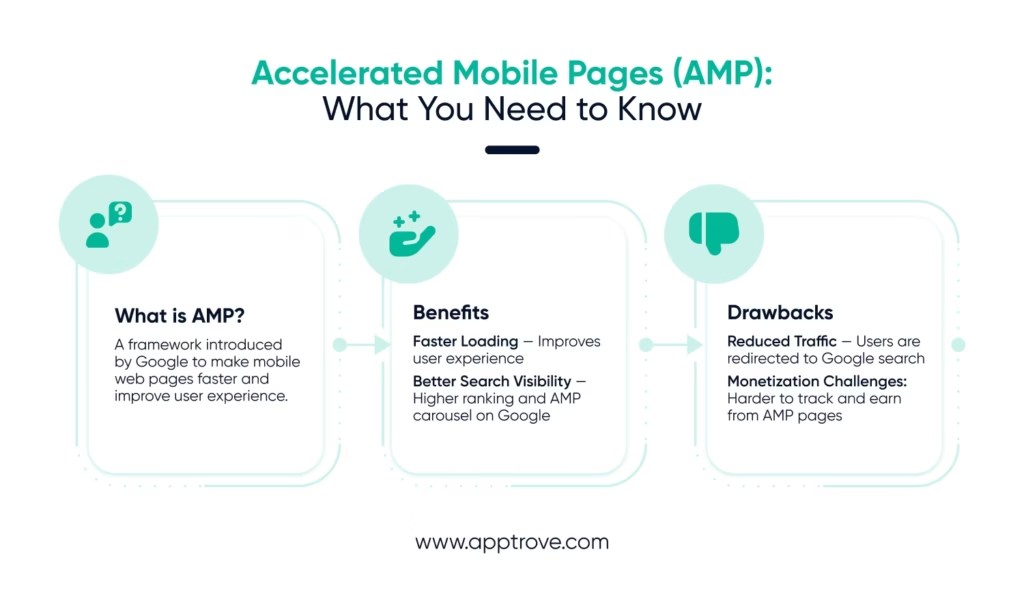
AMP (Accelerated Mobile Pages) is a web framework created by Google. They started it in February 2016 to make web pages faster and better for users. The main goal of these pages is to boost how pages work. However, some issues have made it difficult for everyone to use it as their preferred method of creating web pages.
Accelerated Mobile Pages can accompany standard mobile pages allowing for the same content to have a dual format. The two formats are connected via a special header tag that enables search engines to properly identify and index both formats for display in search results by GoogleBot or by other search engines that support Accelerated Mobile Pages content.
For platforms like Apptrove, which provides service for both app developers and marketers; understanding the value associated with Accelerated Mobile Pages will impact how potential customers interact with landing pages via their mobile devices, how effectively campaigns generate traffic for mobile applications and will also improve optimisation opportunities between web-to-app journeys when implementing AMP enabled landing pages, as opposed to traditional mobile webpages.
How do Accelerated Mobile Pages work?
These are designed to avoid common coding issues developers face and is easier for browsers to interpret AMP HTML, hence reducing lags.
These pages are served directly from Google AMP Cache. Google chooses to serve the cached copy of the landing page whenever required to offer faster loading times.
And when Google is not able to serve a cached copy of the landing page, your Accelerated landing page will load from your web server. Although the latter is not the fastest way to load the page, it is considerably faster than traditional non-AMP landing pages.
Why Do Accelerated Mobile Pages Matter?
AMPs give content makers two main perks:
- Users Have a Better Time as the Pages load faster
- Google Sees You More
In today’s online landscape, slow page loads can push users away. On the other hand, these boost your website’s speed. This helps websites with unoptimized or complex code, as Google has already streamlined the performance.
Even for quick-loading websites, these pages can improve visibility in Google search results. A big plus is showing up in Google’s Accelerated Mobile Pages Carousel often at the top of search pages, for news content supported by big publishers (except Facebook and Apple).
Advantages of AMP
Advertisers: These pages can be utilized for a variety of advertising formats. User experience is not interrupted by ads as the content is loaded asynchronously.
Publishers: Most Publishers benefit from the placement of AMP websites. Mobile optimized websites promise higher usability and contribute to better user signals.
Users: Users can now experience faster load time for pages and will get significant improvement in performance while browsing on slow internet.
AMP Drawbacks
While there are significant benefits, they face criticism in two main areas:
- Less Brand Traffic
- Weak Money-Making Potential
AMP’s setup doesn’t let users stay on the publisher’s site. Instead, it sends visitors back to Google search, which “steals” traffic and makes it hard for brands to track performance.
Making money from these pages is tough too. Less traffic due to redirects means publishers earn less. Many people who used AMP to get noticed on Google later discovered its limitations.
These problems have slowed down the usage of accelerated mobile pages compared to other tech. Though it’s great for user experience and search visibility, accelerated mobile pages face big hurdles to take over the mobile web.
Conclusion
Accelerated Mobile Pages, also known as AMP, is a fast browsing experience used by Google to create a great mobile browsing experience. There are many benefits to speed and the agility of Accelerated Mobile Pages, but there are also many barriers that Accelerated Mobile Pages put on how a website would perform. AMP is an easy way to create a webpage and/or application for a website; however, for online publishers and advertisers trying to maximise their website traffic, there are many obstacles involved in creating profitable opportunities from that traffic.
Online marketers must understand the limitations of Accelerated Mobile Pages for the success of their campaigns. Due to Accelerated Mobile Pages’ restrictive framework, options for customising a webpage are minimal. When compared with a non-AMP page, much of the advanced tracking capability of Accelerated Mobile Pages will be lessened; therefore, due to the low level of control an advertiser or publisher has over what happens during the user’s journey, a publisher or advertiser’s ability to create an effective campaign will be greatly impacted. Thus, although Accelerated Mobile Pages present an opportunity to create fast-loading webpages, many marketers, developers, and content teams continue to debate AMP’s long-term value in the digital industry.
FAQs
1. What is AMP and why is it important for mobile performance?
AMP, or Accelerated Mobile Pages, is a framework created by Google to make mobile pages load faster and provide a smoother browsing experience. AMP removes unnecessary code and uses a lightweight structure, which helps pages open almost instantly. This matters because faster mobile performance leads to better user engagement, improved SEO visibility, and higher chances of ranking in search results.
2. How do Accelerated Mobile Pages improve website speed?
Accelerated Mobile Pages (AMP) improve speed by using simplified HTML, restricted JavaScript, and Google’s AMP Cache. When a user clicks on an Accelerated Mobile Page, Google often serves a cached version, which loads much faster than traditional mobile pages. Even when not cached, Accelerated Mobile Pages typically outperform non-AMP pages due to their lightweight structure and optimized code.
3. Do Accelerated Mobile Pages pages help with SEO and Google rankings?
While AMP itself is not a direct ranking factor, Accelerated Mobile Pages often perform better because they load quickly and offer a better user experience, two things Google values highly. Accelerated Mobile Pages can appear in specialized placements like the AMP carousel (for news websites), which increases visibility. Sites using Accelerated Mobile Pages may see higher click-through rates, lower bounce rates, and better mobile search performance.
4. What are the advantages and disadvantages of using Accelerated Mobile Pages?
Advantages of Accelerated Mobile Pages include faster load times, improved user experience, smoother ad display, and better chances of appearing prominently in search results. However, Accelerated Mobile Pages also come with drawbacks, such as reduced brand traffic, limited monetization opportunities, and reliance on Google’s ecosystem. Publishers often struggle because Accelerated Mobile Pages keeps users within Google instead of directing them to their own websites.
5. Are Accelerated Mobile Pages still worth adopting today?
Accelerated Mobile Pages can still be beneficial for websites that struggle with speed, have complex code, or rely heavily on mobile traffic. Accelerated Mobile Pages offer noticeable performance improvements, especially on slow internet connections. However, because Accelerated Mobile Pages limit branding and revenue potential, many publishers now prefer modern performance optimization techniques instead. Whether AMP is worth adopting depends on your long-term SEO goals, content strategy, and monetization needs.