
Click-Through Rate or CTR is a performance metric that indicates how many users clicked on a link after seeing it. It is calculated by dividing the number of clicks by the number of impressions, then multiplying the result by 100 to get a percentage. A higher CTR often reflects relevance, clarity in messaging, and alignment between user intent and the marketing touchpoint with which they interacted. It is calculated using the formula:
CTR = (Total Clicks ÷ Total Impressions) × 100
Click-Through Rate is widely used across paid campaigns, in-app messages, emails, app store experiments, push notifications, and cross-device advertising. In performance marketing and mobile growth environments, CTR acts as one of the earliest indicators of interest and engagement. A change in CTR can reveal shifts in audience behavior, creative fatigue, targeting mismatches, or seasonal demand patterns.
While strong CTR benchmarks vary across platforms and formats, the metric consistently influences other KPIs. For example, ad networks frequently reward higher CTRs with lower cost-per-click (CPC) or improved placement priority. A high CTR generally means less budget wasted on uninterested audiences and more opportunities to convert users further down the funnel.
Creative execution, call-to-action clarity, timing, personalisation logic, device experience, and targeting accuracy all shape CTR performance. Even small adjustments, such as updated copy, refreshed visual assets, or behavioural segmentation, can lead to measurable improvements.
The higher the CTR, the stronger the signal that the messaging, targeting, and format resonated with the audience. CTR is used across digital environments, including mobile acquisition campaigns, app store assets, email marketing, push notifications, in-app engagement, and cross-device advertising
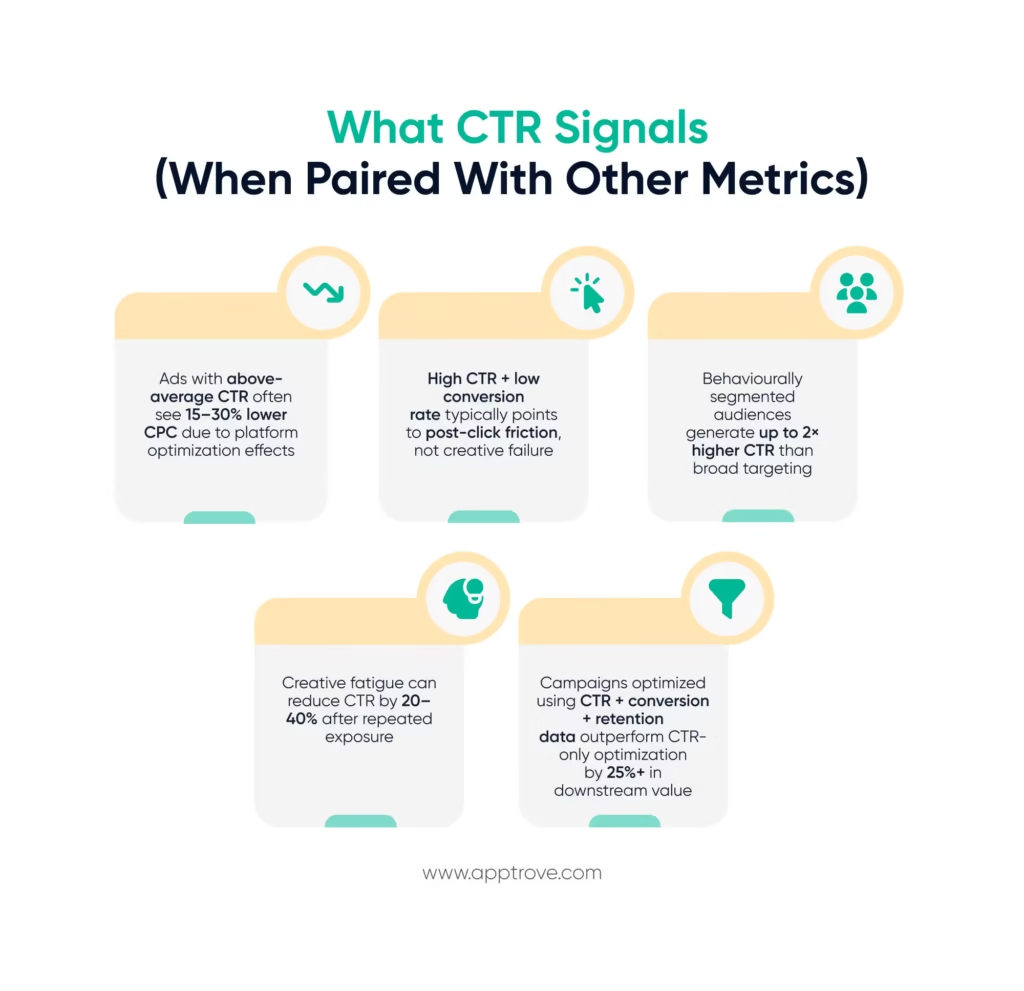
How Click-Through Rate Influences the Marketing Funnel
CTR is not an isolated metric. It complements and strengthens the interpretation of other KPIs, especially when paired with install rates, activation numbers, conversion volume, session depth, or revenue contribution. CTR often acts as the first measurable interaction a user has with a brand. Once a user has clicked, they enter the next stage of the funnel, where factors such as landing page experience, onboarding friction, value clarity, and timing determine whether that click becomes a meaningful conversion.
A high CTR paired with low conversions often indicates friction after the click, not before it. This insight helps marketers refine the right stage of the journey rather than repeatedly changing creatives unnecessarily.
What Impacts Click-Through Rate Performance
CTR is influenced by multiple variables that operate both independently and in combination. The most notable factors include:
- Targeting accuracy: Matching the message to the right cohort sharply improves engagement.
- Creative relevance and clarity: Ads that clearly communicate value often outperform ads that rely solely on aesthetics.
- Call-to-action strength: Direct and expectation-setting CTAs typically drive higher CTR than vague alternatives.
- Platform, placement, and device type: Clic-through rate benchmarks shift depending on where users encounter the message and how much intent already exists.
- Frequency and exposure: Overexposure leads to fatigue, which usually results in declining CTR over time.
- Seasonality and cultural timing: High-intent periods naturally inflate click-through rate while cluttered or non-relevant moments suppress it.
Incremental optimization across these variables leads to cumulative performance lift, especially in high-scale environments.
Benchmarks and Expectations for Click-Through Rate
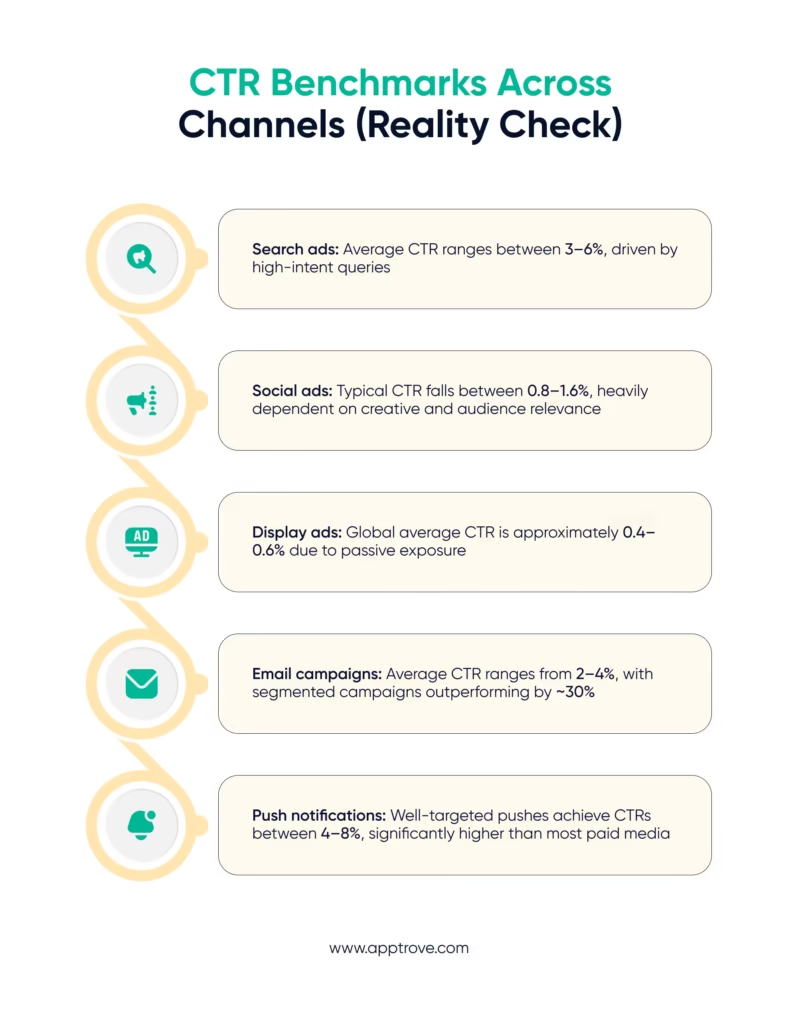
CTR benchmarks vary widely across industries, audiences, and platforms. While there is no universal benchmark, some directional averages can provide context:
- Display ads tend to record lower CTRs due to their passive nature
- Search ads typically achieve higher CTRs because they match active user intent
- Social media CTR depends heavily on format, audience familiarity, and message relevance
- Email CTR varies by segmentation quality, subject relevance, and lifecycle positioning
These ranges shift over time alongside privacy policies, platform competition, and consumer behaviour patterns. Instead of treating benchmarks as rules, high-performing growth teams track CTR relative to past performance and competitive context.
Interpreting CTR Performance and Data: Strategic Analysis of CTR Performance & Reports & Data
Once the “Benchmarks & Expectations for CTR Performance” section has been reviewed, it is essential to also follow this section with a study on how to both understand & use performance Data.
When measuring performance, it is equally important to know how to interpret that Data in Context. If you interpret CTR alone, you could potentially reach a wrong conclusion about the results of your performance without considering downstream behaviours associated with the CTR. For example, If your CTR indicates a positive trend, however, that positive trend may be the result of unreliable creative or misaligned messaging; therefore, the value of the user experience may decrease as a result of that positive trend. On the other hand, a lower CTR does not necessarily mean the outcome is still bad. If you have a lower CTR but your conversions were from high-quality customers that have a better likelihood of Reducing Customer Churn, then that lower CTR may be indicative of strong growth.
More sophisticated organisations or teams will consider CTR Analysis as segmented by targeting & creatives (variant testing), placement types, and time frame (windows) to help identify any trends that may have resulted either from genuine user interest or from short-term/temporary external factors (e.g., Seasonal Trends, Competitive Forces). When CTR insights are combined with conversion, retention, and revenue Metrics, they will become much more valuable as Diagnostic Tools rather than just standard reports (Vanity Metrics).
Summing Up
Click-through rate is a defining metric in digital and mobile marketing. It reflects attention, intent, and relevance and provides a measurable signal that a message resonated enough for the user to act. When interpreted through the lens of attribution and user value, CTR becomes a critical part of growth strategy, informing creative decisions, audience targeting, and long-term optimization.
FAQs
1. What is Click-Through Rate (CTR)?
The Click-Through Rate (CTR) is defined as the percentage of users who clicked on the link after seeing the advertisement, indicating a user’s initial interest/engagement with the content.
2. How does CTR apply to Performance Marketing?
CTR can provide insight into how relevant a message was to the target audience, how effective the creative was at capturing their attention, and how accurate the targeting technique was at the top of the marketing funnel.
3. Does Having a High CTR Guarantee Better Conversion Rates?
No. A high CTR but a low conversion rate typically indicates that there is post-click friction. This can be due to factors other than poor targeting or creative.
4. What Factors Influence CTR the Most?
The factors that influence CTR most include how accurately the advertisement is targeted to the intended audience, how clearly and concisely the advertisement is created and displayed, the strength of the call-to-action, the placement of the advertisement, and the frequency and timing of the advertisement.