The competition between apps today is fierce and it falls upon the app owner’s ability to re-engage inactive app users to determines which apps survive. Failure to do so would mean the users migrating to another app with a similar concept that caters to their needs better. This is where mobile measurement partners like Apptrove help app teams understand user behavior, identify drop-off points, and create data-led reengagement strategies that bring users back with purpose.
Are you seeing a dip in your user retainment numbers? Then you first need to understand why they are leaving in order to formulate a successful strategy to re-engage inactive app users. The following could be some of the reasons why users are uninstalling your app:
- False promises or overstated value of the app in an ad or description
- Poor functionality
- Substandard Interface
- Infrequent updates leading to redundancy
- Poor customer service
- Untrustworthy activities
- Excessive in-app advertising and push notifications
If you are wondering how you can determine the reasons for the high attrition rate of your app users, we can help you figure it out. Let’s get started with strategies that you can start incorporating today to successfully re-engage users with your app.
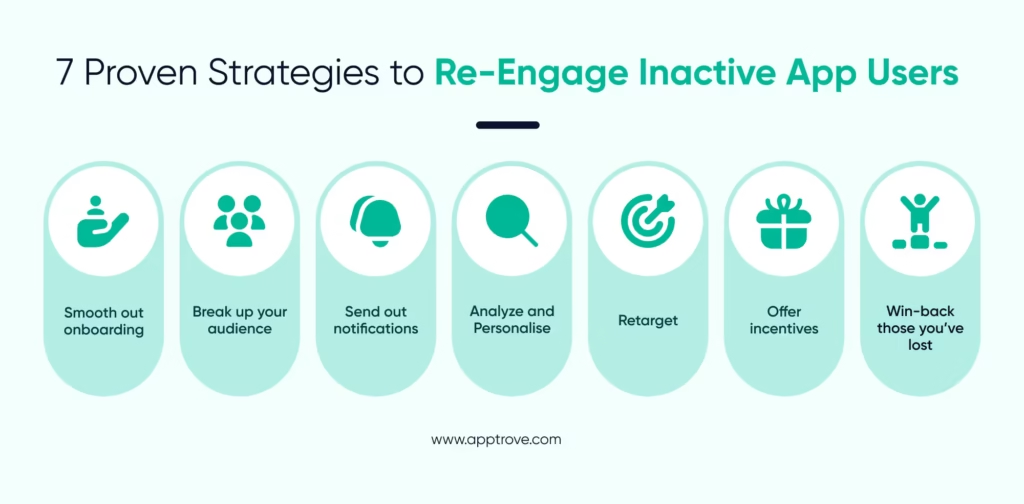
Proven Strategies to Re-Engage Inactive App Users
Sending more messages to inactive users is not the solution to getting them back. You need to send the correct messages at the most opportune times. Most of the time when users are no longer engaged with your app, it means they no longer find it valuable rather than that they have no longer any interest in your product at all. All of the strategies mentioned below will help to minimise the barriers to return, the barriers to maintaining relevance, and to remind the user why they downloaded your app in the first place.
Streamline how you send push notifications
Statistics show that 55% – 60% of app users agree to receive push notifications and push notifications to have an opening rate of 90%. But if we were to dive deeper into this data, it would be revealed that irrelevant push notifications will soon lead to you losing customers.
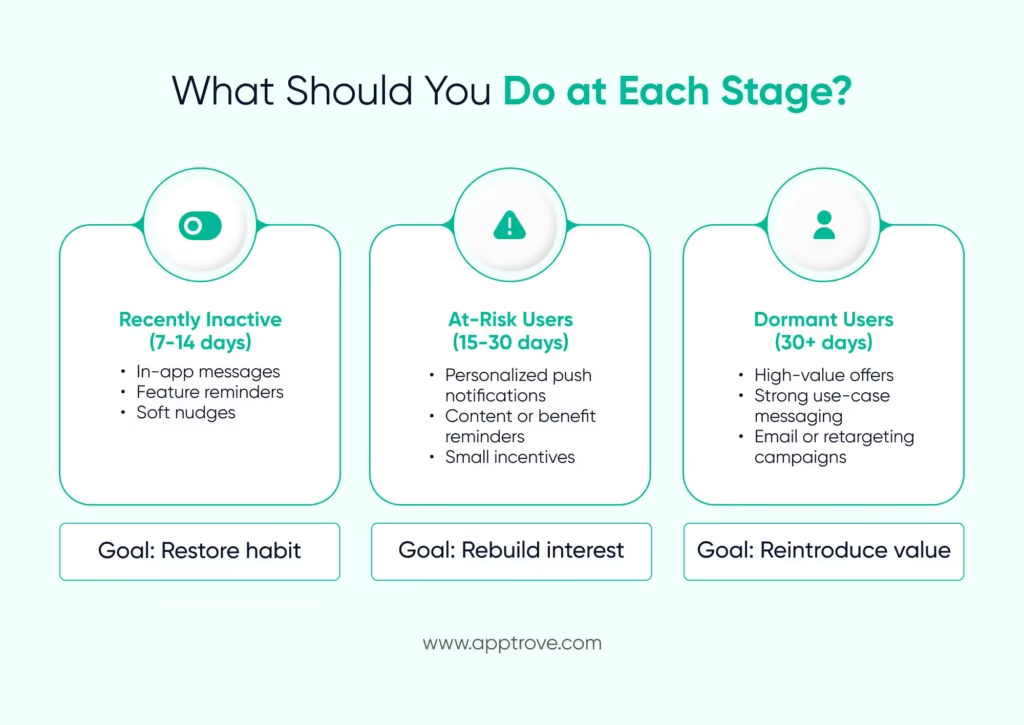
If you are using push and social notifications to re-engage inactive app users and active app users, do so without seeming intrusive. This can be achieved by notifying users of new activities or updates when they are within the application and alerts regarding the latest update or activity when the app is not running.
You can go a step further by sending discounts and coupons to the users who have been inactive for a longer period.
Personalize in-app communications
A personal touch is a wave that is sweeping the marketing world. Users want to feel exclusively catered to and the apps which are able to exploit this are coming out on top.
Following are the aspects that you should keep in mind while trying to create a personalized experience for your users:
- Interaction: Base your interaction on your consumer’s actions. For example, sending thank you emails upon successful purchase.
- Content: You are sitting on a landmine of data from browsing history, purchases, to searches. Use this data to personalize content from ads, articles, to product and service recommendations.
- Experience: More developed apps can even personalize the user experience based on various factors. For example, it could behave differently for experienced users and people who have just downloaded the app.
Employ social media marketing
Go beyond just announcing new features and sharing reviews on your app’s social media profiles. Social media can be a very powerful tool while trying to re-engage inactive app users. Here’s how:
- Belt out consistent and engaging content: Social media like Instagram is all about catching the eye of the viewer in a fraction of a second. High-quality visuals such as graphics and videos are what you need to recapture your demographics’ attention.
- Interact with reviews: When was the last time you downloaded an app without checking the ratings and reviews? Just like you, your users are scrutinizing not only what your users are saying about you but also how you are responding to them. Start rewarding users for their reviews and share them on social media. Interact with negative reviews and help in any way possible.
Incentivize loyal and returning users
This is a no-brainer strategy. Regular discounts, bonuses, and gifts are the easiest way to retain customers. You can make your own reward systems from providing exclusive deals to loyal members to in-app credits, to purchase discounts, etc.
In the long run, these rewards will cost you way less than the loss of losing customers. Give your churning users real-world incentives such as discounts, freebies, giveaways, offers, and passes. Tempt people into giving your product a second chance by rewarding them.
Implement gamification to boost engagement
This interesting strategy takes gaming approaches and applies them in a marketing scenario. This approach is not exclusive to gaming apps, in fact, any app owner should be applying these strategies to boost their user retention and mobile app re-engagement.
The simplest element of gamification is rewarding the user for visiting the app daily. These rewards can be as arbitrary as badges or points, as long as they give the user a feeling of accomplishment. Here are some other gamification strategies for you to explore based on the kind of app you own and operate:
- Progress dashboards: Show your user their progress within the app.
- Scoreboards: Display rankings and enable users to share them on social media.
- Social interaction: Enable users to communicate with each other.
- Levels: Draw levels from beginners to experts to encourage users to attain the higher level.
Apply deep linking and webhooks
Deep linking is an easy way to direct the user to the relevant piece of content on the right page within the application. This is a huge time saver and immediately engages them.
Similarly, using webhooks can help you track users that are proactively promoting your product in their circles. You can identify them based on the number of sent invites, generated clicks, and successful installs.
Book a free demo to start using deep linking today!
Enable effortless social sharing
Most successful apps today have the option of sharing their in-app activities and achievements on their social profiles. This will not just help you with re-engaging existing users in the user’s social circle, but also help market your app.
The neck-to-neck competition between apps today means that you have to try 10x harder to remain relevant in the app market. While it is important to look forward and build strategies that bring in new users, you cannot disregard your existing customers. Retaining the existing users is arguably more important for an app to grow more sustainably in the app market.
Contact us to learn more about mobile app marketing and how you can retain your customers better.
Re-engagement Is Not a Recovery Tactic But a Growth Strategy
Industry research consistently shows that improving retention even slightly can significantly increase lifetime value and overall growth.
Most of the time, the users you call lost are the ones who feel they have lost enough value in using a service, and therefore will not remain active with it. Therefore, the most effective strategies to re-engage inactive app users respect their feelings of not having enough value in their use of your service.
The most successful strategies for user re-engagement will be those that remove any obstacles to re-engagement. For example, if a user receives a personalized message, a smart notification, a relevant incentive, or an easy-to-use deep link, they will find it easier to return to your service and quickly rediscover its value to them.
With so many alternatives available, sustainable growth will not come simply from trying to drive installs, it comes from developing a relationship with your customers that goes beyond the initial session and lasts until they stop using it altogether. Reengaging your users who have been inactive becomes simply a natural extension of product growth, rather than something you try to do at the last minute to stop churn. Know what your users are doing; monitor the actual signals from your users, use those signals as a basis for what you do, keep improving your user experience so they will want to continue using your service; this will lead to ongoing user engagement.
Frequently Asked Questions (FAQs)
1. How can you re-engage inactive app users effectively?
To re-engage inactive app users effectively, focus on relevance and timing. Use behavioral data to understand why users dropped off, then reach out with personalized messages, meaningful incentives, and frictionless experiences such as deep linking. The goal is to bring users back by restoring value, not by increasing message frequency.
2. What does it mean to re-engage inactive app users?
To re-engage inactive app users means using targeted strategies to bring back users who have stopped opening or interacting with your app. This includes reactivation campaigns through push notifications, in-app messages, email, rewards, and experience improvements designed to spark renewed interest.
3. Why do app users become inactive in the first place?
Users often become inactive due to poor user experience, lack of perceived value, irrelevant notifications, performance issues, or stronger alternatives in the market. Identifying these reasons is essential before attempting to re-engage inactive app users.
4. What are the best channels to re-engage inactive app users?
The most effective channels to re-engage inactive app users include push notifications, in-app messaging, email campaigns, social media retargeting, and SMS. The right channel depends on user behavior, app category, and how long the user has been inactive.
5. When should you start trying to re-engage inactive app users?
Many apps begin efforts to re-engage inactive app users after 7, 14, or 30 days of inactivity. The ideal timing depends on how frequently users are expected to engage with the app and the nature of the product.