
An Identifier for Vendors (also known as an IDFV) is a unique identification code assigned by Apple to all applications downloaded from the same retailer or vendor that are installed on the same device. Developers can monitor user activity, monitor engagement levels and implement cross-promotional activities among their application ecosystem. The IDFV does not reveal any personal identifiable information (PII).
Typically, an IDFV will be formatted as a 32-character string divided into five groups and separated by hyphens. An example follows:
F325G3GB-12FC-352F-C6C3-DZ52F0F690D8
Purpose and Use
Through the use of the IDFV, developers can gain insight into how their users interact with their full array of applications on a single device. This grants developers the ability to:
- Identify patterns in user engagement and behavior across apps.
- Implement cross-promotional tactics to encourage users to install additional applications within their ecosystem.
- Utilize frequency capping to limit the number of times that a user will see a single advertisement or type of marketing while using other marketing/apps within their own ecosystem.
- Create first-party data sets that help improve personalization and user retention without violating Apple’s privacy requirements.
Since the IDFV is classified as anonymous first-party data, it can be utilized without obtaining consent from the user unless it is created using third-party data.
How It Works
Apple generates an “Identifier for Vendors”, which is assigned to each app created by a developer, at the time of installation of the app on a device. For any app developed by a specific vendor currently installed on the device, the app will share the same identifier for vendor. IF all apps developed by that vendor are uninstalled from the device, so will the IDFV be purged from that device. Therefore, once an app from that vendor is reinstalled on the device, a new Identifier for Vendors will be generated for that app.
This feature allows for a straightforward data framework for tracking the use of applications developed by a single vendor. Accordingly, it is impossible for a vendor to track the use of their applications across multiple vendors or devices. The IDFV functions like a first-party cookie in a mobile app environment, allowing developers to view user activity while remaining in compliance with Apple’s privacy guidelines.
Comparison: IDFV vs. IDFA
| Feature | IDFV | IDFA |
| Scope | Shared between applications that belong to the same developer on one device. | Shared between all applications and developers on a device. |
| Purpose | Analytics by the application owner (first party), advertising across different applications, and limiting the amount of time advertisements are shown. | Tracking users across different applications and linking advertising to the applications. |
| Consent Requirement | Does not require user consent under the App Tracking Transparency law, assuming there is no combination of third-party data. | Explicit consent from the user is required under the App Tracking Transparency law. |
| Reset Mechanism | Automatically resets when all applications from the developer have been removed from that device. | Users can manually reset at any time they want. |
| Attribution | Not suitable for tracking advertising for third parties. | Used for tracking advertising attribution or measuring campaign effectiveness. |
Importance in the Privacy-First Ecosystem
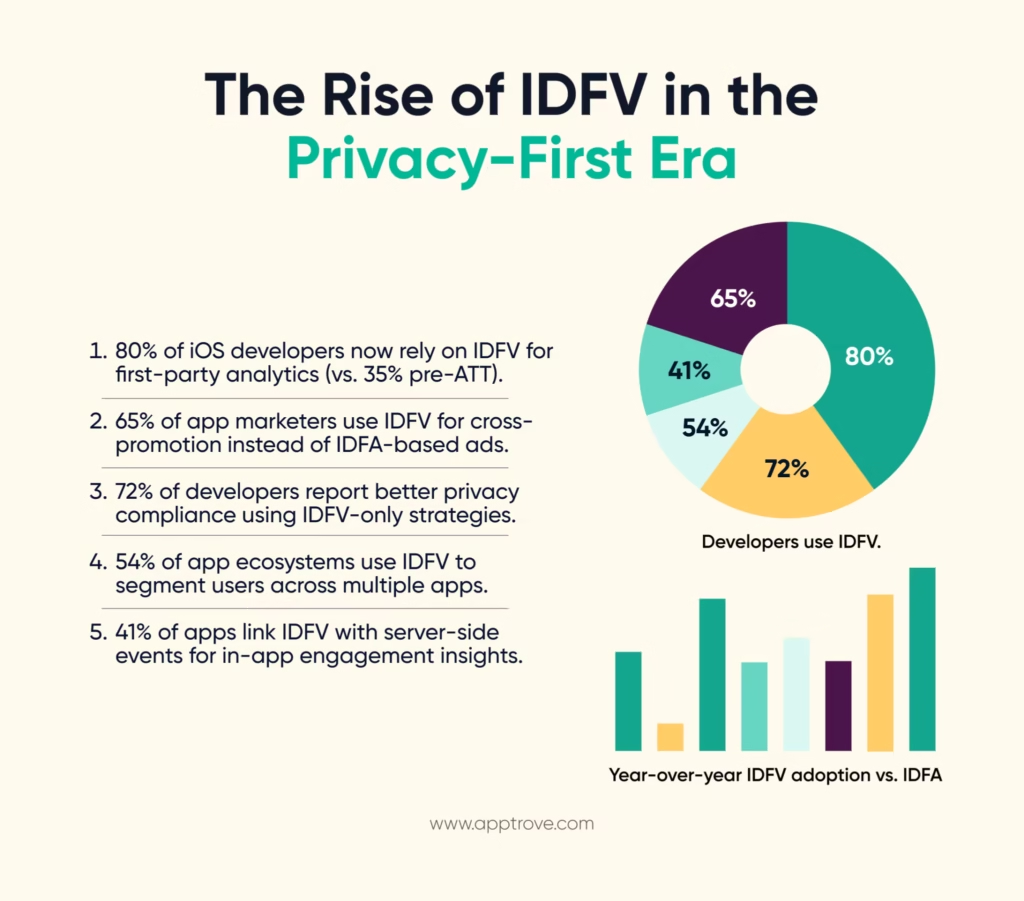
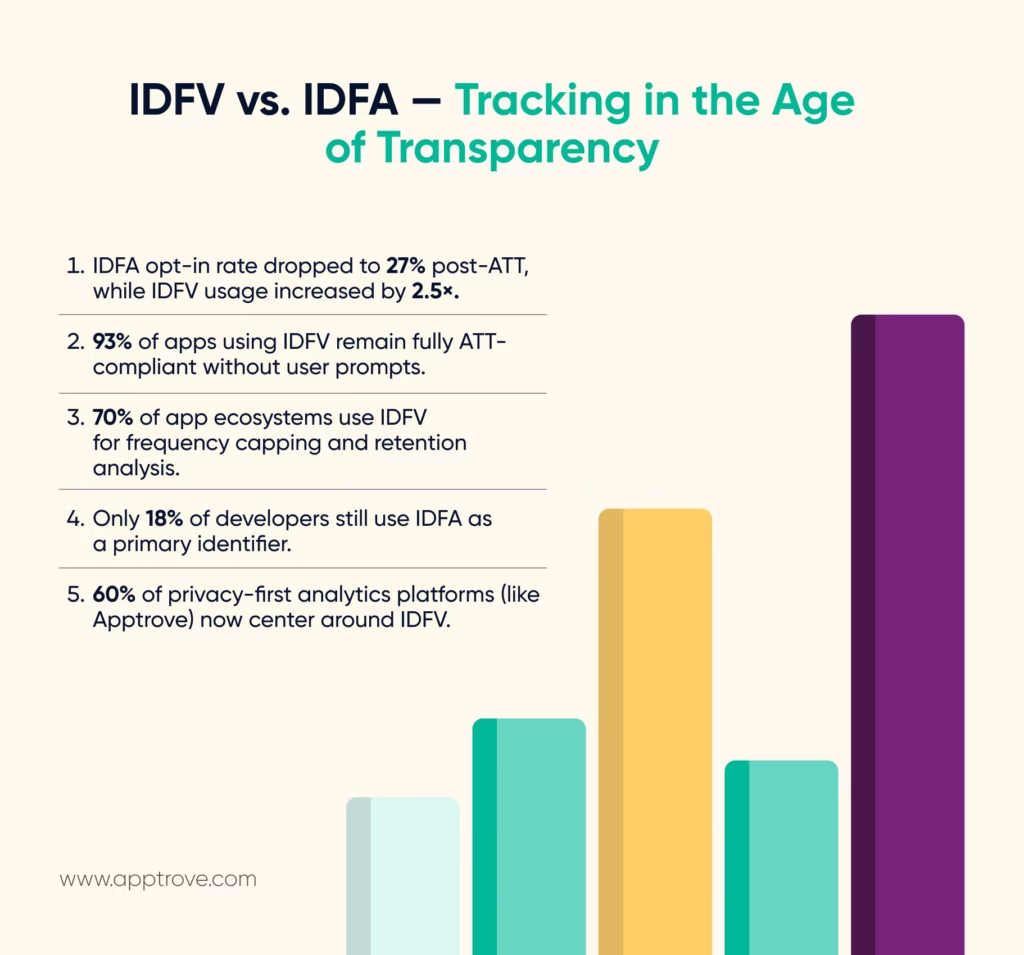
The privacy policies of Apple have altered the way we perform mobile advertising and now, as there are restrictions to using the Identifier for Advertisers (IDFA), the mobile app developers are to think of using IDFV (Identifier for Vendors) and looks to come up with first-party data strategies.
IDFV gives vendors the capability to:
- Ensure the integrity of their analytics and at the same time do not interfere with the right of privacy of the user.
- Assist in developing more relevant adverts to the users and enhance their experience when using the application.
- Help in the development of the product by giving an understanding of cross-app engagement.
- Measuring reinstallation and tracking the success of cross-promotion.
Since IDFV is not a mechanism that enables one to identify the users among the independent ecosystems, it offers user privacy and business intelligence safeguard.
Technical Characteristics
Format: 32-alpha-numeric code (T563P9YS-856G-473X-H1J2-FC94L0T37IC6).
Assignment: Automatically assigned by Apple, on a per-device basis, on a per-developer basis.
Persistence: Relevant until the applications of the vendor are deleted.
Scope: Shared by all the apps on a single device, of the same vendor.
Anonymity: Does not reveal PII and cannot be traced across vendors or devices.
Benefits for Developers
IDFV provides different advantages to the developers who run different apps within the same app ecosystem. The following are the advantages:
- Cross-App Analytics: Provides a universal perspective of user behavior within the app development company’s portfolio of apps.
- First-Party Data Analytics: Allows the application of first-party data to enhance internal analytics and audience segmentation.
- Advertising Efficiency: The efficiency of advertising targeting and capping based on analytics and engagement data that have been gathered from different apps within the ecosystem.
- Privacy Compliance: It is currently employed within the Apple frameworks, but not in conjunction with 3rd party data.
- Reinstall Tracking: Tracking of users who reinstall an app without employing IDFA or fingerprint.
In a distinct platform like Apptrove, IDFV will serve as a trustworthy framework to build privacy-capturing user analytics and cross-promotion strategies that conform to the plan of Apple.
Limitations
Though the IDFV has some benefits associated with it, there are limitations that are related with it:
A. Limited Scope: It can only be used within the application of a vendor and cannot be sent beyond the application.
B. No Cross-Device Tracking: It may access only a specific device (i.e., the device on which you used it) in regard to the user that is linked to the IDFV. In this way, you cannot find a user with an IDFV on two or more devices.
C. Dependent on Application Installed: Once any user uninstalls all the vendor applications, then IDFV cannot be utilized any more.
D. No Attribution Support: IDFV may never replace IDFA to attribute campaigns to multiple ad networks.
As such, IDFV can also be used in the scenario involving first-party measurement, audience analysis, and engagement (compared to third-party advertising attribution).
Key Takeaways
The identifier of vendors is an identifier for each and every vendor in a first-party privacy-compliant context that will allow the development community to measure engagement with their users through their applications.
This will be essential to perform cross-promotion, frequency capping, and provide internal attribution after the Apple App Tracking Transparency (ATT) framework, which has imposed significant restrictions on developers’ ability to directly access the IDFA, due to limitations on access to IDFA after Apple implemented the ATT framework in April 2021. This is due to the industry-wide trend towards first-party ownership of data by app developers, enabling developers to measure user behaviour without the use of biometric identifiers.
The IDFV data from any specific vendor’s ecosystem will remain in the vendor’s ecosystem and will automatically update when all applications of that vendor are removed.
Conclusion
The IDFV is a secure and privacy-conscious method for app developers to cope with the ever more restrictive and data-forbidding ad environment. It will be possible for app developers to retain their access to the key information that helps them to function effectively and satisfy their users in an ad environment that is ever more focused on privacy and the protection of their users’ data. Apptrove and other platforms utilize IDFV as part of a well-designed and integrated first-party measurement solution that will enable app developers to retain their access to valuable user engagement data in an ad environment that is focused on compliance and consumer data protection.
FAQs
1. Is IDFV considered personal data?
The Identifier for Vendor does not collect any personal identification data and therefore cannot be used to distinguish an individual user. The IDFV is also limited to providing anonymous reporting to track how many users use a vendor’s app across all devices.
2. Does IDFV require user consent under ATT?
Because it is only available for first-party tracking, you do not need to get permission from a user prior to using the Identifier for Vendor as long as you do not mix it with any third-party tracking or use it to measure the effectiveness of advertising campaigns.
3. Can IDFV track users across multiple devices?
No. IDFV generates based on the device that is being used to download or install an app by a user. Therefore, if the same user installs the same app on different devices (iPhone, iPad), the IDFV will be different for each device.
4. What happens to IDFV when apps are deleted?
When users delete all of the apps from a creator’s app (developer), Apple resets the IDFV of all the removed apps from the creator. Therefore, if a user deletes a creator’s app and then later reinstalls the same app from the creator, it will create a new Identifier for Vendor for that app.
5. Can IDFV replace IDFA for advertising?
No. IDFV is not a reliable method for measuring a third-party app’s advertising. IDFV works best for measuring engagement of a creator’s application through internal app analytics and cross-promotion, and cannot reliably measure third-party apps’ advertising due to IDFV’s lack of multi-device tracking ability.