Introduction
Having successful marketing depends on developing a strategy that not only successfully moves a user down a path towards a successful outcome, but also allows for greater flexibility on how a user interacts with your brand at all of the many touchpoints they will go through in their user journey. The rise of higher expectations for privacy and growing costs associated with acquiring customers, plus the need for companies to adapt to fit the new definitions of their target market, are changing the landscape in the marketing world.
For these reasons, you should begin to implement behavioural segmentation strategies; rather than simply putting users into buckets based on who they are in your business, behavioural segmentation focuses on how users are interacting with your business and what their behaviours are when engaging with your company in between those different touchpoints. In fact, targeted campaigns based on user behavior can achieve up to three times better conversion rates than non-segmented approaches, making behavior-driven insights a powerful lever for growth. The information you gain from behavioural segments that illustrate user behaviour can allow your company to gain valuable insights to continue building on in creating the best possible experiences for your users, helping make the best decisions possible for your company, as well as ultimately driving sustainable growth for your business.
This comprehensive guide provides an extensive overview of the fundamental principles of behavioral segmentation and provides insight into how to implement such concepts effectively within your organization’s contemporary marketing efforts. By reading this guide, you will learn about using behavioral values to assess the users’ true intent rather than merely relying on presumptions.
At Apptrove, we offer a partnership to marketers who are trying to meet these same challenges; we provide guidance in interpreting user-generated behavioral signals in a responsible manner and translating this data into useful insight without the need to compromise user privacy. This guide represents this combined effort; we strive to deliver practical advice with a user-centered focus so that marketing professionals can understand their options amid the complexity of the modern marketing landscape.
Behavioral Segmentation in Marketing in the Digital Age: Understanding Our Audience Without Asking Them What They Like
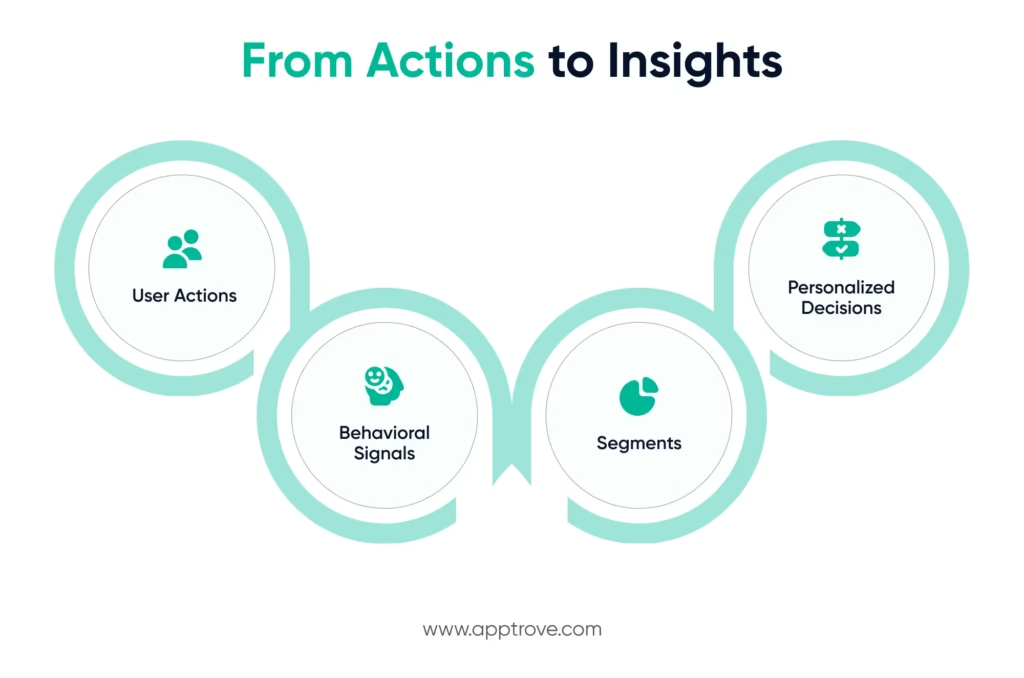
Behavioral segmentation in marketing is not just an academic concept or a checkbox on your marketing strategy deck; it is a very practical method of collecting user feedback without requiring them to communicate verbally. Each tap, scroll, pause, return visit, and drop-off from a page has a meaning. The collection of those actions can be used to tell you what their intentions and interests are and how ready they are to purchase or interact with your brand. Direct demographic segmentation cannot provide this insight.
In its simplest form, behavioral segmentation in marketing is based on measuring observable actions. The number of times a user uses your app, the features they utilize most, the length of time a user is actively engaged with content, and the point at which a user disengages from your app can give you valuable insights into what they consider valuable at the time of their engagement. Behavioral segmentation is fluid and reflects the changing nature of a user’s activity. For example, a user who was casually exploring your app yesterday may have become a serious buyer today. Behavioral segmentation allows you to track that shift in real-time.
The rapid evolution of modern-day consumer behavior illustrates how fluid and varied consumer journeys are. Consumers have become adept at using multiple devices, channels, and intent-related moments of engagement in several ways (i.e., just briefly while on their way to work, returning to a page later with a higher level of focus, or leaving a purchasing “flow” and coming back later to make a purchase).
Behavioral signals such as timing, frequency, recency, and depth of interaction indicate how users engage with and experience your product in many ways as they change and continue to develop. When you begin to segment users based on their behavioral patterns as opposed to guessing why they behave as they do (or as previously assumed), you will be able to use those signals to create groups of users based on their historic and future behavior patterns.
In short, the behavioral segmentation in marketing takes your users’ raw behavior data and turns it into valuable insights and information. It will allow you to make marketing decisions that are more relevant, respectful of your users’ preferences, and will better reflect how your users view your business.
Traditional Models of Segmentation Based on Demographics and Psychographics
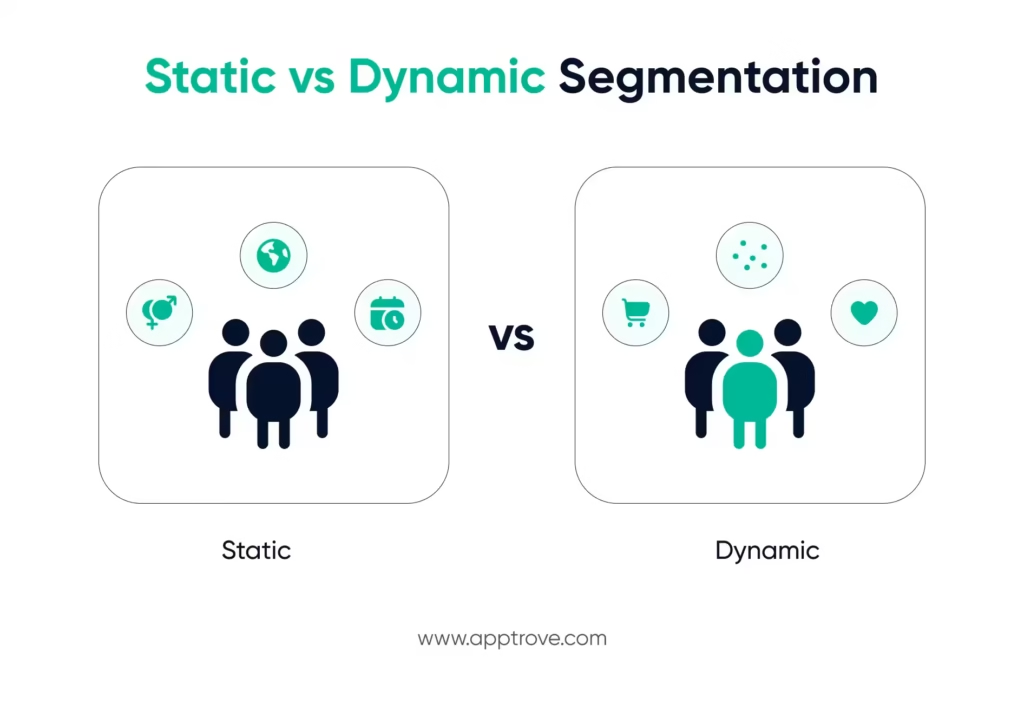
Traditional methods of marketing segments, such as demographics and psychographics, are not as effective as they used to be. These models assume that demographic information (age, location, income, etc.) or psychographic data (stated preferences, etc.) can be used to predict customer behavior, but this information is essentially useless after a short period of time because of the volatility of consumer mindsets, intents, wants, and needs.
Behavioral segmentation provides a real-time connection to the user (consumer) and, therefore, can be used to provide more accurate insights into current behavior. Rather than relying on the historical segmentation information (demographics, psychographics), marketing using the behavioral segmentation method will have a better connection with the user and will therefore be able to more accurately understand their behavior based on the previous and continuing user’s interest, attention, and intent.
Changing inefficiencies into efficiencies in behavioral segments. Acting based on behavior allows marketers to target better & smarter based on what is relevant to their customers at that point in time. Focused on the relevant behavior of the user (what are they doing right now, where did they come from, are they hesitating or moving forward) conveys a message that is much less intrusive (and more engaged) than sending a message based solely on the past actions of that customer.
Behavioral segmentation allows you to act based on current behavior versus the static attributes (age, gender, location) historically used in segmentation. Studies and industry analyses show that marketing strategies based on behavioral segmentation often deliver more effective and precise results than strategies relying solely on static criteria like demographic segmentation, because they use actual customer actions to tailor campaigns. As a result, by using data that reflects the user’s behavior in real-time, behavioral segmentation allows marketers to make smarter, more relevant, and better decisions about how to reach their customers.
Behavioral Segmentation in Marketing is Built on User Intent Rather Than Assumptions
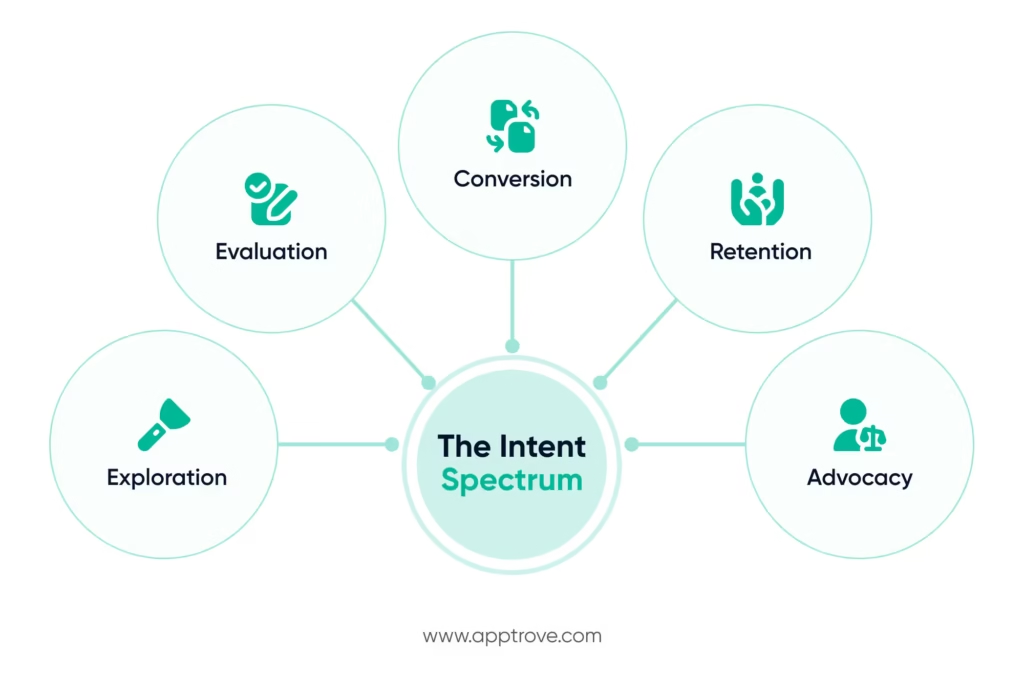
Behavioral segmentation focuses on how a person behaves and where that user is in their decision-making process, rather than making an assumption about where a user is in that decision-making process based on similarity to other people. You have moved from making an assumption, based on a visual similarity analysis, to a true understanding of an individual’s state of mind based on their behaviours.
An individual’s intent can be inferred by their behaviour. A quick tap on an icon may indicate that a user has quickly found something they want or need, or a long pause may indicate that they are still trying to figure out what they want or what product best suits them, and so on. However, this will not be interpreted in terms of the number of other users in the funnel at that time, but rather the mental state of that user at that moment. Instead of asking, “Where should this user be?” you will ask yourself, “What is the user’s intention at this moment?”
The dependence on user intent is a key reason why this type of approach is so effective. User journey paths can be non-linear, meaning users will progress at different speeds; they may pause or step back and even have an opportunity to reset their journeys when needed. A drop-off does not always mean that the user is disinterested; instead, it can represent a point of friction, uncertainty, or the user may not yet be ready to commit. The importance of repeat actions can be just as strong as the action itself – for instance, curiosity, assurance/confirmation/self-confidence through repeat actions may translate into a future alignment of long-term value for a brand or product. Behavioural segmentation allows us to read the nuances of the user’s actions, allowing us to segment without limiting the user to a predefined funnel-like model.
By using behaviour as your lens to segment users, you no longer view taps, views, or pauses as raw metrics that need to be optimised, but instead view them as indicators of what users are doing and what they need from you. In this way, you can respond based on relevance rather than based on your pre-conceived assumptions, thus enabling you to meet the user where he/she is (not what your model tells you he/she is). This aspect of behavioural segmentation is what provides meaning to a user’s ongoing intent, in real time, based on his or her actions.
Core Behavioral Data Signals Powering Behavioral Segmentation in Marketing
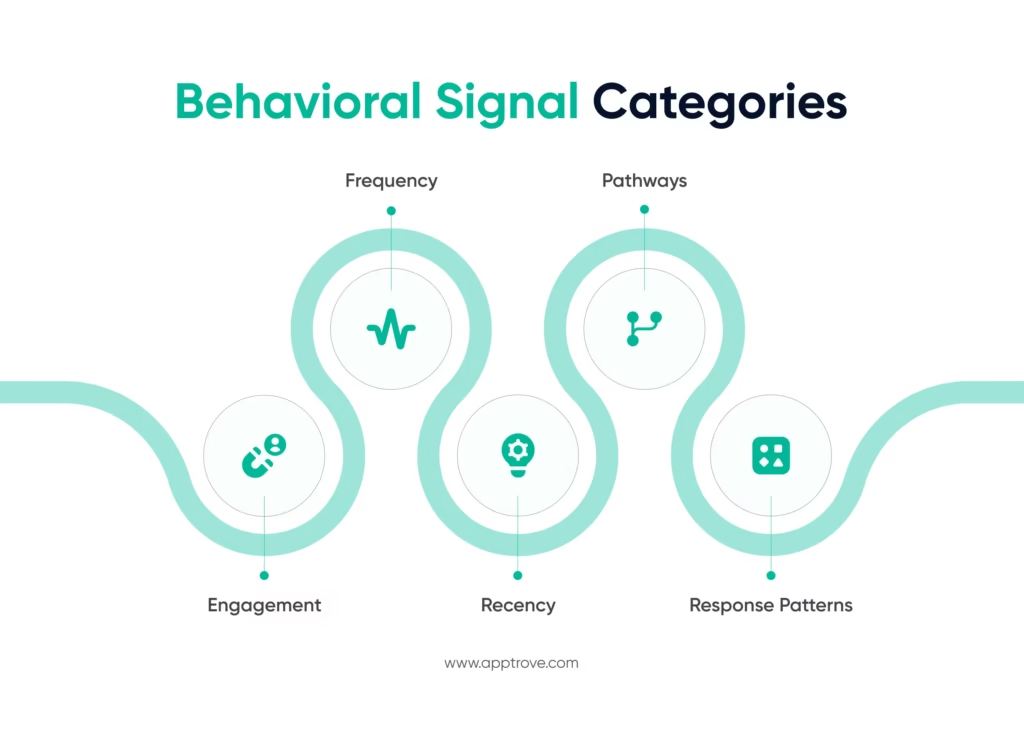
Marketers don’t depend on collecting a single behavioral signal or an isolated behavioral metric to determine how to segment customers. Rather, a single behavioral signal by itself doesn’t offer marketers much insight into what customers really want. Marketers develop an accurate understanding of customer intention, preference, and momentum over time by looking at multiple behavioral signals together. Thus, it is better for marketers to view all of a customer’s behavioral signals as a pattern that evolves, rather than looking at each signal as just another independent piece of data.
Engagement is usually the first signal that marketers notice; however, even engagement requires context. For example, a long engagement session may mean that a customer is interested in a product, or it may mean that the customer is confused about it. The frequency of user visits to a business can add additional context to the engagement session, allowing marketers to differentiate between one-time interest and ongoing engagement. When marketers look at engagement together with frequency, they are better able to determine whether a user’s interest in a business is increasing or decreasing.
Marketers can use recency to further clarify and contextualize engagement and frequency. The signal that a user was recently engaged is quite different from the signal that a user has continued to engage up to the present time. The purpose of using recency as a parameter for behavioral segmentation by marketers is to better understand when users are most likely to be receptive to a marketing message, curious about a product, and most likely to disengage from a company. Generally speaking, when it comes to behavioral segmentation by marketers, the timing of action is just as important as the action itself.
The journey of the user through an experience is illustrated by pathways. The series of screens, features, or content that the user interacts with creates a more detailed picture of the user’s journey when compared to the end result of the user’s actions. Some users will explore all of the options available, while others will take a more measured or calculated approach to exploring their options. Understanding user response patterns (how users respond to prompts, changes to services, or new features) will provide you with insight into user adaptability, hesitation, and confidence.
This is where the power of these signals lies, in how they work together. Frequency of interaction does not necessarily provide urgency if the interaction is not recent. Pathways without finding frequency do not provide direction. In aggregate, these signals provide segments based on behavioral patterns, rather than identifying users from their profiles. This is especially important with the emergence of privacy-first measurement, which provides insight into collective trends and observed behaviors rather than identifying individual users.
To help understand the ways that engagement-related signals are typically interpreted and measured within mobile environments, Apptrove has created a glossary related to user engagement that breaks down the meaning of interaction patterns in relation to providing valuable insights. Behavioral segmentation remains effective and respectful when focusing on user behavior rather than how users are labeled.
Behavioral Segmentation in Marketing Over Users’ Life Cycle
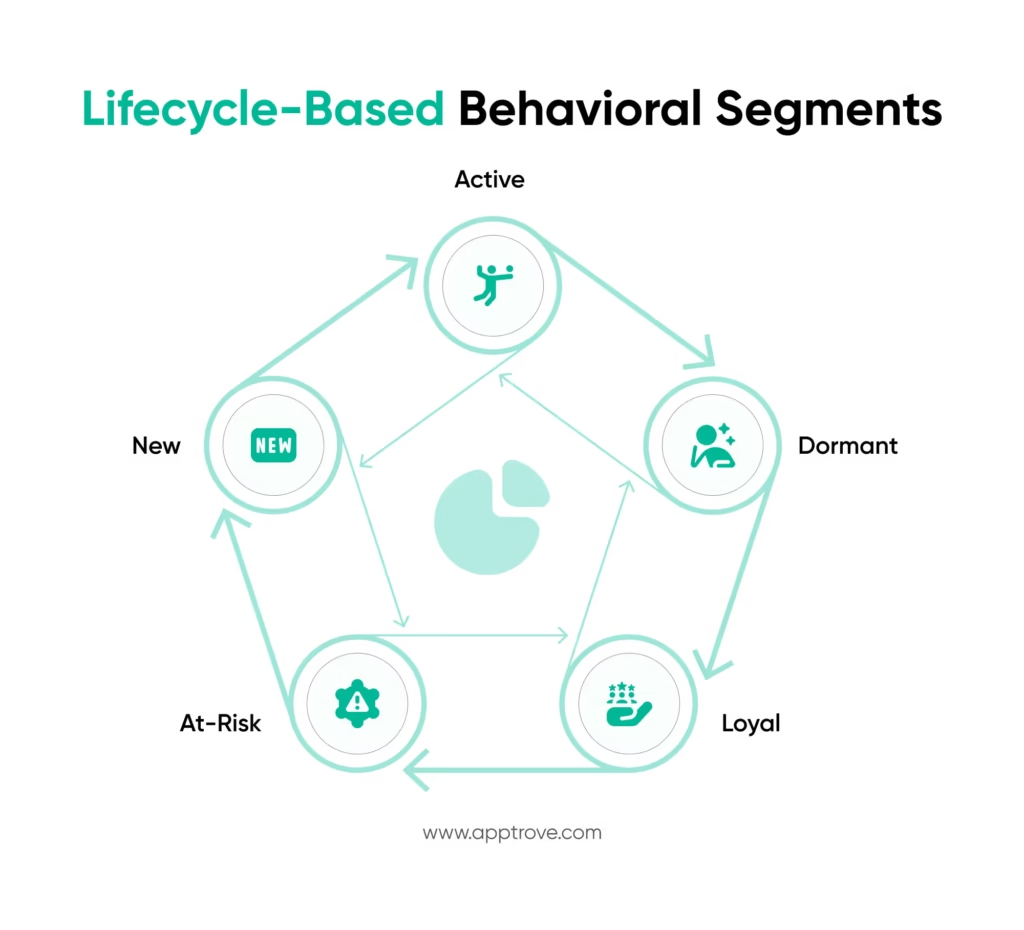
Lifecycle stage is typically thought of as a defined label, such as new users, active users, dormant users, and loyal users. While these labels serve as a good starting point, they do not represent the actual complexity of how consumers transition through a lifecycle of product usage. Behavioral segmentation provides a different way of viewing how users navigate through the product lifecycle; it looks at an individual’s journey through the lifecycle based on their behavioral pattern (i.e., actions taken along the way), rather than a defined timeline (i.e., how long they have been using the product).
For example, a new user is usually considered to be someone who has just signed up; however, by measuring the user’s behavior once they start to use the product, marketers will gain a greater understanding of the user’s curiosity level, how quickly the user is learning, and what their initial intent(s) are for using the product. Some users may spend time exploring many different areas of the product, while others will quickly move to a particular objective. Using behavioral segmentation, marketers can adjust their communication strategy according to how users engage with the product as opposed to how long a user has been in their system.
Once users become “active,” their behavioral patterns are still evolving. Therefore, as a user continues to engage with the product, frequency, consistency, and the user’s path to engage with the product become increasingly important versus simply noting the user’s activity status. An active user who actively engages with the product, but infrequently, may experience the product differently than a user who engages with the product lightly, but daily. Behavioral segmentation allows marketers to recognize these differences among users so they may provide experiences that are not just generic but also appear to be supportive.
When users are inactive, it can often be challenging to tell if they have indeed lost interest on the app and/or the company, or if their needs have changed, or if this is simply due to friction. By examining changes to the timing, pathways or response patterns of these dormant users, organizations can determine how best to engage with these users again; whether to re-engage the user immediately, hold off until the user has an identified need, or make a complete change to their experience. This allows the organization to eliminate unnecessary noise and respect the user’s intent.
Loyalty and risk levels, similar to inactivity, can be best understood through user activity. Loyal users generally have stable patterns of behaviour that include repeat engagements and voluntary explorations; At-risk users show subtle indications of changes to their habits or preferences, i.e., shorter session times, fewer activity engagement points, and avoidance of actions previously enjoyed. With the use of behavioural segmentation, organizations are able to see these slight shifts in users in real-time and thus the organization can respond with appropriate content or messaging rather than reactively.
When users are examined through the lens of their behaviours, the organization stops viewing users as a static group of customers and begins to view users as evolving individuals. This results in more timely messages, adaptive experiences and decision-making that is based on observations rather than assumptions. This is the evolution of lifecycle marketing into a user-centred, responsive strategy through the use of behavioural segmentation.
Examples of implementing practical behavioral segmentation in today’s marketing teams
To maximize behavioral segmentation, you want to see it applied to the marketing process rather than just using it as a framework. Behavioral segmentation focuses on how you view user behavior and offers insight into the how, what, and when of marketing.
One example is when you analyze user activity and identify that a subset of your users have consistently visited a particular section of your product more than once; they have not converted yet, but their behavior indicates that they are actively exploring options versus casually browsing. This is evidenced by the amount of time they spend on a specific area and the way they return and interact repeatedly with key screens, wait to proceed forward, etc. Instead of categorizing this user group as “undecided,” behavioral segmentation will highlight that this segment has a high intent to purchase. As a brand, you do not need to put pressure on this group to buy; you need to deliver the right message (i.e., deliver the right content, set up the right time to communicate, and create experiences that foster the ability to make a good purchasing decision).
Another example is when you observe users with high levels of previous engagement slowly reducing their levels of engagement over time. Over time, their average session length will decline, and they will also stop using familiar pathways. As they stop responding to prompting, traditional life cycle models would typically identify these users as inactive or churned. Behavioral segmentation, however, allows for a more nuanced interpretation of these patterns. While this group of users is clearly becoming less engaged, their declining trend may indicate that they have become fatigued or experienced friction in their experience, or there could be a shift in their priority, not a decrease in their interest. Understanding that users may fall into these two categories allows you to adjust user experiences in a more thoughtful manner rather than reacting to their decreasing level of engagement.
Behavioral signals demonstrate the differences within user groups that may seem similar on the outside. For example, while two users may both be classified as “active,” one is likely engaging in a broad exploration of content as opposed to following a narrow, repetitive path. Additionally, one user may respond quickly to new experiences, whereas the other engages selectively with new experiences.
By evaluating how users interact through their behavioral segmentation, the marketing team has greater insight into how each of these users prefers to engage, enabling them to develop communications that align better with how the user prefers to engage, at what pace, and how they prefer to experience their content.
These powerful use cases are strong examples because they do not depend upon industry-specific assumptions or tools. Rather, they illustrate the patterns that are apparent across the spectrum of products, platforms, and markets. The reason behavioral segmentation works is that it continues to be able to adapt itself to the behavior of individuals in real-time, allowing marketing teams to offer empathy rather than expectations to their customers.
If you’re interested in learning more about how organizations use audience behaviors and how these behaviors are often interpreted and used in the real world, you must know about “Audience Segmentation”, for more in-depth knowledge about how to convert customer behavior into tangible insights. These combined solutions provide marketing teams with an opportunity to move from making reactive decisions based on industry assumptions to developing user-centered, well-informed strategies based on what people are actually doing.
Behavioral Segmentation in Marketing Challenges
Behavioral segmentation in marketing can be an incredibly useful tool, but it’s not without its challenges. As businesses shift away from static models and begin to rely more and more on Behavioral Segmentation marketing, new difficulties arise; however, these obstacles are not a sign of failure but rather signs of maturity within an organization. If marketers can identify these challenges at the onset, it enables marketers to create long-term, sustainable, and realistic segmentation strategies.
Data noise is often the most significant obstacle that marketers need to overcome when doing Behavioral Segmentation marketing. How do you know what actions indicate actual intent? And how do you know which interactions are worthy of being weighted the same amount? Users may be tapping on their devices, scrolling through websites, or pausing because of a sudden interest in something other than what they are actually looking for. When we isolate those behaviours, we can easily misinterpret them. The key to success in Behavioral Segmentation marketing is to look for patterns in your data over time rather than responding to isolated events. The challenge of separating noise from valid signals is more about interpreting data correctly than it is about having more data.
The problem of over-segmentation in Behavioral Segmentation is also very common. With increasing behavioral data available, it makes sense to want to create segments that are as effective as possible. However, the creation of too many micro-segments may take away from your focus and slow down your decision-making process. The goal of Behavioral Segmentation in Marketing is to identify patterns that give you actionable insights, rather than capturing all of the nuances of each individual’s behavior. Finding the right balance between being too detailed and having enough detail to make sound strategic decisions is often the tipping point where teams move from experimentation to being strategically cautious.
Misunderstanding behavioral signals can create friction as well. For instance, a decrease in an individual’s activity may suggest a lack of interest in your product or service when, in fact, the individual wasn’t able to purchase your product or service at the time. Likewise, high levels of engagement may be perceived as intent to purchase, but may actually signal confusion about what your product or service actually offers. By taking behavioral signals out of context, teams create friction by misreading behavioral signals. As a best practice, mature segmentation practices view the interaction between “behavior” and “behavioral signal” as a conversation (one that requires ongoing listening and context) rather than jumping to conclusions based upon a single behavioral signal.
Finally, aligning with others in your organization on the topic of behavioral segmentation presents a significant challenge for many. Many teams throughout an organization (Marketing, Product, Analytics, and Growth) have an impact on Behavioral Segmentation; therefore, it is essential that organizations have shared definitions and expectations for the signals used, how those signals will be interpreted, and how the decisions will be made that are based on those signals if segmentation efforts are to succeed beyond isolated efforts.
According to research conducted by Qurate Retail Group regarding Personalization/Based Marketing, brands continue to face greater operational complexity and customer fatigue when attempting to target their audience through personalization and behaviour-based marketing, even with the significant increase in relevance and engagement associated with these methods of communication. Optimove Insights further indicates that approximately 67% of Consumers will likely suffer from Marketing Fatigue as a result of Receiving Repetitive, Overwhelming Messages. Therefore, as the method of Segmenting Consumers becomes more Advanced, Effective Strategies will need to develop Simplification, Contextualisation, and Alignment between Strategies.
The Evolution of Behavioral Segmentation in Marketing via Privacy-First Measurement
As a result of changing attitudes toward data collection, interpretation, and the use of data, the evolution of behavioral segmentation in marketing is progressing along with an overall paradigm shift in Privacy.
Consumer expectations regarding their privacy are on the rise, as is the maturity of regulatory frameworks. Therefore, the emphasis has shifted from identifying individuals to understanding behavioral patterns; the result is a refinement of the segmentation process rather than a decrease in segmentation overall.
By taking a privacy-first measurement approach, marketers are encouraged to view user behavior in aggregate (i.e., as groups) rather than individually. As marketers no longer track individual user paths, but instead examine the aggregated behavior of groups over time, marketers are provided with insights into current trends, future trends, and potential opportunities without having access to personal identifying information. Therefore, behavioral segmentation in marketing will be less about identifying a particular user; it will be more about understanding how a group of users acts collectively over time.
Cohort-based analyses will be pivotal in supporting this transition from identifying individual users to examining collective behavior. By grouping users based on shared behaviors or time-based actions, marketers will be able to measure changes and trends in user engagement and provide context for the reasons for that change. As such, cohort analysis will enable marketers to track user impact and user intent while adhering to ethical standards. Cohort analysis will also allow marketers to view user behavior as a pattern to be interpreted, thus supporting the progression of privacy-first behavioral segmentation.
As a result of this shift to a focus on meaningful behavior shifts and changes instead of reactionary response to randomized deviations at the individual level, this shift will result in a reduction in the amount of unnecessary emotional reaction and the amount of “noise” in the data, and an increase in the amount of long-term stability for legitimate business operations and profitability driven by human behavior over time.
In addition to ethical uses of customer data, disciplined communications between marketers and customers will also help ensure that marketers continue to provide positive, meaningful experiences for their customers, as ethical use of data will create a higher compatibility rate between the marketer’s data and the customer’s mental picture of themselves and their emotions, thus allowing marketers to be able to build trust with their customers in that sense.
Through the combination of privacy-first measurement and ethical segmentation of customers, the future of behavioral segmentation will be characterized by the combination of measurement with human behavior and the ethical use of data in segmentation efforts, to develop a more sustainable, respectful, and ultimately successful long-term engagement model for marketers.
Long-Term Plans for Marketing Using Behavioural Segmentation
Behavioural Segmentation In Marketing is an ongoing journey rather than a one-time task. Once established, You must continue to check the interactions you have had or will have with your customers as they make shifts in their relationship with you or continue to develop new products or provide existing products in new areas. Viewing behavioural segmentation in marketing from this perspective allows you to develop a strategic approach, rather than a tactical approach.
Long-term behavioural segmentation is fundamentally based on the observation of behaviours occurring prior to the desired outcome. The analysis of behaviour will provide new insights into how the customers use your product over time. The behaviours of your consumers will be revealed through iterative learning of the same customer over time. By closely monitoring your consumers’ behaviours, you will begin to see associated patterns of behaviour.
In short, the ongoing learning from behavioural signals is the tool by which an effective behavioural segmentation plan grows. When consumers behave in different ways based on their individual experiences, the behavioural segmentation plan continues to grow and adapt. However, effective behavioural segmentation does not require continual modifications of the segmentation plan. Instead, you will need to be attentive to the analysis of customer differentiators, changing expectations, and the necessary adjustments to segmentation criteria. Allows behavioural segmentation in marketing to certainly change as the strategy continues to grow and develop.
The approach to respect for action and response (e.g., user behavior) in the article supports the long-term sustainability of the approach. There are many actions that do not require any responsiveness to them, nor does every action need to have an associated action/reaction label from the user. On occasion, the best course of action taken with respect to the user’s action is simply to observe the action occurring. In doing so, patience has the effect of establishing a level of trust and authority with the user. Additionally, through segmentation, we can develop a methodology for learning about users instead of trying to control them.
Behavioral Segmentation is a means of promoting long-term sustainability in Growth Marketing when viewed and pursued through the lens of patience and intent. This methodology promotes team alignment and consistency regarding the user’s behavior and makes better decision-making as a result. Behavioral Segmentation will also ground Growth Marketing strategy in the real world and provide the opportunity to develop a better relationship with users through the process of growth, through observing and understanding how users behave through their Actions, responding to their behavior, and building long-term relationships.
Conclusion
The key thing that defines behavioural segmentation is how you interpret the behaviour of customers, rather than simply having more data points or being “obsessed” with every single tap, pause, etc. Behavioural segmentation is about listening and knowing how to really hear what your customers have to say from their behaviours (engagement) back to how they interact with you and the choices they make throughout their customer journey; therefore, the “value” of behavioural segmentation is derived from actual insights (being able to see beyond the obvious), ie By being able to interpret behaviour within context, ie, when someone decides to stop buying or pausing in buying but continues shopping, then being able to respond appropriately (in a manner that respects and adds value to that customer).
Embracing behavioural segmentation, as a marketer, is about moving from being a control-oriented to observing; from having assumptions about your customers to trying to fully understand your customers. When a marketer embraces behavioural segmentation, the marketer will start to see the customer as ever evolving and create experiences that will adapt with them. This approach leads to improved targeting and overall increases the level of trust, and is beneficial to the growth of both business and individual customers. In other words, businesses can, if executed correctly, have measurable and meaningful growth by using behavioural segmentation of their customer base.
This guide has been developed to provide information for anyone interested in behavioural marketing. Those who require assistance in how to implement behaviourally-based marketing strategies, comprehend signals, or process behaviour-driven insights can turn to Apptrove for direction and help turn trends into actionable plans. Please do contact us for further conversation or additional customised support.
Behavioural segmentation within marketing should be considered as a continuous evolution rather than a one-off implementation. The closer you pay attention to the behavioural patterns of your users, the better you will be able to respond and grow your business, increasing the chances of providing meaningful experiences.