Mobile marketing has become a much more complicated form of communication for brands looking to connect with their target audience. App marketing teams are now launching campaigns, from paid advertising to social media and everything in between. At the same time, these campaigns are launched across multiple marketing channels. According to a Gartner study, 80% of the leading marketers said they have a lack of visibility into what marketing channels work together during the customer journey. Their inability to link marketing activity and performance with understanding leads to wasted budget, misattribution, and unfulfilled revenue opportunities. This is where cross-channel marketing comes in.
Cross-channel marketing brings all of your marketing activities together to create one cohesive and measurable system of understanding. When you begin to combine the channels you use to communicate with customers rather than analyzing each individually, you start to see how the different channels relate to each other, impact the customer’s purchase decision, and create long-term value.
For app marketers, growth strategists, and app owners, taking a cross-channel approach is no longer optional. Mobile journeys are composed of many fragmented touchpoints, and without good measurement and attribution, each touchpoint will react as if by its own will, and no optimization can occur. Using a mobile measurement partner like Apptrove gives app marketers a way to combine their disparate data into one, actionable picture of growth.
What Is Cross-Channel Marketing?
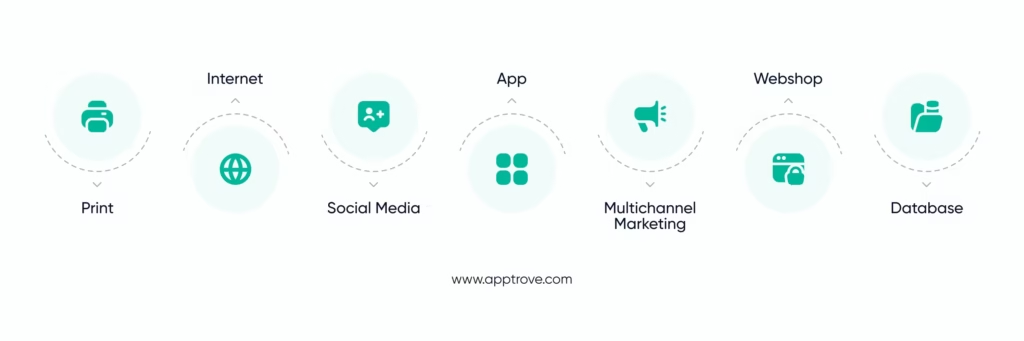
Cross-channel marketing consists of the development and execution of a comprehensive marketing strategy across a range of platforms, enabling marketers to assess how well individual marketing initiatives work together as part of a larger marketing ecosystem, compared to isolated marketing campaigns. Cross-channel marketing also allows marketers to see a user’s journey from their initial encounter through post-install activities as one continuous process.
Unlike traditional marketing, where you could look at which channel “won” a conversion, a cross-channel marketing approach answers a more important question: “How did multiple channels work together to create this outcome?” This more advanced way of thinking will allow app teams to make better decisions, allocate their budget more efficiently, and deliver users with relevant experiences.
Why Cross-Channel Marketing Is Important For App Growth
Apps tend to have longer conversion cycles than other web products. Consequently, users will go through many different touch points prior to installing an app, and even more prior to becoming an engaged user. With each of these steps along the way, users are exposed to friction and high drop-off potential.
By ensuring a consistent message across all of your marketing efforts, creating seamless transitions between different marketing channels, and providing full insight into where users are having difficulties, a Cross-Channel Marketing strategy will help to eliminate friction for users. When all channels are connected, app development teams can optimize the entire user journey rather than only engaging users in each marketing touch point, thereby creating a higher app activation rate, improved retention rates and increased Lifetime Value.
How Cross-Channel Attribution Supports Better Decisions
Cross-channel attribution is a major factor for success in an effective cross-channel marketing strategy. Cross-channel attribution is the ability to recognize multiple touchpoints that lead to conversion rather than only the last touchpoint. The ability to see how each channel introduces, assists, and converts users throughout the customer journey is extremely helpful because it gives app teams full insight into where they are over-investing and undermining potential channels that create demand.
Apptrove enables this attribution capability through the ability to link all interactions across all devices and platforms, providing app teams with complete visibility of all touchpoints across channels.
Cross-Channel Marketing vs Omnichannel Marketing Strategy
The main difference between cross-channel and omnichannel strategies is that a cross-channel marketing strategy focuses on the performance measurement, coordination and optimization of each channel, while an omnichannel marketing strategy focuses on how to deliver consistent customer experiences across all channels.
To illustrate the difference between the two strategies’ practical applications, omnichannel defines how users should feel when using an app and cross-channel defines how app performance should be measured. Together, they create an ecosystem for both seamless user experiences and data-driven growth.
The Role of Mobile Marketing Analytics
By Linking acquisition information with in-app activities mobile marketing analytical solutions provide insights into what users do after installing apps. Such analytics give an indication of which features were utilized and which actions subsequently generated revenue.
Analytics assist marketers identify where to invest media dollars effectively. When combined with cross channel marketing, analytics provides marketers with insights into which media channels produce high-value users, versus low-value users.
Through the creation of a unified analytics layer, Apptroves provides marketers with the ability to optimize their media dollars based on long-term user value rather than just surface-level metrics.
Why You Need a Marketing Attribution Platform
A marketing attribution platform serves as the backbone for cross channel marketing. By linking user identities, tracking touchpoints, applying an attribution model, and delivering real-time insights cross channel marketing cannot be scalable without such a foundational layer.
Apptrove is a marketing attribution platform specifically designed for mobile-first companies leveraging attribution deep linking fraud prevention and analytics into one ecosystem.
7 Ways App Teams Turn Touchpoints Into Growth
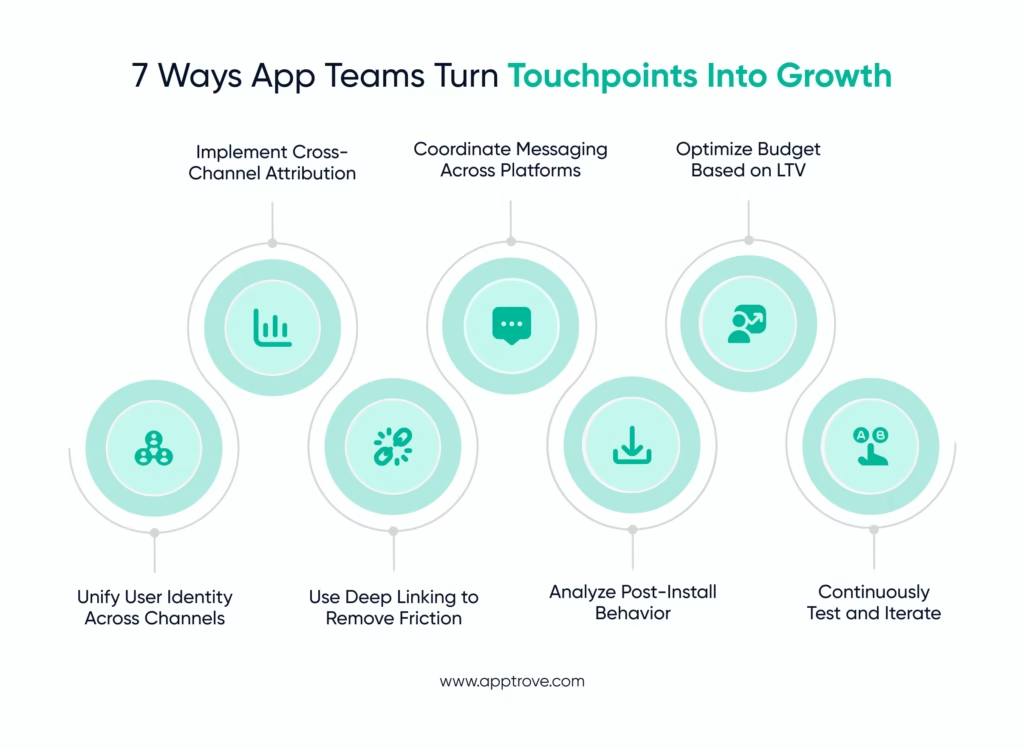
1. Unify User Identity Across Channels
Connect identifiers such as device IDs, email addresses, and login data into one persistent user profile. This ensures every interaction across ads, web, app store, and in-app activity belongs to a single journey, enabling accurate attribution and personalization.
2. Implement Cross-Channel Attribution
Moving away from the traditional last-click attribution model now allows marketers to distribute attribution across different touch points. Knowing which channels bring users in, which channels help generate interest and which ultimately convert leads to smarter budget allocation and optimization.
3. Use Deep Linking to Remove Friction
Instead of taking users to a generic home page, send them from ads or web pages to specific screens within your app that are most directly related to what they were looking for. This will reduce their time-to-value, improve activation rates, and decrease the likelihood of drop-off.
4. Coordinate Messaging Across Platforms
Make sure there is a clear theme, offer, and timing for all of your messaging across multiple channels. All of your messaging should support the same story. This will eliminate inconsistent messaging and increase overall conversions rates.
5. Analyze Post-Install Behavior
Evaluate all channels based on retention, engagement, and revenue. Focus on identifying sources of high quality users versus just the number of installs made.
6. Optimize Budget Based on LTV
Direct your media budget towards channels and campaigns that drive users who produce a high LTV as opposed to optimizing by cost per install (CPI) only.
7. Continuously Test and Iterate
Use ongoing experimentation of your creatives, sequencing, and channels. Your cross-channel marketing will improve through ongoing learning and refinement.
(Infographic Placement: “Cross-Channel Marketing Flow – From First Impression to In-App Value”)
Common Mistakes That Limit Cross-Channel Marketing
Teams that only rely on last-click attributing their performance, consider multiple channels as competitors or don’t consider post-installation behavior will create slow growth and hide the true performance of a campaign. The success of cross-channel marketing is dependent upon being able to think about a customer’s journey as a whole and how metrics from the entire customer journey are measured collectively.
How to Measure Cross-Channel Marketing Success
By monitoring assisted-conversions, retention by channel mix, trends in lifetime value and journey drop-offs, it will be possible to demonstrate improved performance of your cross-channel marketing strategy when all four measurements show improvement collectively.
Conclusion
Cross-channel marketing will integrate multiple campaigns into a single source of sustainable revenue growth by allowing app developers to analyze user movement across all marketing channels, determine which interactions have influenced user decision making, and identify where marketing budgets provide the greatest opportunity for impact.
Rather than running optimally in silos, teams using a cross-channel marketing approach can create a business model based upon consistent goals and understanding the customer’s overall journey as it relates to marketing outreach to increase revenue. When partnered with a mobile measurement provider such as Apptrove to provide the means to measure, scale and make actionable cross-channel marketing efforts will allow today’s app development teams to consider cross-channel marketing as a key component to achieving sustainable revenue growth rather than having an advantage over their competition.
FAQs