

Inside Datalytics 2026, the Apptrove report examines how app growth is actually unfolding today—where budgets move in waves, attribution signals are partial, and decisions are shaped by privacy constraints and AI-driven optimization.
Built from aggregated campaign data, it goes beyond reported performance to surface the patterns that influence what you scale, what you cut, and where you invest next.
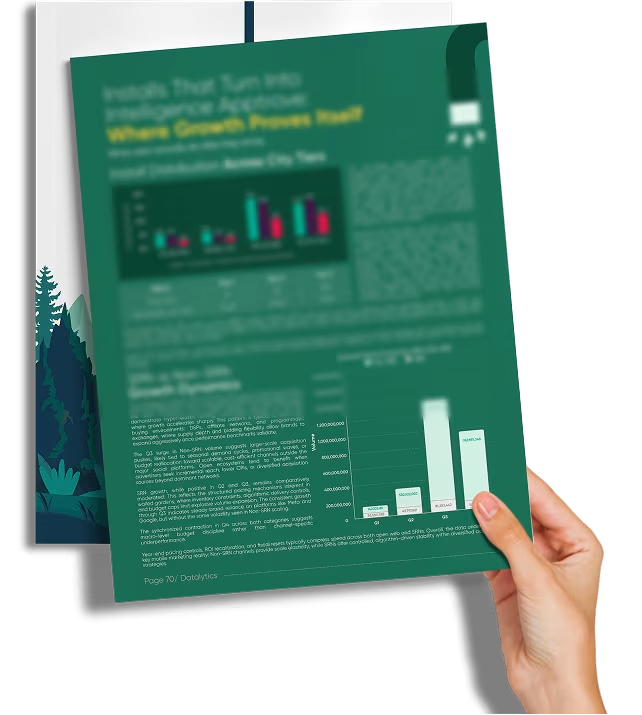


Across multiple verticals, inorganic installs more than doubled between Q1 and Q2, followed by 60–70% pullbacks in Q3, suggesting tactical budget deployment, not demand decline.
Periods of new user growth were repeatedly matched by sharper rises in remarketing activity, showing that brands are pushing value creation earlier in the lifecycle.
By the second half of the year, organic discovery became the majority source of new users in several categories, especially where paid efficiency softened.

A grounded view of how app growth actually works in fragmented, privacy-first environments
Real examples of how attribution behaves when signals are incomplete
A closer look at how teams are shifting from reporting metrics to interpreting behavior
Practical ways to rethink campaign decisions, budget allocation, and performance evaluation

Channels with cleaner tracking tend to look stronger, but don't make them more effective.
Get the Apptrove Report
Now to Know ‘Why’.
What you see is organized, simplified, and incomplete.
The actual user path is not.
Learn how to account for
what’s missing.
And when that context is incomplete,
even good decisions can scale the wrong outcomes.
This report shows how to
correct for that.
Which campaign performed best?
What actually influenced this outcome—and what didn’t get captured?
reacting to metrics
What assumptions are these metrics built on?
optimizing faster
clearer context, fewer assumptions, & better timing
Not just where conversions are recorded—but where influence actually happens
Operate effectively even when data is aggregated, delayed, or incomplete
Know when to scale, when to pause, and when reported performance is misleading

