Suppose a customer comes to your online store, goes through your catalog, puts a couple of items in the cart, and goes away. Sound familiar? That is the fact of the matter for most e-commerce companies: it is hard to gain traffic, and it is even harder to maintain the interest of the shoppers and turn them into loyal buyers. This is precisely where e-commerce gamification fits in; they make your normal shopping experience an interactive, entertaining experience that is addictive.
As the world gamification industry is projected to explode to US$30.7 billion by 2025, the need is now. E-commerce gamification is a potent tool, not a trick, for brands that aspire to gain sustainable loyalty and raise their numbers.
At Apptrove, we assist mobile-first retailers in using deep analytics and segmentation to add gamification mechanisms into their applications and achieve increased engagement, repeat buying, and valuable user behavior.
What Is E-commerce Gamification and Why Does It Work So Well?
E-commerce gamification denotes the incorporation of game mechanics in retail systems such as points and rewards systems, challenges, and progress bars to encourage customer self-action. Instead of just providing discounts or push messages, gamification is a way of accessing the human psyche: achievement, competition, surprise, and mastery.
Here’s why it’s so effective:
The engagement becomes fruitful: According to The Pursuit Agency, gamified experiences can increase consumer engagement by 48%, leading to a 30% rise in sales and a 27% boost in retention.
The retention receives a vast improvement: A study in the International Journal of Electronic Commerce Studies found that gamification can significantly improve loyalty, engagement, and brand recognition.
Conversion rates increase: In concrete terms, when customers receive game-like rewards, they’re more motivated to complete their purchases. As reported by Ptolemay, businesses have seen up to a 15–50% lift in conversion rates through smart gamification.
In short, e-commerce gamification doesn’t just keep people on your site; it drives them to take action repeatedly.
The Most Powerful E-commerce Gamification Strategies to Try
In case you are serious about incorporating e-commerce gamification in your marketing strategy, then here are some of the high-impact tactics, not mere gimmicks, that are advanced:
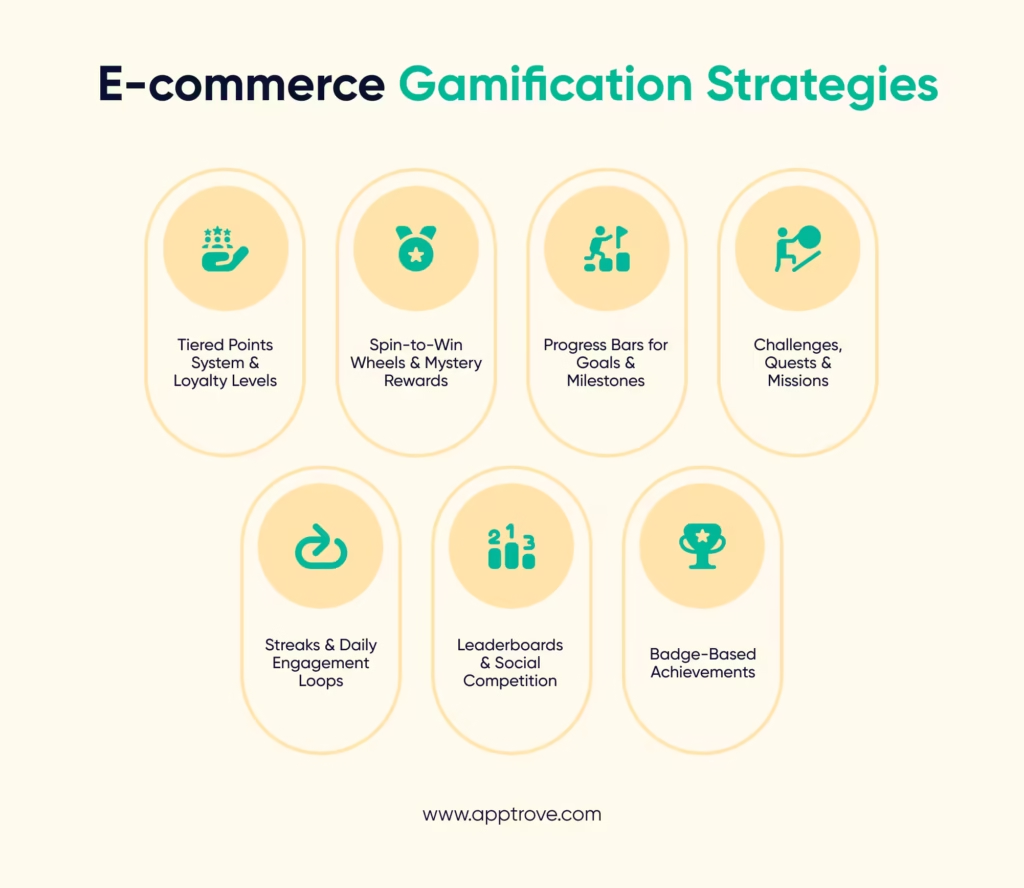
Tiered Points System & Loyalty Levels
Develop a scheme of multi-tiered loyalty (e.g., Bronze – Silver – Gold). This promotes status and benefits chasing, driving up lifetime value. The more users get, the more perks of higher value they should be rewarded with.
Spin-to-Win Wheels & Mystery Rewards
The addition of spin-the-wheel or scratch-card functionality provides the user with a certain feeling of randomness and unexpectedness. These are particularly productive during checkout times, when one offers a chance to win something in return for making a purchase. The thrill aspect gives them repeat business.
Progress Bars for Goals & Milestones
Even basic milestones (e.g., 20 dollars to free shipping) are transformed into aspirational targets with a visual progress bar (ex, 4 purchases to unlock a reward). This is making a subtle push towards a customer to add more cart value or return to complete tasks.
Challenges, Quests & Missions
Create mission-based experiences: “Purchase two items within a week, 3 reviews, Check in daily. These generate a storytelling effect. Users should be rewarded with points, badges, or special offers when they accomplish tasks.
Streaks & Daily Engagement Loops
Promote streak mechanics on a daily or weekly basis. Streak models cause a psychological incentive: users would not wish to interrupt the streak. This is especially effective in mobile apps as a retention strategy.
Leaderboards & Social Competition
Incorporate social mechanics, allow users to compete on metrics like referral numbers, purchases, or reviews. Use leaderboards and shared achievements to fuel community and retention. According to OkMG, gamification helps brands build a sense of community and belonging.
Badge-Based Achievements
Provide badges or levels on milestones reached by the user: first purchase, number of referrals, and number of reviews. The status and recognition these badges indicate are strong motivators.
Why E-commerce Gamification Is a Strategic Advantage
Data-Driven Insights
All communication with a gamified system is also traceable. Rewards gained, levels achieved, spins taken – all these are data that help to know how customers behave. As The Pursuit Agency notes, gamification provides deep information about consumer behavior, thus allowing campaigns to be targeted with accuracy.
The tracking and analytics capabilities of Apptrove can exploit these engagement indicators to assist product teams in streamlining and optimizing their gamified experiences.
Habit Formation = Lifetime Value
Gamification does not only focus on a single sale. Customers are forming habits when they are participating in missions, streaks, and progression. This makes casual shoppers become repeat customers and brand ambassadors.
Psychology-Driven Revenue
Human beings react to success, rivalry, and unexpectedness. With proper organization of your rewards, challenges, and levels, you are not merely providing rewards but initiating strong psychological motivators that will make people buy.
Brand Differentiation
In a crowded e-commerce ecosystem, gamification gives you a unique, experiential layer. According to Ecommerce Fastlane, leveraging gamification techniques is becoming a key differentiator for brands.
Retention Gets Built Into the Experience
Gamified mechanics are not transactional, as opposed to transactional coupons. They ask their customers to remain, interact, and develop with the brand; thus, retention is a byproduct of a well-developed system.
Challenges & Common Pitfalls (And How to Escape Them)
As powerful as e-commerce gamification is, it is not riskless. The following are some of the pitfalls and how they can be avoided:
Gamification Fatigue
Constant bombardments of either challenges or rewards will cause the user to feel overwhelmed or bored. There is the threat of creative fatigue as noted by research (e.g., JIRASet review).
Solution: Find rotation, provide time-limited tasks, and shelve non-performers.
Poor UX Design
Unfit game mechanics may be off-putting or puzzling. Huge reward systems or incomprehensible progress bars intimidate users.
Resolution: Have simple, clear, and unobtrusive mechanics built into the shopping process.
Misaligned Rewards
When you do not appeal to your audience in terms of rewards, then there is a possibility of low participation.
Solution: Segment the users using data (through Apptrove or any other tools) and provide rewards according to the personas.
Privacy Concerns
Gamification tends to involve the monitoring of user behaviors. The customers can protest when they believe that their information is being misused.
Solution: Be open, embrace opt-ins, and explain the use of data.
Overemphasis on Freebies
When users sign up because of the freebies, they will have a tendency to churn after the offer expires.
Resolution: Add value-based interaction with incentive-related mechanics (e.g., levels of status, quests) so that loyalty is not based on discounts only.
Why Apptrove Is the Ideal Partner for Your E-commerce Gamification Strategy
E-commerce gamification through Apptrove goes beyond simply offering different games; the key to success in this area is through developing a strategic approach to gamification with data at the centre and an emphasis on growth.
The data collected is used to better understand customer behaviour, for instance: which customers are ‘spinning’ wheels, completing specified challenges, and redeeming points, and at what times.
Apptrove enables merchants to segment their users into specific reward journeys that will maximise the lifetime value (LTV) of the user. Therefore, through the use of Apptrove tracking and attribution capabilities, merchants can measure the precise amount that gamification contributes to retention, repeat purchases, and engagement metrics.
Continuous experimentation with gamification capabilities is encouraged through Apptrove’s gamification platform. Merchants have the option of testing various types of missions, reward programs, seasonal mechanics, and so on to optimise what truly impacts the business.
Gamification becomes a viable and scalable growth lever for organisations by combining Apptrove’s attribution and analytics with e-commerce gamification.
Conclusion
E-commerce gamification is no longer a novelty; it’s a high-leverage strategy to drive engagement, retention, and higher sales. By combining the playful power of game mechanics with the data-driven insight of Apptrove, you can not only delight your customers but also build a sustainable, growth-oriented business. So, if you’re ready to level up your e-commerce experience, it’s time to think beyond plain discounts and start playing to win.
FAQs
Q1: What is the difference between e-commerce gamification and a regular loyalty program?
While both reward customers, e-commerce gamification uses game mechanics (points, levels, challenges) to drive behavior, not just purchases. Gamification is interactive, often surprise-based, and designed to foster engagement, not just transactional loyalty.
Q2: Will gamification really increase my conversion rates?
Yes, studies show that well-implemented gamification can boost conversion rates significantly. For instance, integrating badges, progress bars, or spin-to-win mechanics has helped businesses drive up to 15–50% in conversions.
Q3: Can small e-commerce brands benefit from gamification, or is it just for big players?
Absolutely. Brands of all sizes can implement basic gamification like progress bars, streaks, or simple missions. With Apptrove’s analytics, even smaller stores can design and test effective gamified flows that deliver ROI.
Q4: How do I avoid gamification fatigue among my users?
Rotate your game mechanics, set mission expiry periods, and use data to retire low-performing challenges. Segment users so that not everyone sees the same missions, and optimize frequency based on engagement signals.
Q5: How much does it cost to implement e-commerce gamification?
Costs vary based on complexity. Simple progress bars or points systems are relatively inexpensive, while spin wheels, quizzes, or competitive leaderboards may require more development. However, when combined with Apptrove’s analytics, you can measure ROI closely, making the investment more strategic and justifiable.