
India’s digital lending industry is experiencing rapid growth. The number of people utilising their smartphones to obtain instant credit is growing at an incredible speed around the country, even in small towns and villages. For this reason, Chinese loan apps in India are exploring ways to get into the market and offer their products to Indian users.
China has developed one of the most mature fintech ecosystems in the world, boasting electronic companies such as Ant Group, Tencent, and JD Digits that are highly sophisticated and possess considerable experience in mobile lending, AI credit scoring, and real-time approvals. This makes it a great opportunity for any prospective Chinese fintech to develop legitimate and responsibly driven fintech strategies in India.
However, India is a complex market; a successful entry into India’s lending market depends on compliance with myriad financial laws, data privacy protections, and building trust with local users. This blog will discuss the keys to entering India’s lending market, risks to avoid, and compliance with India lending laws. Also, how Apptrove can help these apps with their advanced features like real-time fraud detection, SKAN analytics and user behavior tracking.
Why India is an Attractive Market for Chinese Loan Apps
The Indian market has significant potential for Chinese loan apps in India:
- Rising credit demand: Many Indians, mainly young people and small business owners, want short-term loans, but traditional banks have denied them. Digital lending is filling the gap.
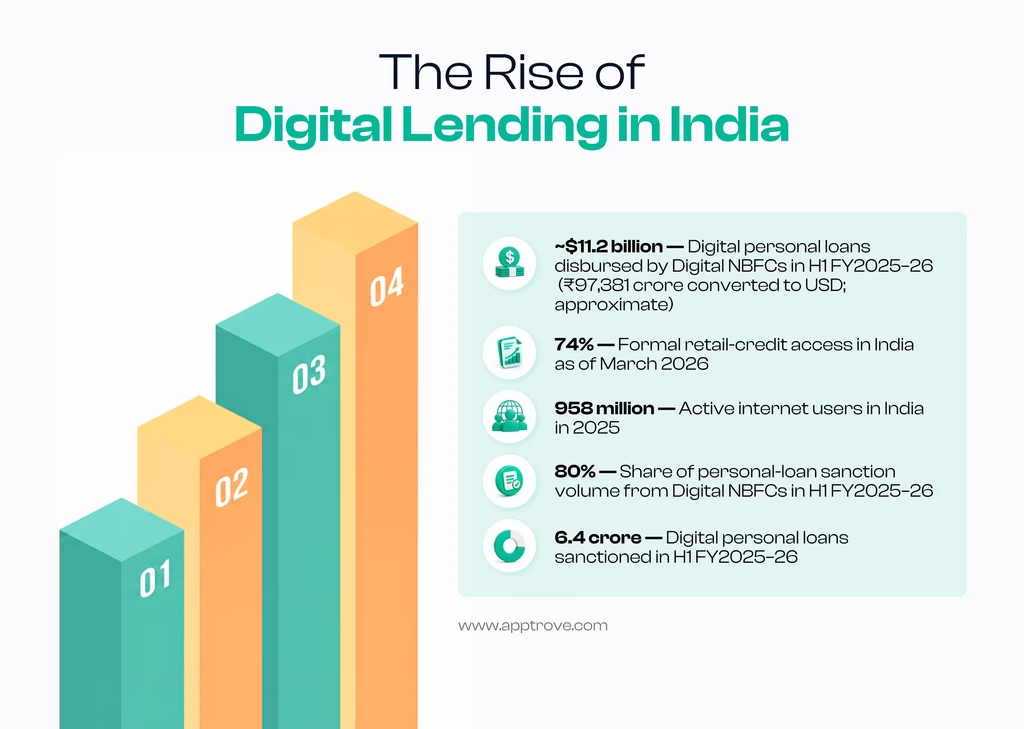
- Strong digital infrastructure: India has over 950+ million internet users, and UPI, Aadhaar, and e-KYC enable easy offering of online lending services.
- Low competition in Tier 2/3 cities: Many Indian towns remain underserved. Local fintech cannot meet all the demand.
For these reasons, India is one of the most attractive markets for Chinese fintech players to grow outside of China.
Regulatory Requirements for Chinese Loan Apps in India
To be legal, Chinese loan apps in India must abide by certain regulations issued by Indian regulators.
RBI Licensing
The Reserve Bank of India (RBI) is the de facto bank that regulates all lending. If a business wants to lend in India, it needs to:
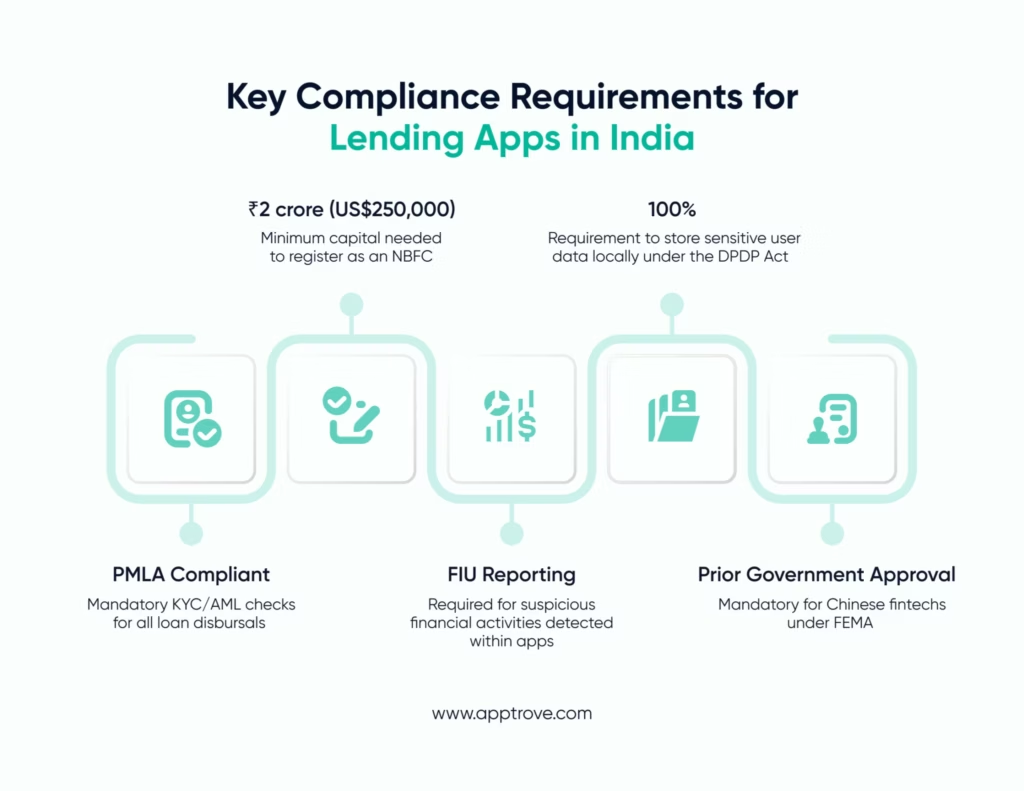
- Register as a Non-Banking Financial Company (NBFC) – this requires having the minimum capital of ₹2 crore (US$250,000) and a due diligence check.
- Register as a P2P lender – if it connects lenders and borrowers without using its own money, P2P registration is needed.
No lending is legal in India without approval from the RBI.
Know Your Customer (KYC) and AML Requirements
In order to combat fraud and money laundering, the RBI is going to require strong KYC and AML controls to be utilised for payment apps.
All apps will be required to establish and verify a user’s identity for KYC. This can be achieved through the use of Aadhaar reference number, PAN, or passport. Payment apps are required to report to the FIU (Financial Intelligence Unit) any suspicious transactions reported from the users. Payment apps are required to comply with the rules under the Prevention of Money Laundering Act (PMLA).
This compliance becomes extremely important as all Chinese fintech India operators who are going to work and intend to remain in the Indian market for the long term must comply.
Data Privacy and Localization
India’s new obligations under the Digital Personal Data Protection (DPDP) come with responsibilities and user consent requirements.
- Operators must obtain user consent before collecting any personal or financial information.
- Operators must use the data and explain to users why the data was collected.
- Operators must keep sensitive financial data in India.
Many of the Chinese Apps that have operated in India in the past have been blocked due to bad data practices, permissible data, and use protocols. Implementing strong data governance is achieved to negotiate the Indian market.
Foreign Investment Rules
India’s Foreign Exchange Management Act (FEMA) provides oversight for all foreign investments. If a Chinese fintech India company wants to invest in Indian financial services, then the company must secure prior approval from India’s government to invest.
All sectors of the fintech industry carry respect to national security, and certain sectors are for sensitive reasons. If the Chinese company fails to secure the prior approval, then it may prohibit or block the payment app from operating in India.
Strategy for the Chinese Loan Apps in India to Enter the Market
Entering the lending market in India is challenging for anyone, let alone new technology-driven players. It requires a more comprehensive strategy across the legal, business, and cultural aspects. For any business operating a Chinese app loan platform, understanding India’s regulatory, financial, and cultural landscape is essential before launching:
1. Establish a Local Entity
Circa 2018, for a foreign company to lend to customers in India, they needed to form a private limited company in India, obtain the requisite RBI license, have Indian directors, and open a local office. The aforementioned steps built significant trust with regulators and users alike.
2. Partner Locally
Partner with Indian banks, Non-Banking Financial Companies (NBFCs), or fintech incubators. Partnerships can provide speed to scale while you learn about local market needs.
3. Localize the App
A Chinese loan application entering India cannot simply replicate its existing product. India is a complex, diverse market. Your app needs to provide services in several regional languages, use local currency units, and have repayment terms that suit Indian salaries and expense profiles.
4. Integrate Technology
Make use of the Unified Payments Interface (UPI) for loan disbursements and repayments. Leverage the Account Aggregator framework to access better credit scoring. Technology in India has different standards, but you need to respect the standards and comply with their open API requirements.
5. Remain Compliant
Make sure your processes are auditable and audited on a timely basis. Stay up to date with RBI notifications. Report regularity and data submissions within the timeframe to stay compliant and respond quickly to regulators.
Following all of the above, Chinese loan apps in India will be able to provide safe and useful credit to millions.
Key Challenges for Chinese Loan Apps in India
Compliance Volatility
RBI has quick access to change laws. Apps need to be nimble to ensure they can make adaptations to stay compliant with Indian lending regulations.
Public Trust and Reputation
After multiple Chinese apps were banned by the government in 2020, Indian users are sceptical about Chinese apps. To establish themselves with Indian users, Chinese fintech Indiaplayers have to operate in a transparent manner, communicate fairly, and comply with the law.
Competition
Established Indian fintechs like Paytm, KreditBee and LazyPay already have a market, users. Any new app will have to differentiate itself by providing some comparative advantages, i.e. lower rates, quicker approval, or better customer support.
How Apptrove Can Help the Chinese Loan Apps in India
In the case of Chinese loan apps in India, success comes down to two things: knowing the user and staying legal. Apptrove makes both of those a lot easier.
Apptrove offers:
- Real-time fraud detection
- User behaviour tracking
- Marketing ROI (ROAS) and SKAN measurement
Privacy-focused analytics, which can keep you in compliance with India lending legislation
Apptrove is important for Chinese fintech companies in India when expanding or testing new markets. That way, you can stay compliant and enhance the user experience at the same time!
Conclusion
India’s lending market is large, growing, and flooded with opportunities. Chinese loan apps in India can work here, but only when rules are followed. Those rules range from RBI licensing, through to data protection and foreign direct investment laws, so all parties must get it right!
Companies also need to think and work locally with regional languages, local Indian partners, and use UPI and other forms of local payment systems. With a strong strategy, robust governance, and verification through a trusted third-party provider like Apptrove, Chinese fintech in India, for sure, fintech in India can create a lasting digital lending platform.
FAQs
Are Chinese loan apps legal in India?
Chinese loan apps are not automatically prohibited simply because they originate from China. However, lending activities in India are subject to applicable RBI regulations, licensing requirements, data protection obligations, KYC and AML requirements, and foreign investment rules. Any business planning to operate in India should obtain appropriate legal and regulatory advice before launching.
Can a Chinese loan application operate in India?
A Chinese loan application can only operate within India’s applicable legal and regulatory framework. Depending on the business model, this may involve working with a regulated Indian lending entity, meeting RBI requirements, complying with KYC and AML obligations, and following India’s data protection and foreign investment rules.
What are the main challenges for Chinese loan apps entering India?
The biggest challenges include regulatory compliance, data governance, foreign investment restrictions, establishing consumer trust, localization, and competing with established Indian fintech platforms.
Do Chinese loan apps need an RBI license in India?
Whether an RBI registration or license is required depends on the entity’s lending model and role in the lending process. Businesses should determine the applicable regulatory framework and work with an appropriately regulated lending partner or entity where required.
What should a Chinese loan app do before entering India?
Before entering India, a Chinese loan app should assess its regulatory structure, establish the appropriate local partnerships or entity, understand foreign investment requirements, implement KYC and AML controls, localize its product, and establish strong data governance.
Why are Chinese loan apps interested in the Indian market?
India’s large digital user base, growing demand for digital financial services, expanding fintech ecosystem, and increasing adoption of digital payments make the country an attractive market for international fintech businesses.