
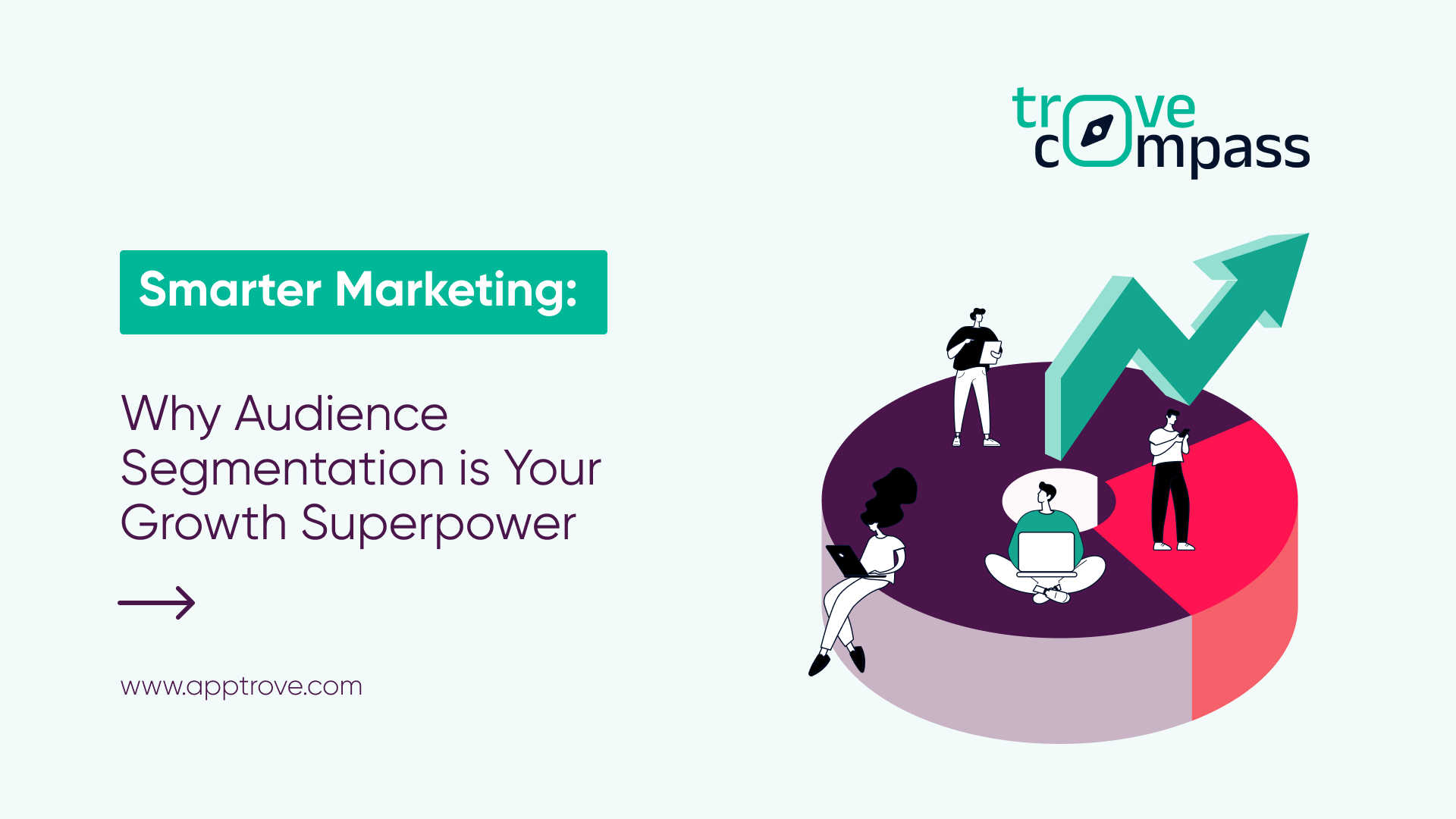
Smarter Marketing: Why Audience Segmentation is Your Growth Superpower
Hey, there, marketer,
Not all users behave the same. Some open your app every day, others only on weekends, and a few disappear after just one interaction. If you send them all the same message, chances are it won’t land. What you need is smarter targeting — and that’s where audience segmentation comes in.
Here’s a stat to keep in mind: 80% of consumers are more likely to buy from brands that offer personalized experiences. In today’s hyper-competitive app space, personalization is no longer optional; it’s your competitive edge.
What is Audience Segmentation Marketing?
Audience segmentation is about precision. Instead of treating your audience as one big block, you break it down into smaller, meaningful groups based on shared traits like demographics, behaviors, location, or values.
This helps you avoid generic campaigns and instead deliver hyper-relevant messages. Imagine a fitness app: sending the same push notification to both yoga lovers and weightlifters won’t work. But if you tailor a message for each group, it feels personal, timely, and far more effective.
That’s the real difference: you stop broadcasting and start having conversations.
Why Segmentation is Essential
Marketers often have endless data but lack clarity. Segmentation bridges that gap. When you truly know your audience, your campaigns become sharper and your spending becomes more efficient.
The benefits go beyond marketing:
- Higher engagement – users react more to personalized campaigns.
- Stronger conversions – behavioral triggers (like abandoned cart reminders) drive action.
- Improved retention – users stick around when they feel understood.
- Better ROI – every dollar goes to the right audience at the right time.
In other words, segmentation isn’t just nice to have — it’s survival in today’s crowded app ecosystem.
Five Powerful Segmentation Examples
- Demographic Segmentation
Age, gender, income, or occupation.
Example: A fintech app might design different campaigns for young users starting their financial journey vs. older users planning retirement. - Behavioral Segmentation
Based on actions like purchase history, app usage, or engagement.
Example: Streaming apps recommend content based on your watch history; e-commerce apps send abandoned cart alerts. - Geographic Segmentation
Tailor messages by location.
Example: Food delivery apps highlight breakfast deals for commuters in cities and late-night snacks for students in college towns. - Psychographic Segmentation
Goes deeper into values, attitudes, and motivations.
Example: A meditation app can segment users who want stress relief vs. those looking for better sleep, and serve each with personalized content. - Technographic Segmentation
Based on device or platform usage.
Example: Gaming apps may find iOS users spend more on in-app purchases, while Android users engage more with free-to-play options.
Read The Blog
Apptrove Update Highlights
-
Partner Segmentation in Audience: Instantly target and analyze users by specific media sources for faster targeting, cleaner reporting, and better budget optimization.
-
ARPU & ARPPU on Dashboard: Track Average Revenue Per User and Average Revenue Per Paying User at a glance for immediate clarity on monetization.
-
Stronger Together: Combine segmentation and revenue insights to identify high-value partners, optimize campaigns, and drive smarter growth—saving time, reducing waste, and increasing ROI.
Not all users are the same. Learn how segmentation makes your campaigns personal, effective, and ROI-driven.
Preview Text This will be used as the preview text that displays in some email clients