The OTT video advertising market is bigger than ever, driven by the rapid growth of streaming services, with a market volume of over US$189.6 billion in 2024.
This makes OTT and CTV advertising a lucrative avenue for advertisers and mobile app publishers alike in the broader digital advertising ecosystem. Even then, most marketers don’t realize the potential this emerging advertising medium offers in revenue and reach across subscription models and ad-supported platforms, especially as OTT/CTV trends continue shaping the future of digital advertising.
Let us cover the basics of OTT vs CTV before going into deeper detail on how they are different and the benefits they offer for publishers.
OTT vs CTV Explained: Understanding the Two Pillars of Modern Streaming Advertising
OTT or Over-The-Top refers to video on demand (VOD) content delivered over the internet, including subscription video on demand (SVOD) and ad-supported video on demand (AVOD) models. Users can access OTT content seamlessly on devices that support apps using the internet, bypassing traditional linear TV and accelerating cord cutting (also known as cord-cutting).
Popular OTT platforms and content providers include Netflix, Hulu, Disney+, YouTube, HBO Max, and Peacock, which act as large-scale content aggregators offering licensed libraries through content aggregation and content licensing agreements.
On the other hand, CTV or Connected TV refers to the streaming devices on which OTT apps run, including smart TVs, gaming consoles, and media players such as Roku, Apple TV, Amazon Fire TV, and Google Chromecast. Simply put, CTVs are the hardware layer enabling OTT consumption.
OTT or Over-The-Top refers to streaming content – audio, video, and text – using the internet. Users can use OTT to access content easily and seamlessly on a device that can run apps using the Internet. A few popular examples of OTT include Hulu, Netflix, YouTube, and Spotify.
The Evolution of OTT and CTV: From Cable Television to a Streaming-First World
The evolution of CTV and OTT is closely tied to the rise of internet protocol television (IPTV) and widespread internet access. Consumers shifted from traditional television networks to interactive TV experiences delivered via connected devices.
The transition from cable television to set-top boxes laid the groundwork, but the widespread adoption of smart TV platforms and OTT apps changed how content distribution works. By 2019, competition between OTT platforms intensified as ad-supported streaming and subscription offerings expanded.
As platforms matured, selling ad inventory became inevitable. Advances in programmatic advertising, advertising technology, and audience targeting enabled advertisers to reach viewers with greater precision while improving user engagement and user experience (UX).
Benefits and Challenges of OTT and CTV Advertising in a Fragmented Streaming Ecosystem
Here are some of the primary benefits associated with OTT and CTV advertising:
- Access to a growing, cross-device audience
- Improved audience measurement and cross-platform measurement
- Cost-effective reach through advertising-based video on demand (AVOD)
- Accurate attribution using data analytics
- Increased flexibility across content distribution channels
We’ll discuss the aforementioned benefits of OTT and CTV advertising in detail later in this article. For now, you should also know about the following challenges associated with this advertising strategy:
- Steep learning curve and knowledge gaps: OTT and CTV advertising is still a developing space, and can confuse even the most modern marketers. There are knowledge gaps in navigating interactive advertising formats. It is good to keep an eye on this space and get a better understanding of navigating omnichannel advertising and video placements.
- CTV ads are not clickable: To get the most out of CTV ads, you must focus on delivering tailored advertisements to the right people at the right time. Moreover, since these ads are not clickable, avoid running ads that drive users to interact with the ad.
- Potentially lower engagement levels: Users can not skip CTV ads, which means you can definitely communicate your marketing message successfully but also risk losing the users’ attention and lowering engagement levels and user experience.
OTT vs CTV Advertising: What’s the Difference?
Now that we have looked at some of the primary benefits and challenges associated with OTT and CTV advertising, let us delve into the differences between the two approaches.
Sophisticated Targeting Techniques
Whether you opt for OTT vs CTV advertising, you can leverage advanced targeting capabilities and run contextual advertisements. The only difference is that you can fully utilize advanced advertising strategies on multiple devices when you opt for OTT advertising whereas CTV advertising will work on limited devices such as smart TVs.
When advertising on OTT, you can attempt to get a lot of success by boosting click-through rates, however, CTV ads are not clickable yet. So, CTV ads have to rely on QR code marketing, immersive formats and contextual messaging rather than direct clicks, aligning with evolving interactive TV consumption patterns.
Ad Formats
The ad formats and creatives used for CTV and OTT advertising can also vary as publishers on OTT platforms tend to have much more flexibility in exploring different ad formats. CTV ads are generally between 30 to 60 seconds and are designed to perform well on TV screens.
On the other hand, OTT ads are designed to perform well on various devices such as mobile phones, tablets, and desktop computers. OTT platforms support flexible ad formats aligned with interactive advertising, enabling experimentation across devices while maintaining strong user engagement.
Pricing Models in OTT and CTV Advertising: How Platforms Monetize Content
As a publisher, it is important to be aware of different kinds of pricing models on CTV and OTT platforms so that you can decide where to advertise.
CTV Pricing Model
Demand Side Platforms or DSPs are platforms that bring an array of potential buyers and publishers looking to fill ad spaces together using programmatic advertising, and manage real-time bidding for these parties. CTV ads require advertisers to buy programmatically through these DSPs and appear on the channel’s websites.
OTT Pricing Model
When it comes to advertising, there are multiple pricing models that OTT publishers can consider while improving monetization for content providers. Here are some that you should know about:
- SVOD (Subscription Video on Demand): Considered the most premium-tier pricing model, the SVOD model entails the user paying a subscription fee to access content without advertisements. OTT platforms can enjoy a steady revenue stream with this model.
- TVOD (Transactional Video on Demand): In a TVOD model, the users need to pay a fixed fee to access specific content on the platform without having to pay for a subscription.
- AVOD (Advertising Video on Demand): Most OTT platforms today prefer opting for an AVOD pricing model, which lets users access content for free and generates revenue through advertisements.
- Hybrid: Publishers can also opt for a combination of the aforementioned pricing models so that users can choose the option most feasible for them. This hybrid pricing model opens up your OTT platform to a wider audience.
Tracking, Measurement, and Analytics: How OTT and CTV Measure Ad Performance
Regardless of the similarities between the two approaches, CTV and OTT advertising take different approaches to measuring the effectiveness of advertising campaigns.
To measure CTV ads performance, platforms need to rely on metrics such as fill rates and viewability that offer a more detailed view of your campaign performance, but the exact metrics depend on the platform.
On the other hand, you OTT platforms benefit from advanced data analytics, audience measurement, and cross-platform measurement tools. You can measure OTT ads performance with the help of several metrics of your choosing. Most OTT publishers depend on robust third-party measurement tools and attribution platforms like Apptrove to measure advertising campaign performance.
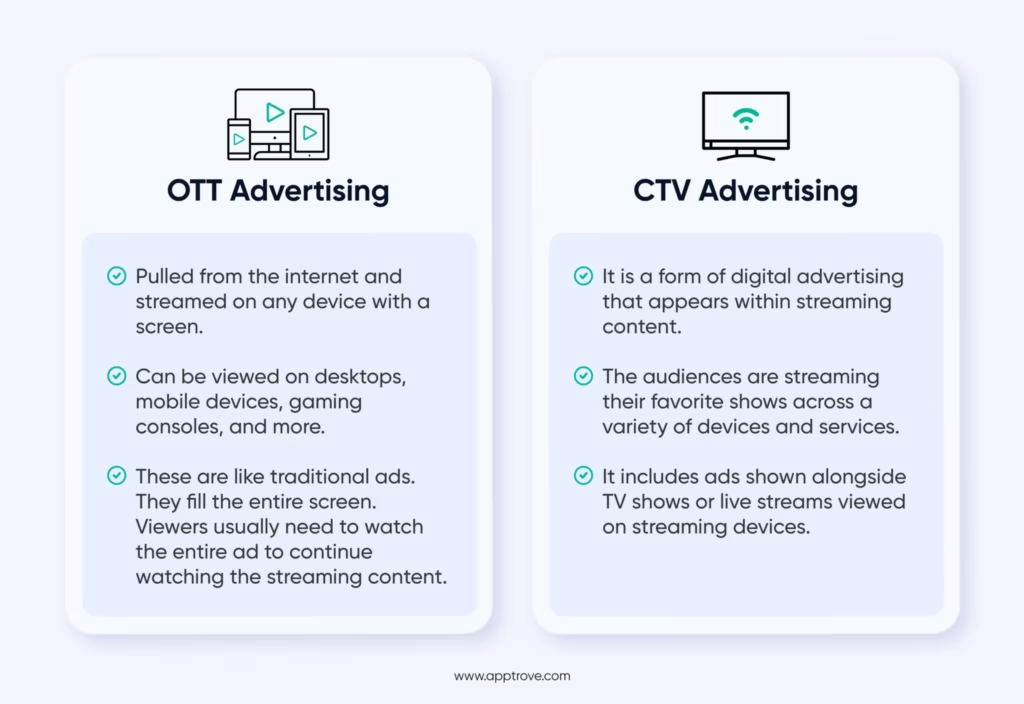
Here’s a TL:DR to understand the differences between CTV and OTT advertising more easily:
Why Should Mobile App Owners Care about OTT and CTV Advertising?
Now that you know the pros, cons, and differences associated with OTT and CTV advertising, here are some benefits that make it important for mobile app owners to consider these in-app advertising approaches:
Growing App Audience
While most households today have at least one CTV to stream content on, it is important to know that your target audience is streaming content on their mobile phones just as much.This creates opportunities to engage users across OTT apps, streaming services, and CTV environments simultaneously.
As an OTT publisher, you can leverage this growing base of engaged audience, and generate revenue by displaying highly tailored advertisements. As per a CTV trends report in 2023, 98% of brands think CTV ads will overtake mobile advertising with increased engagement levels, new audiences, and higher LTVs.
Flexibility
OTT advertising not only lets you reach users on multiple devices but also gives publishers more flexibility in terms of ad placement and timing, improving user experience while enabling efficient programmatic advertising execution. Publishers can even choose ideal timings customized as per different platforms and devices to maximize advertising revenue.
Since you will leverage programmatic technology to automate OTT advertisements, you can optimize audience engagement and ensure that interested users take a step further toward conversion.
Hyper-Targeting Capabilities
OTT and CTV advertising can add inimitable hyper-targeting capabilities to your advertising campaigns. With these advertising approaches, you can deliver hyper-targeted TV and OTT ads to specific households depending on their interests, digital viewing preferences and habits, and demographics.
While traditional TV advertisements focus on displaying marketing messages to the masses only to impact a few, the OTT and CTV advertisements ensure that your ad investment is targeted at people likely to be interested in the offering.
Cost-Effectiveness
The hyper-targeting capabilities of OTT and CTV advertising make them a cost-effective advertising strategy with the potential to deliver a high ROAS. When running highly targeted OTT and CTV ads, you will also need fewer of them, thus bringing down your ad costs.
Digital programmatic advertising running OTT and CTV ads can also offer you a lower minimum cost threshold, and cheaper cross-platform blended CPMs. As a result, CTV and OTT ads contribution to digital ad spend is usually on the higher side.
Attribution Measurement
Only the right mobile app analytics and metrics can determine whether a specific advertisement campaign is a success or failure. With the help of the metrics that OTT and CTV advertising can let you measure, you can better track and optimize your advertising campaigns.
With the help of the right measurement and mobile attribution tools, you can also track the sources of ad revenue through OTT and CTV advertising more accurately.
Navigating OTT and CTV Advertising with Apptrove: From Attribution to Optimization
With Apptrove, you can not only attribute the success of your mobile app advertising campaigns to the right sources but also track and monitor them in real-time. Here are some of the features that make Apptrove the perfect tool to manage your OTT and CTV advertising efforts:
Prevent Ad Fraud
Ad fraud in CTV and OTT advertising is a persisting challenge, but integrating Apptrove into the process can help you prevent it effectively. Apptrove can help you safeguard your ad campaigns against fraud by implementing custom fraud shields for each campaign and protecting your ad spend with multi-layered fraud protection.
You can also set and optimize all your fraud prevention and validation rules from a single dashboard to track and get notified about any fraudulent activity that can cause campaign losses.
Granular Audience Segmentation
With Apptrove, you can create branded links to personalize your creatives and messaging across channels. You can get valuable insights and intelligence into users and their engagement levels through deep linking, and create highly targeted audience segments.
You can also design and unify complex user journeys with multiple touchpoints by embedding deep linking into ads, QR codes, and affiliate links. Combine all these features to create laser-focused audience segments where your ads always hit the mark.
Boost User Engagement
Apptrove helps you get deeper insights into advertising campaigns with the help of Unilinks which can provide information about every conversion an ad generates. You can track the in-app activity with custom events to identify the drop-off points for customers and maximize your conversions by targeting users with the right ads and messaging.
Summing Up
OTT and CTV advertising are complex to navigate even for experienced marketers but with a better understanding of the basics, you can create highly effective advertising campaigns and generate revenue from them. When used properly, you can generate higher revenue from the ads on your platform.
Apptrove is an in-app advertising attribution platform that helps mobile marketers and product managers like yourself track, monitor, and maximize advertising campaigns to generate more revenue from them. Start the free trial to experience the robust features and comprehensive dashboard provided by Apptrove.
FAQs
1. What is the main difference between OTT vs CTV advertising?
OTT refers to streaming content delivered over the internet (e.g., Netflix, Hulu), while CTV refers to the devices like Smart TVs, consoles, or sticks that play OTT apps.
2. Why should marketers care about OTT vs CTV in 2025?
With OTT revenues surpassing $189B in 2024 and CTV adoption booming, both channels offer unmatched reach, hyper-targeting, and measurable ROI compared to traditional TV.
3. Which is more cost-effective: OTT vs CTV advertising?
OTT often provides flexible ad formats and cross-device targeting, making it more cost-efficient for diverse audiences. CTV excels in premium TV-like experiences but at higher CPMs.
4. How do engagement levels differ between OTT vs CTV ads?
OTT ads are clickable and interactive across devices, boosting conversions. CTV ads aren’t clickable but leverage QR codes and immersive TV viewing to ensure strong brand recall.
5. How can businesses choose between OTT vs CTV for their campaigns?
It depends on campaign goals: use OTT for broader cross-device reach and measurable clicks, and CTV for household-level targeting, high-impact branding, and TV-quality engagement.