Why Progressive WebApp are Relevant in a Mobile-first World Today
The use of mobile devices has surpassed the use of computers as the most common way of finding, researching, and using digital products. However, along with this increase in mobile device usage has come an increase in the level of discomfort that users feel before they use a mobile device to download an application. Most likely, we’ve seen, even in our own behaviour, that it takes users longer to decide to download a new app than it does to uninstall a previously downloaded app due to limited storage space and privacy requests that can deter them from moving forward. Users are much more hesitant to download an app, and therefore, take a longer time to find a suitable application on their smartphone.
This shift in behaviour is reflected in performance data as well. Studies show that Progressive Web App (PWAs) can drive over 30% higher conversion rates compared to traditional mobile web experiences, largely because they remove installation friction while still delivering fast, app-like performance.
Also, the landscape of mobile applications has changed dramatically, and therefore, what a mobile application is and what to expect from a mobile application has shifted, resulting in users feeling more apprehensive about continuing to download new applications. There are now stricter privacy protections in place, and the limitations of obtaining device identifiers and obtaining user consent to use devices for tracking have placed additional burdens on application developers. With the introduction of these restrictions and the increase in caution among consumers, the likelihood of app developers acquiring new users through app store discovery has decreased significantly. While historically, having a presence in an application store was sufficient to guarantee new user increases, what was once true may not hold today.
The Progressive WebApp (PWAs) will not replace native apps, but rather enable users to use their mobile devices. The PWAs are similar to the Native Apps, as they allow users to have app-like services through the use of mobile devices. However, the benefits of using PWAs over Native Apps are that PWAs open the door to users before committing.
The performance of PWAs is important to consider. The performance of PWAs will be directly linked to whether users stick around or leave. Google has repeatedly demonstrated that the faster a user can load the content, will lead to greater user engagement and conversion rates will be, especially with mobile devices. PWAs were developed with this in mind, thus using new technology for the Internet to reduce the time it takes to load the content of the PWA and maintain a fast-loading user-experience for users, regardless of their internet connection.
In addition, PWAs match the modern way that users view on-demand, contextual information, and their right to privacy. Rather than requesting that the user install something, they can get some value before they decide to install it. This small shift changes the user and product relationship from one of acquisition to one of experience.
The way in which we measure engagement and attribution has also changed. Since PWAs exist between both the Web and app ecosystems, they provide a holistic perspective of a user’s journey from discovery through conversion. In the PWA model, engagement is measured over multiple channels, and businesses have a better understanding of how different touchpoints in the user journey interact across devices and sessions with the help of attribution platforms like Apptrove.
With speed, privacy, and the low attention span of mobile-first users, PWAs represent a natural evolution rather than a fad. They are intended for businesses prepared to engage with users who are curious yet cautious and do not wish to wait.
What is a Progressive WebApp, and How It Works
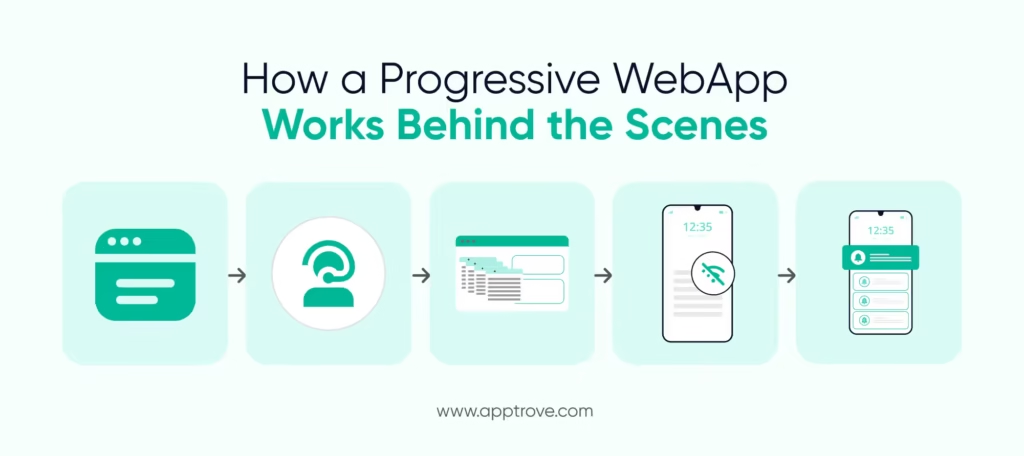
A Progressive WebApp (PWA) is a newer way of doing online things, and it’s basically a website with mobile app features built right in, eliminating the need for you to download anything from an app store. A PWA’s purpose is straightforward: provide a fast, dependable and enjoyable user experience – irrespective of the device or the network the user is using.
PWAs differ from traditional websites, which rely on the user’s consistent connection to the internet and exist within the browser tab. For example, users can launch their PWAs from their home screen, use them in full-screen mode and interact with them much like they would a native mobile app, which feels very similar. However, PWAs retain one of the main advantages of using the web – instant access via a simple link.
Progressive WebApp (PWAs) find themselves in a unique space in the digital world. They serve as a bridge between a normal website and an actual mobile app. This means that users have no obligation to download anything from an app store, but still experience a level of interaction that exceeds all expectations of a standard responsive website. Therefore, they are an exceptional way to provide users the opportunity to engage with your brand before they feel comfortable downloading your actual mobile app.
One of the most common misconceptions about PWAs is that PWAs are nothing more than a “cut-down” version of what a native app would be because they do not require users to visit an app store. The reality is that the greatest asset of a PWA is the ability to remove friction from the user experience. Users do not have to search for a product, download it, update it, or worry about how much storage space they have. Users can access your content instantly, without any barriers, on all available devices—mobile phones, desktop computers, and tablets.
Technologically speaking, PWAs are built to be both intelligent and durable. PWAs can quickly respond to user interactions and continue functioning even in situations where there is a limited or interrupted internet connection. It is this reliability that allows PWAs to provide users with an app-like experience without the complexity and costs associated with native mobile app distribution.
The structure of Progressive Web Applications makes this kind of web presence act like an application
It’s not a coincidence that PWAs mimic the feel of mobile applications on smartphones; this is because they have been designed to provide an optimal experience for users, while at the same time, the software is given life through architectural elements that keep the operation of providing mobile app-like experiences for mobile devices simple for the user and that require the software back end to have an enormous amount of complexity.
A major part of how PWAs can be achieved is through service workers, which function in the background and intercept requests to network providers for the content that an end user wishes to make use of, and determine whether to obtain the content immediately from a content provider or serve it to the requesting end user immediately from a cached source. Due to the service workers, PWAs will seem as if they have instantaneous loading times, as well as the ability to be accessed reliably, even in instances when the availability of the internet is limited or nonexistent.
This architectural approach has demonstrated measurable impact at scale. For example, Twitter Lite—built as a Progressive Web App—recorded a 65% increase in pages per session and a 75% increase in Tweets sent after adopting PWA technologies, highlighting how service workers, caching, and fast load times directly translate into stronger user engagement.
Also contributing to how PWAs are created is the app manifest, which is a very small yet powerful configuration file that controls how a given PWA appears on the mobile device where the PWA is to be run. The app manifest controls important information regarding the PWA, such as its name, icon, theme colors, and how users launch the application from their home screen, thus mimicking the process by which users can launch the app without the visual elements present within a traditional web browser and thus creating the sense of PWA users being able to experience app, similarly to users of native applications.
Progressive web app security is one aspect that underpins progressive web app architecture. Progressive web apps must be served through HTTPS, which provides secure connections between the app and the user. By using HTTPS for all web app communications, both the user and the web app are protected. The use of HTTPS as a security layer also allows for advanced functionality such as push notifications and background sync operations.
Caching brings all of these components together; progressive webapp don’t have to be re-downloaded, and the files are cached locally on a user’s device. The result of caching is quicker loading times, reduced bandwidth usage, and consistent performance. With a connection to background sync, the app can automatically update content or process items in the queue as soon as network access is re-established.
The way that users engage with progressive web apps is incredibly impressive because they never have to see all of this complex technology working behind the scenes. From their perspective, the app works fast, is reliable, and operates seamlessly. This means that users will only focus on the experience of using progressive web apps—and this is exactly what users of web and mobile platforms expect in today’s world.
What Progressive Web App Experiences Look And Feel Like A Native App
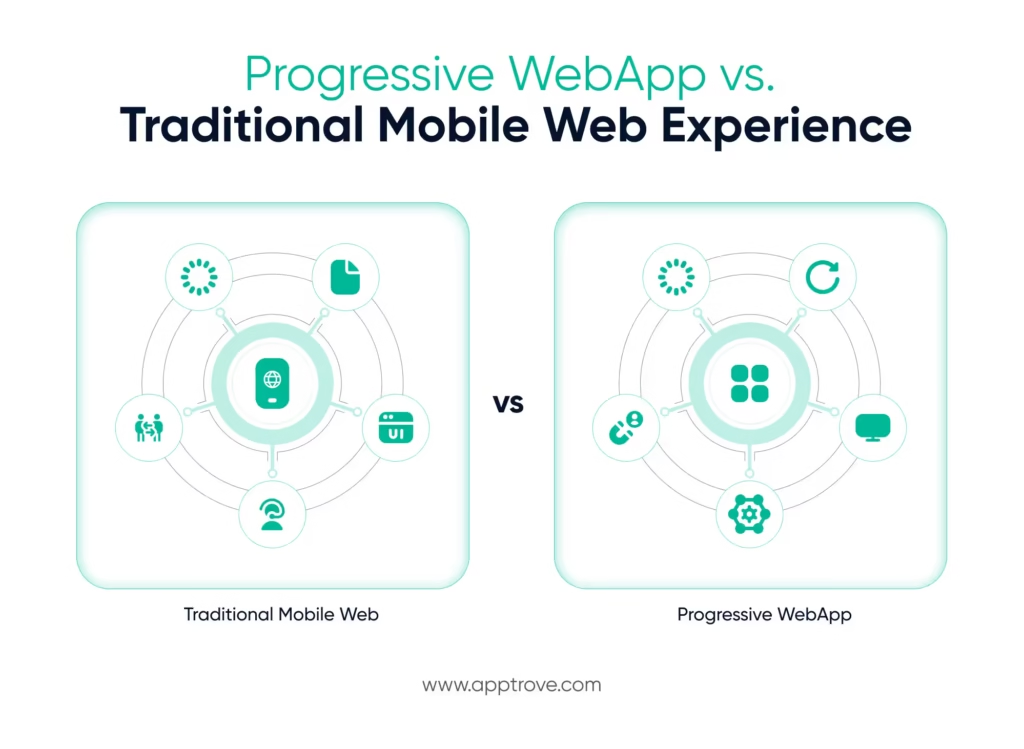
The main difference between a native mobile application and a Progressive Web App is how fast they load and how responsive they are. When users first use a Progressive Web App, they will be amazed at how quickly the application loads. Pages load nearly instantly, animations appear fluidly, and all interactions are immediate. This is especially important on mobile devices, where users have little patience for anything that appears to be slow or clunky. If an application feels sluggish to the user, it may lose them before they can even see what the application is capable of.
One of the main reasons that load speed is so important in terms of how users perceive PWAs is that the Progressive WebApp cache critical files and data. Thus, whenever customers want to return to the PWA, they don’t have to wait for the application to load the entire application over again. Instead, the customer simply opens the PWA, and the application appears almost instantly, even when the user has a less-than-ideal connection speed. The way the application works (the benefit of having cached files and resources) greatly enhances the continuity of the user’s experience with the Progressive Web App, as opposed to native mobile applications, where the customer would need to wait for all the resources to load prior to the application being available to be used.
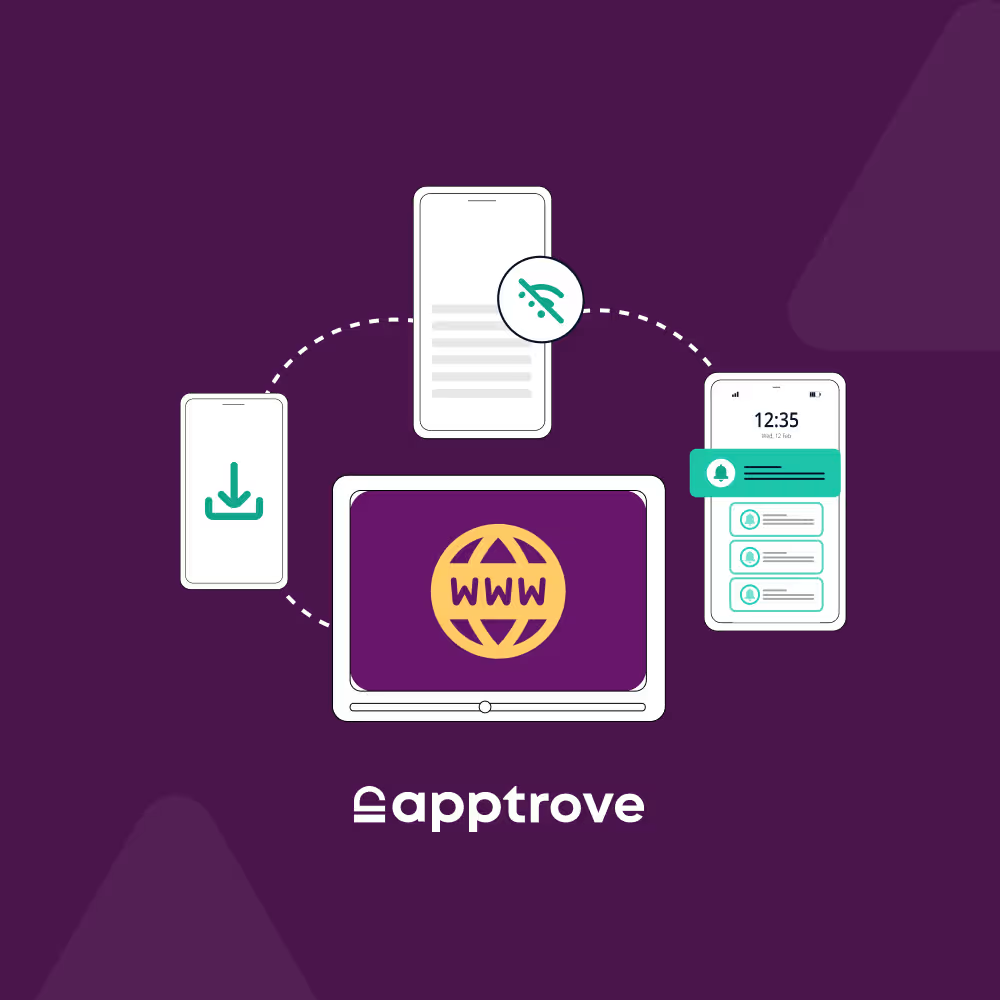
Adding installability is just one more thing that makes the Progressive Web App experience so special. PWAs allow you to add an app straight to your device’s home screen, without going through the app store! The experience is further enhanced by the fact that, when you launch a PWA, it will be in full-screen mode and you will have no distractions from your web browser.
This shift from a traditional web experience to an app-like interface has proven to significantly impact user behaviour. For example, after launching its Progressive Web App, AliExpress reported a 2× increase in pages per session and a 104% increase in conversion rates, demonstrating how installability and native-like interaction can build user trust and encourage deeper engagement.
This one simple step converts a typical web experience to something that looks and acts just like a “true” native mobile app with no downloads, installation permissions, and no need to worry about constantly needing to update the app.
The combined advantages of being fast, being able to switch between different apps easily, being present on the home screen, and being displayed in full screen result in a more “original” feel when using the app. And the best part? Using a PWA is indistinguishable from how the latest and greatest mobile apps work, which results in a strong level of trust from the user and gives them confidence when using a PWA.
How the Design of Progressive WebApp Provides an Improved User Experience (UX) with None of the Download Hassle
The principle of Progressive Web App design is simple but incredibly powerful: The first objective is to create value; the second objective is to ask users for commitment. As such, by allowing users to emerge from the app experience naturally, without being pressured to download it or grant permission, users can engage with their Progressive Web App experience immediately and interactively, and then return whenever they feel comfortable doing so. Therefore, this design philosophy significantly reduces friction during the important first impression of engaging with a new app.
This design philosophy also allows a quick, seamless first interaction. Users do not have to go through a download process to use the app after discovering it. Users will go directly from discovery to interaction once they click a link to the Progressive Web App. From that point on, the Progressive Web App will be responsive, fast, and fully functional, especially on a mobile device. This immediacy represents a critical step to reducing user abandonment, as the more steps there are before using the Progressive Web App, the more likely it is that a user will abandon the experience altogether.
The improvement of the user experience also depends on the consistency of the Progressive WebApp. The design of Progressive WebApp allows for a uniform appearance, feel, and interaction model across all devices and/or screen sizes, allowing users to have the same, familiar experience regardless of whether they return via mobile phone, tablet or desktop computer. This reduces the need for users to think about where they are in relation to their activity, helping to provide users with a better sense of direction when switching between devices.
Progressive WebApp also benefit from the inherent accessibility standards of the Web, while offering similar app-like features, including the ability to navigate with a keyboard, work with screen readers, and have adaptable layouts, to name a few. This means users face fewer barriers to entry, while businesses have an opportunity to reach a broader base of consumers without the complexity of managing multiple platforms.
Thus, removing excess baggage and needless difficulty associated with Progressive Web App design places user experience in a position of prominence. The ability to access content without having to load heavy applications does not equate to a decrease in the capability of users, but instead cultivates a heightened sense of usability for users. The result for users is an uncomplicated, satisfying, intuitive and oriented experience when using modern mobile technology.
How PWAs Impact Engagement and Retention
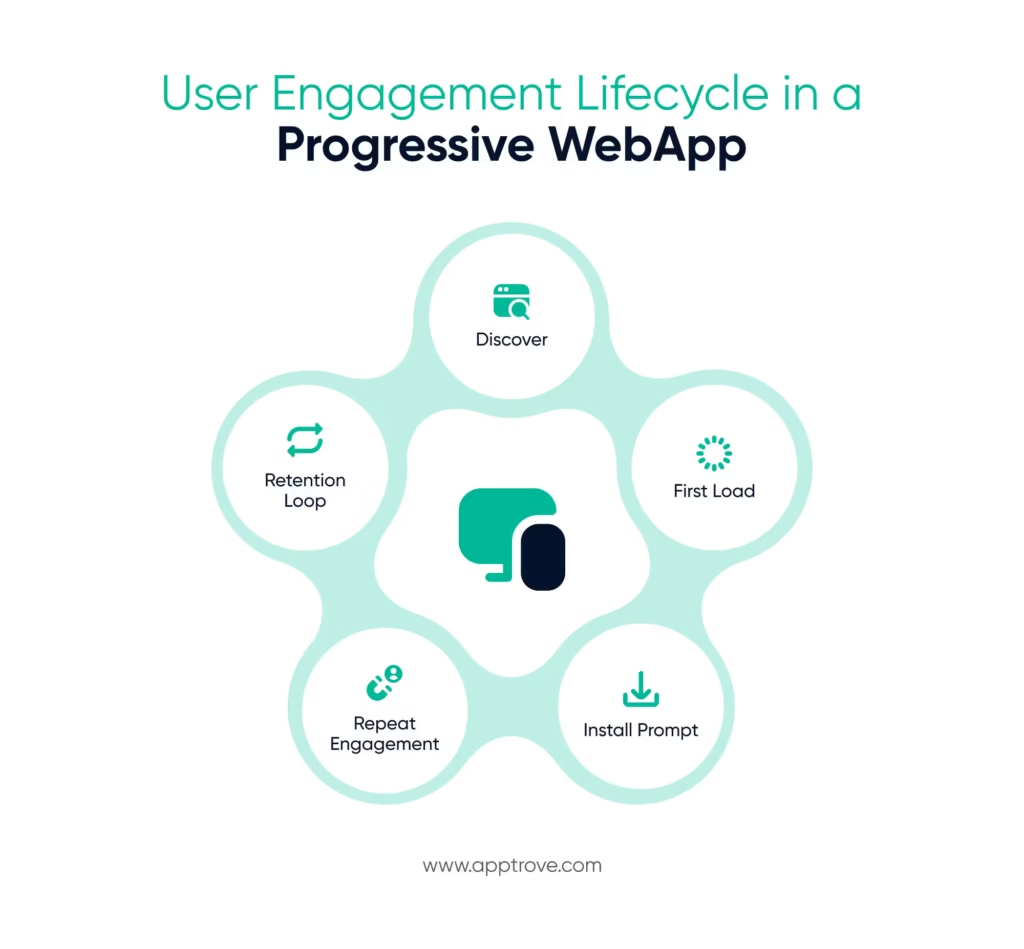
As they explore PWAs (Progressive WebApp), the first thing that comes to people’s minds is how easily they can engage with apps. People can explore the full experience without needing to download anything beforehand.
People are generally curious when they encounter something new. This curiosity drives them to explore, resulting in longer sessions and deeper engagement from the very first use.
The increased depth of sessions is a result of the way that PWAs are designed to keep users moving forward. This is accomplished through quick loading of content and smooth transitions between activities, which eliminates the need for users to pause, delay, or think about what their next steps will be. Therefore, instead of leaving after performing only one action, users are more likely to continue engaging with the app by taking additional actions like scrolling and/or tapping on various items within the app’s content, obtaining additional value along the way.
Repeat visits and higher user retention all share a common thread. Progressive WebApp (PWAs) are always available as links, and there’s no greater ease of returning to a PWA than after adding it to your home screen. With a PWA, you will never have to remember your login information, search for it in the app store, or manage storage on your device. All you need to do is return to it when you need it. Over time, the seamless and effortless access to your PWA will lead users into habitual use, without requiring any commitment.
This accessibility has proven to significantly impact engagement. After launching its Progressive Web App, Starbucks reported a doubling of daily active users compared to its previous mobile web experience, highlighting how frictionless access and consistent performance encourage repeat visits and habitual use. Over time, this seamless experience allows PWAs to become part of a user’s regular behaviour without requiring a formal commitment through native app installation.
Also, the bounce rate of users visiting a PWA is typically lower than that of native apps. This is because PWAs meet users’ expectations of modern mobile experiences with a quick-loading content experience, responsive user interaction, and an overall experience in which users don’t have to wait. When users have an experience that shows respect for their time and attention, they are much less likely to leave that experience too soon.
Also, the one-time best value of PWAs is the chance to engage with your future customers — specifically, PWAs give businesses the chance to engage with users FOR THEMSELVES, meaning brands are able to connect with users even if those users have not downloaded a native app. As a result, brands can maintain a continuity of engagement with users, even if they have not made such a commitment. This means that brands can create a stronger engagement loop in the regions where users have less desire to download an app traditionally.
Why Retention Models in Progressive WebApp Are Different From the Retention Models in Native Apps
In a Progressive Web App environment, the way that users are retained is not dictated by how badly a company wants users to install their app. Instead, retention is about creating a relevant moment in time for the user. Where a user may see an icon in the app store, Progressive WebApp, by design, bring users back for repeat visits through delivering value consistently and maintaining reliability within their mobile experience when they need it most.
The way users are re-engaged in Progressive WebApp is completely different from the way users are re-engaged in native apps. Progressive WebApp use browser notifications to create re-engagement opportunities, but those notifications require user permission to send, and thus, they are perceived as being less intrusive compared to traditional app push notifications. Because users have already opted in to receiving notifications after they have experienced value, they are likely to intentionally choose to engage with a Progressive Web App when they receive a notification, rather than simply responding to a notification due to habit.
The context of the return of the user is more critical in Progressive WebApp than with native apps. For example, the method used by the user to return to the Progressive Web App may include a search engine result, a hyperlink that was shared with them, or a homescreen shortcut to the Progressive Web App. This type of flexibility allows Progressive WebApp to provide an experience that is tailored to the needs of the user and, thus, meet them where they are instead of directing everyone to return to the same closed-off, single point of entry.
The reduced chance of being removed is also a significant advantage. Because a Native App might have been deleted due to limited space on the device, it is often not deleted because it hasn’t been used in a long time or is no longer needed, while Progressive WebApp are not limited to the device’s storage and thus do not run into these problems; they stay on the user’s device and can be used whenever needed.
The combined effect of this is to give a user a retention model that feels more “lightweight,” is more “flexible,” and aligns most closely with how users behave in real life. Progressive WebApp are not permanent; they earn their permanence based on the relevance, speed, and continual performance.
How to use Progressive Web App Strategies to Monetise Your Apps Sustainably
Monetising a Progressive Web App is an opportunity for businesses to create flexible, user-friendly solutions rather than solely relying on a restricted business model within an app store. Progressive WebApp enable businesses to determine how revenue will be generated by analysing their actual real-time user activities and needs. This way, monetising is not viewed as a requirement, but rather is part of the overall experience for users.
In-app purchases are generally the easiest form of monetisation to implement into a Progressive Web App. Through integrating modern and safe online payment solutions into their web apps, businesses allow end-users to purchase items with relatively quick transactions that will have fewer steps than a traditional in-app purchase. Another benefit of completing in-app purchases via website-based payments is that there are no redirections or multiple logins required, meaning that end-users remain engaged throughout the shopping process.
Progressive WebApp can also support subscription-based monetisation models. Businesses are able to implement subscription models gradually rather than immediately forcing them on consumers. By providing customers with a consistent value in their experiences over time before they see subscription models presented, businesses are better able to present their subscription options at the time when usage analytics show their subscribers are ready for an upgrade. Therefore, by presenting customers with options based on actual consumption data, businesses will be able to retain a larger percentage of subscribers over the long term.
Monetising Progressive Web Applications (PWAs) through the use of advertisements (Ad) blends seamlessly due to PWAs being fundamentally based on the web. PWAs utilising a browser as their interface allow for smooth integration of web-based advertising formats; performance is therefore not compromised within a PWA. When designed appropriately, advertisements support revenue by weaving into the content stream and not disrupting the user’s flow. As a result, this provides a positive user experience.
An additional benefit of PWAs is their cost-effectiveness; supporting a lower dependency on third-party providers or platforms lowers the costs of distribution and transaction fees; the potential exists to significantly reduce these costs. Though there are still some costs associated with operating a PWA, businesses have greater control of their margins, as well as the flexibility to test monetisation strategies, which help facilitate more sustainable growth over time for businesses that reach scale.
Why Monetising Progressive WebApp Works Well in Certain Situations
Situations where speed, accessibility, and regular use are greater priorities than visibility in app stores will generally suit the progressive web application (PWA) monetisation model better than other circumstances. PWA monetisation is ideally suited for content-based platforms. Instant access, seamless subscription processes, and ease of returning often without needing to download anything or update an app all benefit the user’s experience with news, media, and education-based sites.
For commerce and travel platforms, Progressive WebApp are also helping produce a seamless customer experience by enabling customers to continue their purchase journey seamlessly on any device. As these journeys are usually high value to the customer and may have an urgency (as in a hotel booking), time is of the essence. Offering fast browsing, smooth checkout processes, and performance consistency across all devices means that Progressive WebApp can help ensure customer linger time is minimised on the transaction path and ease into the final purchase without any unnecessary interruptions in the decision-making process.
Emerging markets are also an ideal market where PWA monetisation strategies will thrive. In these regions, there are generally limitations for devices with regard to storage space, poor connectivity, and high data costs. Thus, by utilising PWA as the preferred model for developing native mobile apps, there is a viable option, with PWAs providing or offering a lightweight alternative to native (and thus prohibitively expensive to create). However, monetisation will still occur as subscriptions, as transactions, or through advertising, and the lower requirements for creating a PWA can make it more accessible to a larger segment of the population in these regions.
Most utilities that experience high-frequency use fit very well into the Progressive Web App model. Rather than having a dedicated mobile application to do something infrequently, the user would rather regain access to a reliable, easy-to-use, and efficient web-based experience for when they need the functionality of their utility. Therefore, a monetisation model based on value delivery and minimal friction is viable. All examples have a common theme: relevance. Progressive WebApp monetise not by imposing forced transaction behaviour upon users, but rather by meeting users’ needs quickly, predictably and with as few barriers as possible.
Concerning Measurement of Progressive WebApp in a Privacy-Focused Way
When analysing how users are monitored within the Progressive Web App environment, we notice a dramatic shift regarding the ways that we as marketers gather, interpret, and respect personal information. Privacy laws are getting stronger, and consumers are becoming increasingly aware of how their data is being used. Therefore, Measurement of Progressive WebApp is in alignment with the principles of obtaining user consent and being open about how we are analysing their behaviours.
The measurement of Progressive WebApp focuses on tracking events rather than relying on individual device identifiers to collect and interpret user behaviour and intent. An event-based approach means that only those actions taken by users that provide actionable insights about their behaviour (for example: page views, taps on an icon or button, scrolling; Form submission, purchase; Returning visitor) will be tracked. This means that you will have a better understanding of what users intended to do and how they are behaving, without needing to collect excessive amounts of data that do not help you achieve your goal.
Data gathered through this means relies on user consent. Since all Progressive WebApp run in the browser, we have been able to apply the web consent framework. Consequently, users will know what is going on with their data and give explicit consent for us to track their behaviour. As a result, the experience for marketers will be much more trustworthy, and data quality will increase due to being more transparent, as opposed to remaining hidden by being associated with a specific device.
In contrast to native app analytics, which uses SDKs and a variety of background data collection methods to understand app usage, Progressive WebApp work within the confines of browsers and, at times, have limited options for passive tracking, which also leads to cleaner analytics because it represents more intentional and focused measurements. Instead of being considered a detriment, this requires a change in thinking; however, this is beneficial for creating more reliable insights and understanding where an individual user adds value through interactions with the app.
This shift also helps provide the foundation for developing more relevant measurement methods through progressive web app analytics by focusing on providing clarity rather than quantity and identifying what experiences provide value, while aligning those experiences to the current ecosystem of privacy-first development.
The Need for a New Attribution Approach for Progressive WebApp
Attribution in the Progressive Web App ecosystem is not focused on a single conversion event, but instead on the entire experience leading up to engagement. It is common for users to discover a PWA via search, social media, or other forms of content sharing before returning multiple times and often from different devices. This type of user behaviour goes against the traditional attribution model, which expects users to take a linear path with a distinct start and end.
Therefore, web-to-app conversions become increasingly vital in this context. A user may have initially interacted with a PWA using a web browser, added the PWA to their home screen at a later point, and then moved on to converting through multiple interactions with the PWA over time. This means that each interaction should be treated as an element within the overall journey, as opposed to interpreting these interactions independently of one another.
The behaviour of using multiple devices adds another dimension of complexity. PWAs can be accessed through mobile phones, desktops, and tablets with no hard-and-fast boundaries between sessions; hence,e analytics do not rely on device-specific identifiers but on aggregated signals, timing patterns, and contextual information to derive the connections between interactions.
A browser-level identifier will continue to change how attribution operates. Instead of using “persistent device IDs” or permanent device tracking across devices, attribution will utilise cookies, session storage, or other privacy-preserving identifiers, creating a more probabilistic (as opposed to a deterministic) means of attribution. Rather than focusing on precision at all costs, this new paradigm will emphasise trends, quality of engagement, and progression through the user journey.
With this new lens, Privacy-First Attribution is not about precision; rather, it can be about understanding user intent on a scale. By developing an effective framework for Analytics and using Products such as Apptrove, it is now possible to provide the best of Insight, Accuracy, and Trust for Users without sacrificing privacy or user experience when it comes to PWA measurement.
The Role of Progressive WebApp in Modern App Development Strategies
As organisations reevaluate how they build, distribute, and sustain digital products, creating Progressive WebApp (PWAs) has emerged as a viable path for the future. Instead of creating a web application and a mobile application as two separate tracks, PWAs provide a unified approach that focuses on reaching a wider audience with faster distribution, sped-up execution and maximised user satisfaction.
Among the advantages of PWAs is the single-source code. By using standard technologies available for Web development and creating a single codebase that can support all devices, including mobile, desktop, and tablet, teams will be able to reduce redundancy in their efforts. They can now concentrate their efforts on developing a single experience as opposed to multiple versions of the same product.
In terms of release cycles, PWAs have a distinct edge over other applications. Because they can be delivered through the Internet, updates can be made live virtually instantly. No longer is it necessary to wait for approval from an app store before providing an update, nor do end-users have to rely on downloaded updates. As a result, organisations can react to customer feedback, resolve bugs, and continue to improve features without significantly interfering with users’ experience.
Over time, this method dramatically reduces maintenance costs. The reduction of platform-specific dependencies leads to fewer breaking changes, simpler testing processes, and greater stability in the performance of the app. This means a smoother development process for the engineering team, lower total cost of ownership, and consistent product quality for the company.
Rather than making it easier to create an app, PWA development makes it easier to develop apps. PWA development creates a solid and flexible platform for building and improving digital customer experiences in a manner that meets contemporary user needs and expectations.
How Progressive WebApp Work in Conjunction with Native Apps
As Progressive WebApp continue to evolve, many believe that Progressive WebApp will replace native apps altogether; however, Progressive Web App development is part of a wider app strategy than just native apps. Rather than replacing native applications, Progressive WebApp serve to complement native applications. The best benefits of Progressive WebApp include their ability to provide significant enhancements with regard to discovery, accessibility, onboarding and engagement during the early stages of the user experience and discovery.
There are many scenarios where Progressive WebApp prove themselves to be exceptionally effective and valuable. Progressive WebApp perform exceptionally well in onboarding new users, provides lightweight access to key app functions and allows access to areas with limited storage capacity or unreliable internet connection. For users, Progressive WebApp provide access to the best of both worlds; users get to experience a level of real value and utility from a service before making a final decision on whether or not to install the service’s native application on their mobile device.
Because native apps require extensive device integration, advanced hardware capabilities or significant performance capabilities for personalised user experiences, native apps provide continued value beyond the capabilities of Progressive WebApp. Rather than being an alternative to the aforementioned native app function, Progressive Web App capabilities are a complement to those areas and allow for a broader market reach with less friction via the Progressive Web App experience for users who would otherwise not opt to use a native application.
By coexisting, you can align user experience with user intent. Users who engage frequently and have a very strong connection to your application may move to a native version of your application, while users who are just using your application for the first time or using it on an infrequent basis will continue to use your Progressive Web Application to interact with your application. The combination of these applications is the creation of a balanced ecosystem that provides opportunities for access, performance, and sustainable growth without requiring every user to travel the same road.
Why Progressive Web Applications Are Becoming More Popular on iOS, Android and Desktop Systems
The increase in the use of Progressive Web Applications by people on iOS, Android and desktop systems is indicative of an overall trend toward supporting more flexible and web-compatible methods of interaction between people and their devices. This trend reflects the shift from considering Progressive Web Applications as a workaroundto being a viable and dependable method of delivering users with robust, interactive experiences that mirror those of traditional mobile applications.
Support for Progressive Web Applications among the various operating system platforms continues to expand. Progressive Web Applications are being treated as true applications, not just a more feature-rich version of a traditional website, by the vast majority of operating systems. This continues to grow due to the wide availability of support for installing Progressive Web Applications directly to the home screen, viewing Progressive Web Applications in full-screen mode, executing periodic background operations, and sending/receiving push notifications. The introduction of these features has significantly reduced the functional gap between Progressive Web Applications and Native Applications, resulting in the decision about whether to use a Progressive Web Application or Native Application being more a matter of fit than a technical limitation.
Browser technology has evolved dramatically in recent years, with both browser security and performance improvements. Modern Web browsers improve both speed and safety for users by utilising new, powerful Application Programming Interfaces (APIs) that enable offline use, background synchronisation, and various interactive capabilities that will enhance the user’s browsing experience.
In effect, as new browser technologies continue to advance, Progressive Web Applications will inherently take advantage of these new technologies and will not require additional development specific to any one platform. This will improve consistency across the board by allowing for better performance from all Progressive Web Application development teams, allowing for fewer compromises in performance metrics.
Acceptance on the operating system level has helped reinforce this new direction of growth for Progressive Web Applications. The continued improvement of Progressive Web Applications and their evolution into a more permanent, installable (and persistent) product rather than a temporary and transient service provided by browsers represents a significant shift in the way that the operating systems are beginning to view the Web. Rather than viewing the Web as simply a secondary method of delivering applications, the operating systems are now beginning to view the Web as an integral part of their overall application delivery methodology.
Thus, all of the advancements that have occurred over time in the area of Progressive Web Applications are all because now Progressive Web Applications are supported, acknowledged, and encouraged as part of a much broader, more flexible App Ecosystem than previously.
The Role of Platform Policies and Privacy Changes in Driving Growth of Progressive WebApp
In recent years, many factors have contributed to the rise of Progressive WebApp, including changing platform policies and changing privacy regulations. They are directly aligned with the direction that user data will go to enable more user-centric data practices, as opposed to simply allowing users to track everything.
The decline of third-party cookies has altered the way users’ journeys are tracked and how we understand them as a business. Because of this transition from persistent identifier-based tracking and eventual loss of the ability to track someone through their journey via third-party cookies, companies must come up with new ways to engage with their customers and analyse their interactions with their business. Progressive WebApp have developed a unique method of measurement through user consent-based analytics and event-based analytics that fit into this evolving user experience.
Additionally, the reduced reliance on app stores is also influencing the growth of Progressive WebApp. The app store policies, lengthy approval processes and restrictions associated with the app store can create barriers to experimenting and hinder the ability to move quickly to the next phase. As Progressive WebApp have avoided many of these hurdles, teams can utilise them to enhance their capabilities for rapid iteration, real-time updates and direct communication with users without reliance on a third party.
An increase in privacy regulations has contributed to the trend towards PWAs. As PWAs run on a web browser, they have built-in support for many privacy regulations, including transparent information collection and explicit user consent. These features allow companies to comply with rapidly changing and evolving privacy regulations while still providing users with personalised and relevant experiences.
With this perspective in mind, the growth of the PWA platform is not simply a result of technological advancements, but instead reflects a shift towards structural changes in the digital marketplace. As platform providers place greater emphasis on privacy practices, flexibility, and user trust, PWAs become more consonant with the trends the industry is pursuing.
How Are Progressive WebApp Helping Industries Grow Their User Experience?
Progressive WebApp now reach beyond one industry type and location. They are being used by all types of industries that want to maximise speed/accessibility/engagement, especially with the increasing number of people who may visit a site before downloading the application.
As an example of the use of Progressive WebApp in the commerce industry, Progressive WebApp have closed the gap between browsing and purchasing. A potential customer visits a website to view products, compare product options, and purchase the product, all without having to install a dedicated application. Furthermore, fast loading/quick interaction times allow users to have a low-friction experience when they are in the discovery phase. In addition, the home screen icon of the Progressive Web App allows easy access for users to return whenever they want or need to purchase from a brand again. From the perspective of the brand, the user interaction with the Progressive Web App means greater early-stage engagement with the user and more opportunities to convert a user’s intent into a purchasing action.
Progressive WebApp also provide media and content platforms with the ability to engage their consumers without placing any controls on them (such as forced subscriptions). News, publishing, and educational content can be accessed instantly, and users are able to view their content across devices with the same ease of use. Through saved links or by using the home screen icon, users can consistently return to the media/content provider’s website, helping to establish habitual engagement with the consumer. Progressive WebApp eliminate the need for users to download and update applications. This is particularly advantageous in a media/content-based environment.
Timing and reliability are two of the most important aspects of both the travel and service-based industries. Many users will typically interact with businesses in times of urgency, such as when they are booking a trip, creating an itinerary, or needing support while they are travelling. Even when connections are unreliable, Progressive WebApp allow these users to have a consistent experience, meaning that they can seamlessly complete their necessary tasks without disruptions. Because travel is typically characterised by offline capabilities and how well they are retained, travel-related use cases will particularly benefit from these experiences.
Another benefit of using a Progressive WebApp is that SaaS providers can provide immediate browser-based access. By allowing SaaS users immediate access to a SaaS platform to see the product features and go through onboarding without requiring them to download the application first or to understand why it is useful, providers can reduce the barrier to entry to using a SaaS platform. This allows SaaS users a much greater opportunity to learn about a SaaS platform, work through their onboarding and begin using the platform in a meaningful way before deciding on a more committed use of the platform. This results in a significantly better transition from curiosity to full user adoption.
In all of these types of industries, Progressive WebApp enhance the scalability of how, when, and where users engage with them, instead of replacing current methods of how users engage, such as when travelling for business or recreation.
How Usage of Progressive Web Applications Is Growing Beyond Entrée-Land Applications
Progressive Web Applications were initially primarily used in entry-level locations due to their ability to circumvent many of the limitations associated with entry-level devices and entry-level connectivity. Progressive Web Applications are now being used at a rapid rate in developed markets because the way people expect to use services and products in developed markets has changed due to an increase in the level of expectation of speed, the importance of privacy, and the need for convenience to the point where no friction is accepted, even on high-end devices.
People everywhere are becoming more discerning as to what applications they download. People with high-end devices are no exception; they are also concerned about the amount of storage space on their device, the large number of notifications they receive, and security and privacy. Progressive Web Applications address all of these concerns by providing people with something of value without requiring any commitment, allowing them to engage on their terms rather than being engaged on terms imposed by others.
Companies are reevaluating their approach to establishing early connections with users at this point in the customer journey. Progressive WebApp allow for initial engagement, tracking of user behaviour, and enhancing the user experience before spending money on deeper-app interactions. As a result, Progressive WebApp are becoming a core element ofmodern-dayy growth and acquisition strategies, rather than just a fallback option.
In addition, the application of Progressive WebApp has evolved from “have to” use cases (whereby the benefit must outweigh the cost) to a “want to” use case in several examples. A user might select a Progressive Web App solely because it is typically the best solution for that situation, as opposed to available native mobile app options.
Future of PWAs in a post-App Store Era
As mobile continues to consolidate, the way we view app stores will continue to evolve the future of PWAs. App Stores aren’t going away; however, they will be just one of many ways to distribute content and will be used in conjunction with PWAs, which offer an open and flexible platform combined with user experience first & foremost.
The increased level of OS integration into PWAs will create this transition point. Currently, PWAs have access to many of the system-level capabilities typically offered exclusively to native applications. This includes greater integration with the Home screen and improved background processing capabilities, as well as significant improvements in how notifications are delivered. Thu,s the line between WEB vs NATIVE is becoming more fluid and, in the near future, will blur completely so that all users will feel as though a PWA has become an integral part of their day-to-day interaction with their device.
With a move away from static caching, future progressive web apps are likely to feature enhanced offline intelligence by incorporating predictive resource management. This means that progressive web apps will be in a position to build up their content in advance based on what is likely to happen (predicting), enabling the same experience in more variable network connectivity conditions and enhancing the notion of progressive web apps as reliable, always available tools.
The common ground for both is defined by the new ability to gain a unified perspective across web apps—understanding an individual user’s journey from discovery to activation, no matter the specific device or starting point used. With the progressive web app space lying between web and mobile, this gives way to a different approach to analytics, moving from isolated perspectives of web or mobile users to a holistic view.
How Future Mobile Apps Will Be Affected by Progressive WebApp
The evolution of Progressive WebApp is influencing the development process, distribution and measurement of mobile apps. They give users control over how they interact with your content, allowing for a more personalised experience, rather than forcing them through a structured funnel. Users have the flexibility to navigate freely, return to the app when appropriate and continue engaging with the brand without being tied to one particular platform or delivery mechanism.
This shift creates opportunities for product teams to experiment with new feature sets, iterate and refine quickly, without having to go through a lengthy platform approval process. The result for users will be a more efficient experience that is better aligned with their individual pace and privacy preferences.
At a macro level, Progressive WebApp represent an entirely new definition of mobile application and doesn’t seek to replace the native application model or to compete against it. Rather, Progressive Web Application technology creates a new model for the mobile application ecosystem, providing increased choice and flexibility to all users. This will lead us to a future where users will have the ability to access a mobile experience that is based more on actual usability, trust and long-term value than simply on how many platforms or channels the mobile experience can be delivered through.
Conclusion: The Role of Progressive WebApp as a Core Element of Your Mobile Strategy
Progressive WebApp have evolved from an experimental or situational approach to being part of your mobile strategy. With the changing user behaviour, Progressive WebApp have moved into an intentional approach to creating mobile experiences.
With many options available and attention spans decreasing, Progressive WebApp focus on the three pillars of access, speed, and continuity. They offer the ability for users to access content and services without making an immediate commitment.
From a user’s perspective, Progressive WebApp take the best elements of both web and mobile. They load fast, they are easy to navigate, and they can be used across a variety of devices. This consistency at each step of the user’s journey helps to reduce friction for the user, making it easier for a user to discover, return to, and engage with a site or app.
In addition, Progressive WebApp align with a user’s privacy preferences. They are created in a manner that allows for the collection of information, but in a way that respects the user’s choice of whether to give consent. As privacy laws evolve and traditional ways of tracking evolve, Progressive WebApp will be better positioned to offer meaningful insights to businesses. The measurement of engagement and performance will be more focused and driven by user engagement and outcomes, instead of invasive data collection.
The greatest benefit of Progressive WebApp is their longevity and contribution to supporting sustainable growth by reducing friction to acquire a client/user, making it easier to create/implement the app, and allowing for a larger number of iterations. Progressive WebApp do not replace native apps; instead, they can expand the overall mobile app ecosystem by increasing the ease of creating apps and allowing for more opportunities to discover and experiment, as well as gradually adapt to the mobile app ecosystem.
If you’re exploring how Progressive WebApps could fit into your broader mobile strategy, it’s natural to have questions around experience design, measurement, or implementation. Sometimes clarity comes from a conversation rather than documentation. If you’d like to talk through possibilities or simply understand where a Progressive WebApp makes sense for your use case, feel free to reach out. Thoughtful mobile strategies are built through dialogue, not assumptions.