The Advancement in the Mobile Market in the First Half of 2026
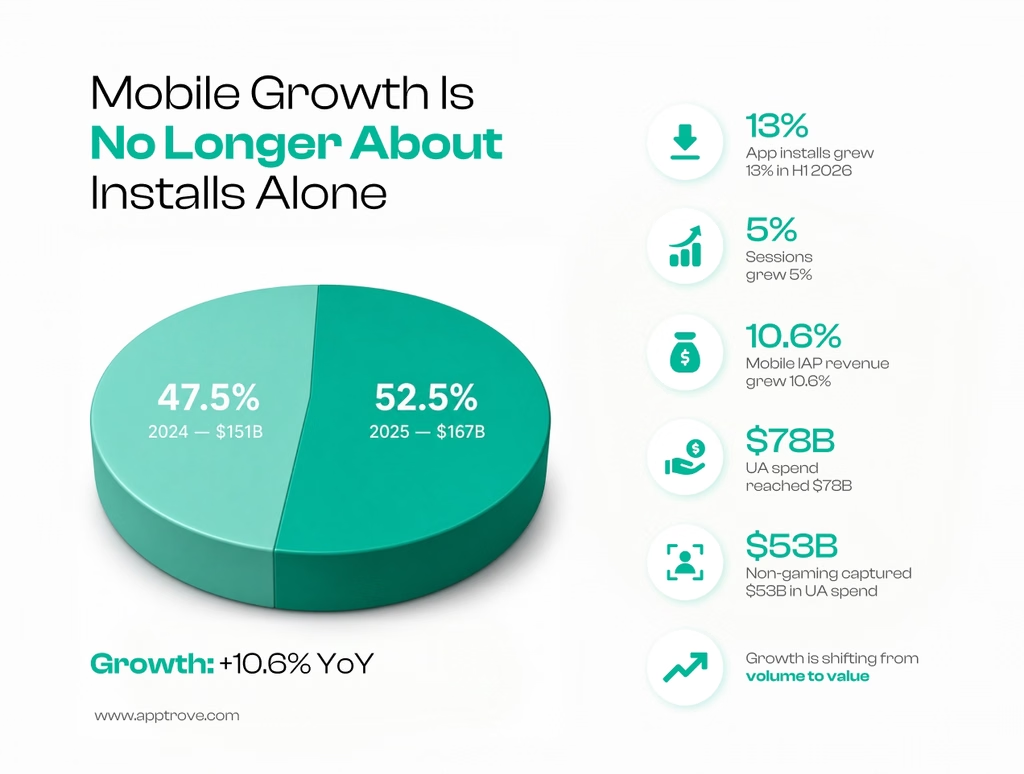
According to reports, we can observe growth in mobile apps in the first half of this year. Global app installations grew by 13% compared to the previous year, while sessions grew by 5%, indicating market growth despite stagnant engagement. Moreover, global in-app payment revenue will reach $167 billion in 2025, a 10.6% increase from the previous year, showing the growing importance of monetisation rather than only acquiring new customers.
The Change in Mobile Market
The main thing is that one should pay attention to the series of changes that occur, among which, it is the transition from the volume of downloads to the value gained from mobile applications. Companies started focusing more on activation, retention, revenue, payback, and lifetime value of applications, rather than considering the cost of installation as the main measure of work effectiveness.
The underlying market backs this shift. In 2025, the total global spending on user acquisitions amounted to $78 billion, an increase of 13% compared to the previous year, with non-gaming comprising $53 billion. The competition for paid users is intensifying, leading marketers to search for cohorts that can generate high revenues instead of just cheap installations.
AI Revolutionizing Mobile Marketing
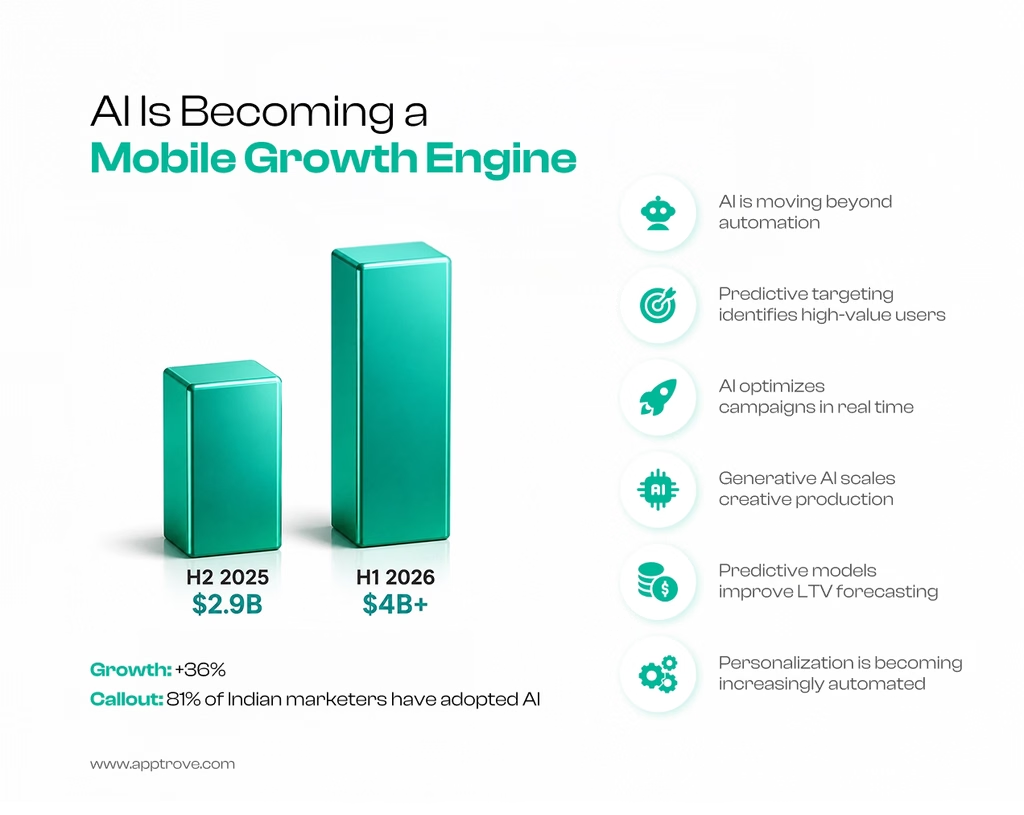
Artificial intelligence has transitioned into a crucial component of mobile expansion. From optimization of ad campaigns to anticipating audience preferences, AI is being widely applied to creative, personalization, and forecasting tasks.
The impact of AI is distinctly visible in the area of AI-based applications. In terms of in-app purchasing, the revenue generated by AI applications was forecast to surpass $4 billion in H1 2026, a significant 36% increase compared to H2 2025. This has created an all-encompassing ripple effect: even applications not utilizing AI are being upgraded to provide better personalization to their users.
The Transformation of the Mobile Applications Market
The market for apps is diversifying rapidly. Non-gaming applications are gaining ground on gaming applications as far as consumer spending is concerned, while AI is rapidly becoming one of the fastest-growing market categories. In 2025, mobile IAP revenue globally amounted to $167 billion, demonstrating that the industry is not only expanding through user downloads but also moving towards progressive monetization.
As for growth leaders, the picture for the first half of 2026 is quite clear: mobile expansion is not merely about getting more users but rather about signing up the right users, delivering value faster, keeping the users with you for longer and turning that engagement into revenue in a sustainable way.
Mobile User Acquisition Through AI Technology
AI technology is being integrated at every level of the mobile user acquisition funnel. Instead of just starting to automate processes, the use of AI technology is now putting the spotlight on techniques like targeting and bidding. The idea of using predictive segmentation to define user types that show potential for conversion, engagement, churn, and LTV is becoming increasingly popular as it allows marketers to target users more effectively than simply relying on past behaviors. Another trend noted by the reports deals with the development of autonomous decision-making models as AI technology grows increasingly capable of making decisions in real-time.
Optimizing Campaigns with AI
There is a clear tendency in campaign optimization from previous experience to continuous models. Nowadays, AI technology is used to analyze key indicators of the efficiency of campaigns and to determine the optimal budget allocation instead of simply reducing CPI.
Predictive Audience Targeting
The use of predictive audience targeting enables marketers to classify users depending on the chances of them installing, converting, engaging, churning, or making money. Rather than considering the audience a fixed cluster as all segments, AI uses the new behavioral signals to refresh the characterization constantly. In 2026, predictive lifetime value (LTV), propensity scoring, automated segmentation, and lookalike expansion are among the most important aspects of mobile User Acquisition (UA) strategies.
Generative AI and Ad Creatives
Generative AI makes the process of creativity faster, making it possible for marketers to create and test unlimited versions of copy, pictures, video ideas, and messages. The key benefit is not merely in having more ads generated. It is about the speed of feedback which is made between creative variations and the outcomes of advertising.
AI-Driven Customization
Customization could be one of the key areas where AI is being utilized these days. In India, 81% of marketers have already started using AI, and 83% of them feel that more targeted content creation would be advantageous. However, it should also be noted that 98% of them encounter difficulties with customization processes due to problems with insufficient data.
As for mobile stakeholders, it means that the latest trend in AI adoption is not adding one more AI tool to their arsenal but rather improving integration of high-quality data, predictive modelling, creative systems, etc. The winning user acquisition strategies in H1 2026 will be based on establishing a closed loop where suitable users are defined, correct messages are delivered, campaigns are optimized, and the information received after users’ behaviour is used for future modelling.
Trends in Mobile User Acquisition for 2026
The trend of mobile user acquisition in 2026 is leaning away from the dependence on a single platform, campaign type, or a number of installs. The app market is now mature. Growth teams are distributing their budget across several channels while paying more attention to the quality of the user, creative performance, and downstream revenue. The global app marketing spending reached $109 billion in 2025, which included $78 billion in user acquisition and $31 billion in remarketing, with the competition for the mobile market being established in advance for 2026.
Focus on Quality Rather Than Volume of Installations
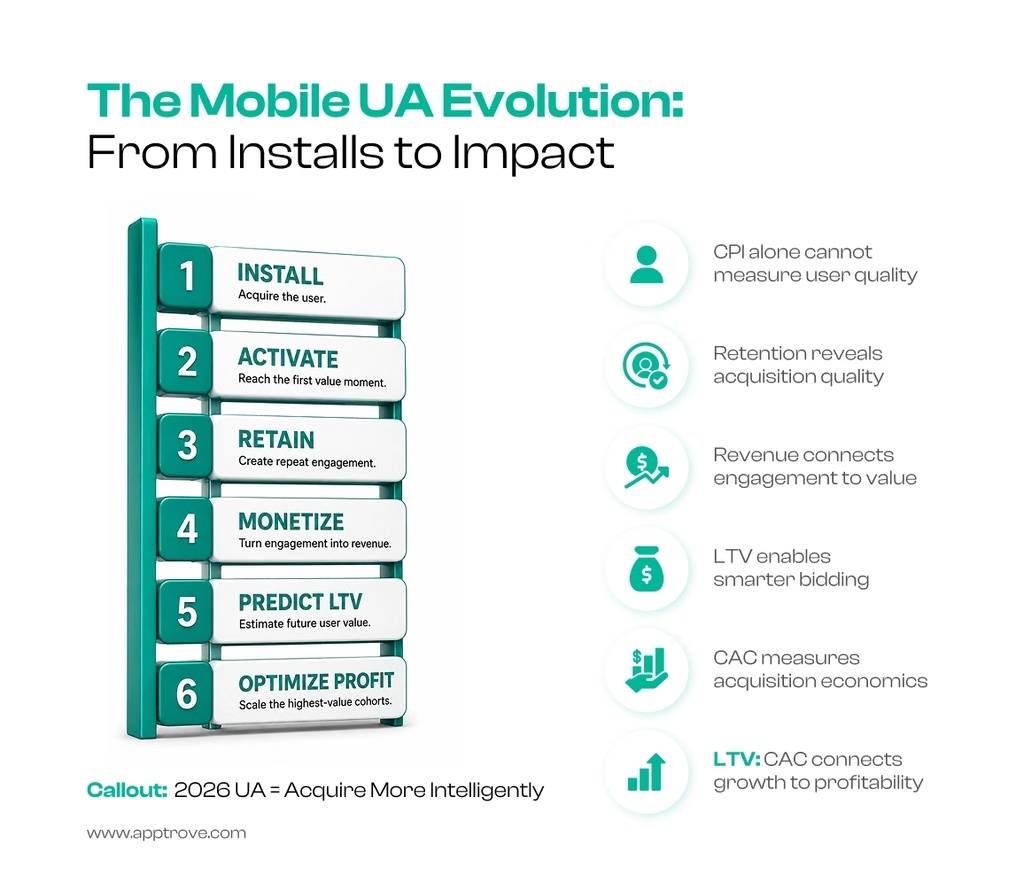
The main shift in UA is in the direction of the acquisition of valuable users instead of the quantity of installs. The CPI metric can be used when evaluating the effectiveness of acquisitions, but it does not mean anything about the activation of the users, subscriptions, purchases, or potential revenue from this user. As competition is getting fiercer, marketers are working more on the post-install events rather than installations only.
An efficient 2026 acquisition framework focuses on:
- Activation rate: The amount of acquired users who achieve their first significant value moment;
- Retention: The rate of returning users after Day 1, Day 7, Day 30, etc.;
- Revenue per user: The speed of monetization of the acquired cohort;
- LTV-to-CAC: The lifetime value of the user is high enough to justify acquisition costs.
This trend is very noticeable in mature markets because slow download growth does not hinder monetization growth. For instance, in 2025, there were nearly 150 billion total downloads globally, which means only a 0.8% year-over-year increase, while mobile IAP income jumped to $167 billion, showing a 10.6% increase.
Creator-led & Short-form Video Acquisition
Short-form video is emerging as one of the strongest acquisition tools, as it allows for reaching users, demonstrating the product, entertaining them, and providing social proof. Other advertising formats are also moving towards video-driven discovery, and mobile video advertising revenues are expected to exceed search advertising revenues in 2026.
Creator-led acquisition adds another layer of advertising, since now marketing looks organic within the content environment. Instead of creating polished brand creatives exclusively, applications can use user-generated content such as reviews, tutorials, reactions, and product demonstrations to create
Diversification of Acquisition Channels
The growth of mobile applications is increasingly becoming multi-channel. Consumers find that apps are increasingly being discovered not only through app store search or classic mobile advertising. Now users can find products through social video, mobile web, CTV, desktop environments, gaming platforms, etc.
This creates a problem for measurement: acquisition teams must analyze the whole process instead of just looking at the last installation or last click and trying to connect the acquisition metrics to them. In this sense, Adjust’s 2026 industry report shows the shift from a mobile-first approach into a more generalized multi-platform one.
Increased Attention to LTV Users
The last evolution is towards acquiring valued users. Instead of looking for the most economical channel, growth teams now turn their eyes to the most economically valuable users.
This is especially true in the developing markets. The mobile ecosystem in India is noted for 25 billion downloads per year, but the growth is becoming more market-oriented, with IAP revenue reaching $1.0 billion in 2025 and bringing in over $1.25 billion by the end of 2026.
Privacy, Attribution & Measurement in 2026
Privacy changes are leading to a different approach to mobile measurement. In 2026, marketers will rely more on first-party data, privacy-conscious attribution systems, and predictive analytics to scrutinize how effective different campaigns are. At WWDC 2026, Apple did not make significant alterations to SKAdNetwork or AdAttributionKit, emphasizing the necessity of working with the existing privacy systems.
The Growing Role of First-Party Data
As marketers get less access to device identifiers, first-party data is becoming increasingly essential as an asset. Tracking in-app events, subscriber behavior, purchases, and other consented data helps businesses gather relevant information about their target groups without reliance on third-party IDs.
Among the most important objectives for growth teams are the following:
- Establishing systems for gathering first-party data
- Unifying web, app, and advertising data
- Using behavioral data for segmentation
- Creating stronger governance and consent policies
- Employing reliable first-party data for building predictive models
Mobile Attribution’s Progression
Mobile attribution seems to be abandoning the notion that each install can be specifically linked to a single ad interaction. Privacy-compliant systems such as the SKAdNetwork and the AdAttributionKit are more reliant on collected signals and controlled postbacks, and performance measurement partners (PMPs) remain helpful in attribution while offering some analytical and campaign measurement services.
This requires marketers to be prepared to use probabilistic conclusions, aggregated information, conversion value, as well as predictive measurements to avoid expecting management through individual-level insights.
Incrementality in Media Measurements
Attribution addresses thematic questions regarding which campaign is credited for the results; incrementality poses the more consequential question of what effects the absence of this campaign would have produced. The distinction is particularly important due to the fact that organic demand, retargeting, overlapping channels, and conversions reported by platforms can lead to a false perception of performance.
Incrementality testing allows marketers to discover actual incremental lifts and understand where paid advertising actually draws the users that would have converted anyway.
Retention is the New Approach for Growth
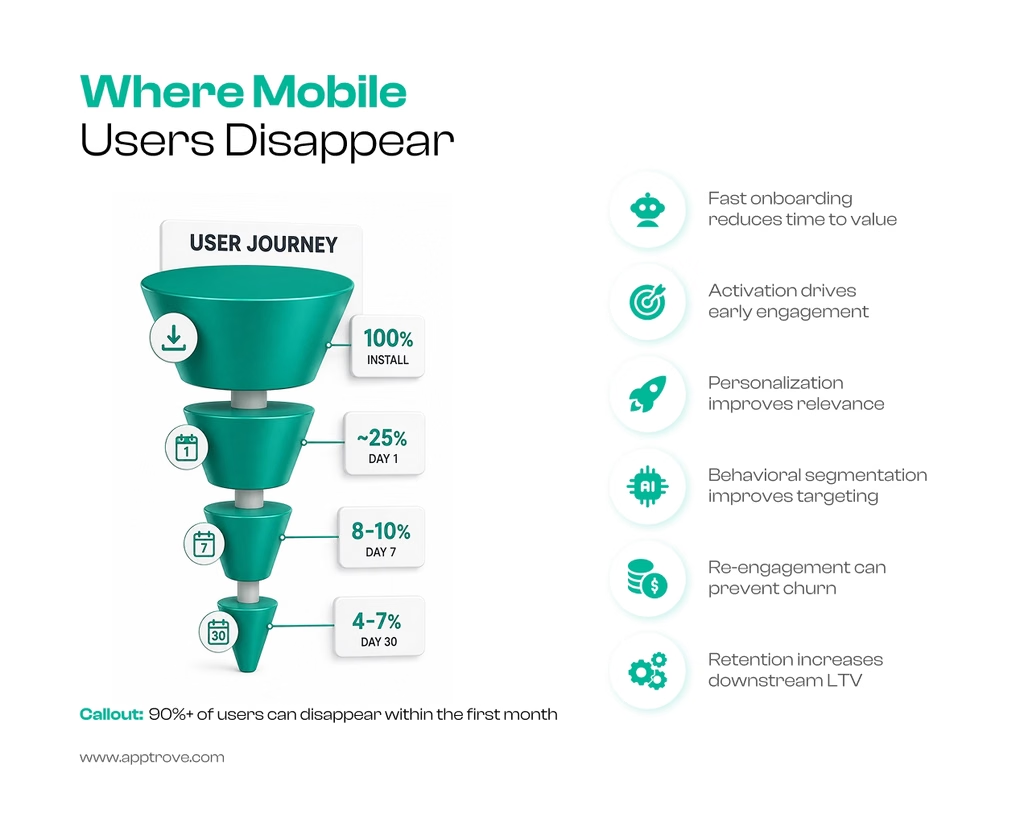
Acquisition is simply the first step toward growth and most certainly does not guarantee that any growth will actually happen. In 2026, the average mobile application manages to retain around 25% of users from Day 1 onward, as well as 8-10% from Day 7, and an approximate 4-7% by Day 30 (depending on the type of app). Since more than 90% of users usually leave the app in the first month, improving retention would likely contribute to growth more than simply increasing the number of people acquired.
Fast Activation and Onboarding
The first session of an application is considered one of the core growth drivers. After all, it is crucial for the user to immediately reach the core value of the app instead of going through endless tutorials, permission requests, and other unnecessary things. According to research data, applications that manage to get their users to core engagement action already in the first session gain 2-3 times higher retention numbers.
It is important for the growth teams to track the following:
- Time needed to reach value
- Onboarding completion rate
- First session activation
- Adoption of major features
- Day-1 retention.
Tailored User Experiences
Personalization has gone beyond simply substituting the name of the user in the notification. Applications are able to modify not only the content but also the offers, onboarding paths, and the message based on the conduct and preferences of a user as well as lifecycle phase and forecasted intention. Modern AI decision-making processes enable carrying out such personalization on a large scale and provide different users with various experiences without requiring the launch of separate manual campaigns.
Behavior Segmentation
The time of large user groups is gone. For instance, a new user who has finished the onboarding process is not supposed to receive the same message as the one who installed the application yesterday and hasn’t used it yet.
The segments that can be used in this case include a user who is likely to make the purchase, a user who was activated, a user who has not used the application for a while, a user who uses the application frequently, a high-value user, and a user who is likely to leave.
Re-Engagement and Churn Prevention
Re-engagement is going from generally broad win-back campaigns to a predictive approach. Rather than waiting for a user to uninstall, marketers can see signs of inactivity through reduced session frequency, lack of completion of desired actions, reduction in purchases, etc.
The potential is significant since most valuable retention interventions take place before the churn becomes irreversible. Research shows that lapsing users have a period of recovery ranging from 3-7 days, which makes timely behavioral engagement more valuable than doing a generic intervention later.
The experience from H1 2026 is clear: the growth teams should not treat retention as something that happens after acquisition. The elements of onboarding and personalization have become important parts of the process from acquisition to LTV.
The Change of LTV in Growing Companies
In 2026, lifetime value will become the link connecting the features of obtaining clients, retaining them, and getting profit. The teams dealing with the growth of the company stop using CPI and short-term ROAS only and now address the economics of the cohorts. The reason for such changes is that cheap installations do not provide profit if the client leaves quickly, while an expensive user may bring much more profit.
Differences between LTV, CPI, and CAC
CPI provides marketers with the cost of obtaining installations, and CAC shows the cost of client acquisition. LTV is the part of the cost of obtaining a client that tells the expected income from that client.
For the effective LTV-based growth strategy to work properly, it has to monitor:
- CPI (the cost of obtaining installation)
- CAC (the cost of obtaining a profitable client)
- LTV (the expected profit)
- LTV/CAC (the relationship between a client and the cost of acquisition)
- Pay back (the speed of receiving investment back)
Predictive LTV
A key change in the industry is that it is no longer necessary for marketers to wait for months to know how valuable a cohort is. Predictive LTV models use early behaviors, such as activation, number of sessions, purchase actions, subscription actions, and engagement, to forecast the future value of customers.
This is especially crucial for quick UA campaigns where waiting for D90 or D180 revenue may lead to delayed optimization processes. Recent studies in cold-start LTV prediction show that machine learning models can forecast LTV based on scarce signals from early users as well.
LTV-Based Campaign Optimization
The predictive LTV allows marketers to optimize campaigns that focus on users who may generate more LTV in the future instead of just those who are most likely to install the app.
The transition can be summarized in the following way:
Install – Conversion – Retention – Revenue – Predicted LTV
This permits the decisions regarding the bids and budgets to reflect the possible commercial profit. Therefore, the costlier campaign may have better results than a lower-priced one, as its users can hold on to the app for a longer time and produce more revenue.
Trends in Mobile Growth in Main App Types
Mobile growth is being defined more accurately by company-specific economics than by a single growth strategy. Apps like gaming, e-commerce, fintech, and AI follow discretely different routes as of 2026. The monetization, engagement, and acquisition characteristics are different across business sectors. The global mobile IAP revenue already hit $167 billion in 2025 as non-gaming apps started to provide higher consumer spending than games for the 1st time.
Gaming
The gaming industry goes from mass to efficiency. In 2025, the global gaming IAP revenue neared $82 billion, with the YoY growth being only 1.3%, making retention, live operations, monetization depth, and LTV particularly significant.
The casual gaming vertical is increasing its momentum as well, with both installs and average session time showing an increase of 19% YoY, which is 25.92 minutes in total for one average session in 2026. The sessions for strategy games doubled with a YoY increase of more than 57%, which is an example of further engagement.
For the games’ growth-oriented teams, the main tasks to consider are:
- LiveOps engagement
- Payer conversion improvement
- Creatives optimization
- Predictive LTV
- Repeat users re-engagement
E-commerce
E-commerce is being driven by a more experience-led approach. While global retail-app downloads and time spent on them fell in 2025, there are now a lot of brands using AI recommendations, shopping assistants, and personalization to strengthen their omnichannel journeys.
In India, e-commerce continued to help boost mobile app downloads in Q2 2026, together with entertainment applications and quick commerce-based services. The core opportunity in this space lies in shifting the audience from merely transactional behavior to governing repeat purchases with recommendations, personalization, loyalty programs, and messaging based on customers’ lifecycle.
Fintech
Fintech belongs to the biggest mobile categories in terms of growth; nevertheless, its growth is becoming more varied. Download growth in terms of credit and loan apps reached 18 % YoY, whereas other fintech categories have been and still are under pressure internationally.
As for the mobile growth in the fintech space, acquiring users is not as vital as it may seem because the users might need to go through verification, make deposits and transactions, or perform some other financial operations before they become valuable in a commercial sense. Hence, activation and conversion in the downstream stages become much more important than the actual number of installs.
AI Applications
Regarded by many as the most significant mobile development category in the current mobile cycle, downloads of AI applications have reached 3.8 billion in 2025 while revenues from in-app purchases (IAP) surpassed $5 billion, three times more than in 2024. Time users spent on AI applications was 48 billion hours, which is about 3.6 times more than the previous year.
India is also experiencing incredible momentum. In Q2 2026, India’s mobile applications market generated a record consumer spend of $345 million, an increase of 35% year-over-year and one of the key monetization drivers is generative AI technology.
The key takeaway from the broader category is straightforward: mobile growth strategies in H2 2026 must be vertical-specific. Gaming requires deeper LTV, e-commerce needs repeat transactions, fintech must deliver high-quality activation, and AI applications have to ensure converting fast adoption into sustainable subscription and engagement economics.
Important Performance Measures for Mobile Growth in 2026
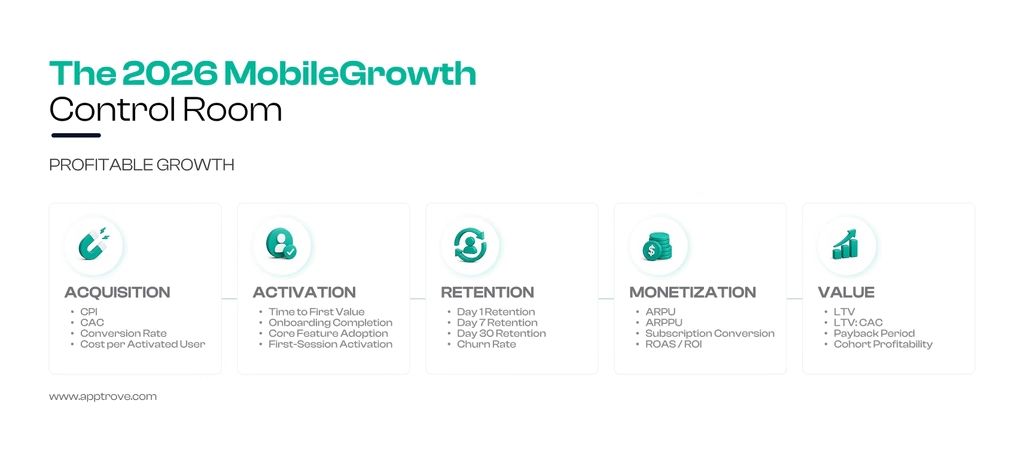
The approach to mobile growth measurement is becoming more advanced. In 2026, companies rely on more than just surface-level metrics such as installations and clicks, and instead focus on metrics which form the broader picture of the user lifecycle. Currently available platforms integrate acquisition, retention, revenue, return on ad spend, return on investment, sessions, and cohort-level lifetime value into a single reporting ecosystem.
Acquisition Metrics
While acquisition metrics are still crucial in assessing the effectiveness of paid growth, their approach has changed. The metrics of cost per install, cost per thousand impressions, cost per click, conversion rate, customer acquisition cost, and cost per activated user allow marketers to assess how successfully users are brought into the funnel.
An important change is to connect acquisition metrics with downstream impact. With a $1 CPI campaign, it cannot be said that it performs better than a $3 CPI campaign without analyzing retention and revenue of the resulting cohort.
The most relevant measures of acquisition include:
- CPI: Cost per install
- CAC: Cost to acquire a customer
- Activation rate: Percentage of leads who reached the first significant value event
- Conversion rate: Percentage of leads who moved from the previous
Metrics for Retention
Retention is a way to determine whether the process of acquisition leads to users being retained. Retention metrics such as Day 1 retention, Day 7 retention, and Day 30 retention, along with DAU (daily active users), MAU (monthly active users), session frequency, and churn, give a clearer perspective of the health of the product than solely the count of downloads. AppsFlyer considers retention to be the percentage of users acquired up to a certain date, returning and interacting with the app.
DAU/MAU
They are an increasingly popular metric of the level of stickiness of the app that shows the level of user engagement every month.
Revenue Metrics
Revenue metrics show whether the level of engagement is convertible to value. The most widely used revenue metrics are ones such as ARPU, ARPPU, purchase conversion, subscription conversion, ad revenue, ROAS and ROI. According to AppsFlyer, ROAS is defined as revenue divided by advertising cost, while ROI factors in the profit after the campaign cost has been accounted for.
LTV and Profitability Metrics
The most significant shift in measurement is the focus on LTV and profitability. LTV predicts how much a user will bring in revenue over the entire time of their relationship with the app, and thus provides marketers with the ability to assess expected value relative to acquisition cost.
For growth leaders, the key metrics become a connected chain:
Acquisition – Activation – Retention – Monetization – LTV – Profitability
The role of cohort analysis makes this connection particularly strong. Marketers can analyze revenue, retention, and ROI, ROAS, and conversion by cohorts, comparing acquisition dates, campaigns, and sources of media to examine which cohort created the sustainable profit.
Therefore, by the second half of 2026, the best measurement systems will focus on fewer metrics and not merely on producing more ones.
To summarize
During the first part of 2026, we could observe that mobile development follows the focus on value rather than the mere volume of mobile applications. According to the data for the first half of 2026, global applications installations increased by 13% on a year-on-year basis while the number of sessions only grew by 5%. This implies that although apps expanded, companies face the challenge of converting acquired users into those who actively engage with their applications.
The most effective methods used in user acquisition, retention, attribution, and monetization are built around the same principles: make greater efforts to identify better users, apply smart measurement strategies, ensure better retention results of an application, and increase its lifetime value. Artificial intelligence plays an important role in this process by providing marketers with tools for optimizing advertising campaigns, anticipating user behavior, personalizing the user experience, and making creative ideas and executions on a larger scale. Moreover, privacy regulations push the teams involved in app promotion toward storing their own proprietary data, aggregate measurement, and testing the effectiveness of different advertising strategies.