H2: Introduction
Programmatic advertising is growing, but also getting more complex. With this growth comes increased complexity; global programmatic ad spending was forecasted to surpass $725 billion in 2025, according to Statista. As a result, it has become a central piece of modern marketing strategies.
A white label DSP (digital supply partner) helps you navigate the complexity of multiple platforms and fragmented data. Programmatic ads require more than just piecing together dollars and data. By allowing you to create your own custom demand-side platform built for your goals, data, and workflows, it represents a major shift from traditional advertising networks. Programmatic is no longer just about “running ads,” but about “owning your infrastructure.”
As more companies build privacy-first ecosystems and require greater transparency and the ability to work closely with their customers, there is a growing industry need for solutions that provide flexibility and scalability. These solutions must be built and utilised efficiently without losing the trust of stakeholders.
A white label DSP allows companies to build their businesses faster, establish effective data strategies, and comply with regulations. Most importantly, it enables the use of tools such as Apptrove to measure success as usual, scale effectively, and comply with customer privacy and intellectual property requirements.
What is a White Label DSP
A “white label” DSP refers to a fully customizable demand side platform that lets you run programmatic ads on behalf of your own brand using an infrastructure that is customised to suit your needs. Rather than relying on a set-in-stone third-party interface, you control how your platform operates, what it looks like and how it develops over time.
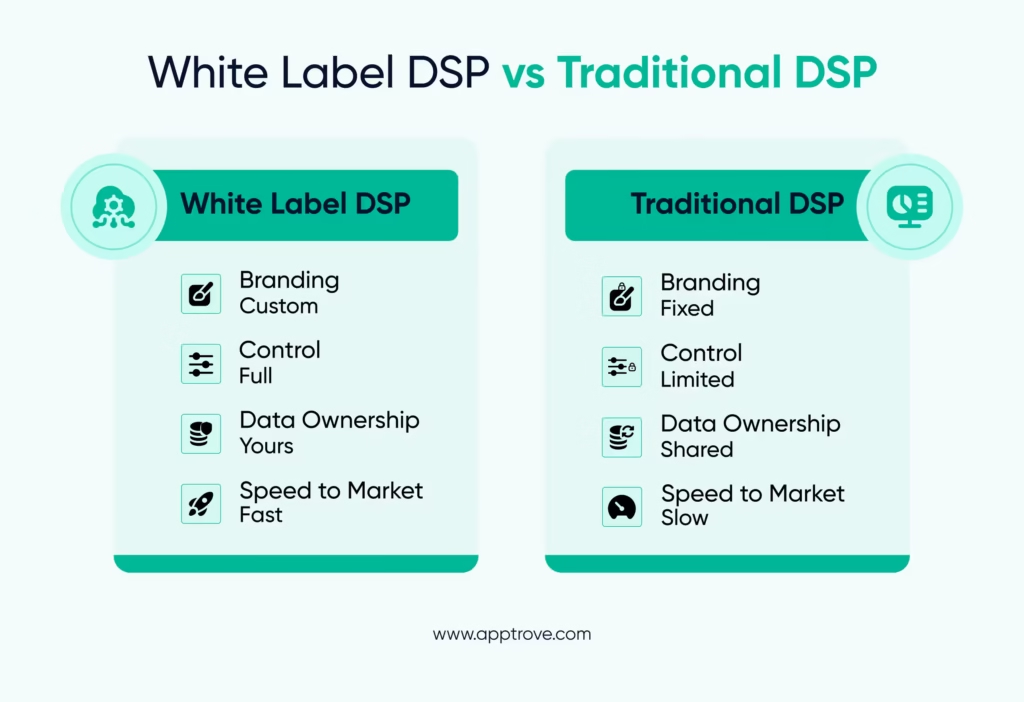
Traditional DSPs tend to be closed systems with little or no visibility into what makes up the system as a whole, so you do not have full access to understand how your campaigns are being executed or if they are even performing the way you want them to. In comparison, a white label DSP allows you much more visibility into not only your campaign data, but also your bidding strategy and ultimately your campaign performance. Therefore, you have the ability to shape your campaigns to improve performance and scale.
There are three primary elements in any DSP as it relates to programmatic advertising: the first is the bidding engine that allows for real-time bidding of available ad inventory based on your parameters; the second is the targeting capabilities that give you the ability to serve ads to specific audiences based on behavioral, contextual, or first-party data; and lastly, reporting and analytics provide insight on the performance of your campaigns and facilitate continual optimization of your campaign performance.
How a White Label DSP Fits Into a Demand Side Platform Package Solution
White Label DSP’s plug-and-play architecture allows them to integrate easily into other Demand Side Platforms. These can be plugged into other existing systems without having to rebuild your whole tech stack.
A white label DSP also gives you the ability to customise your branding and create the UI to reflect your company’s image – not your partner’s. You keep all of the ownership of your data so that you never lose control over how you collect, how you use and how you optimise your data, which is critical today with privacy issues becoming a greater concern.
Why Do Advertisers Prefer to Use a White Label Demand-Side Platform in this Privacy-Focused Climate?
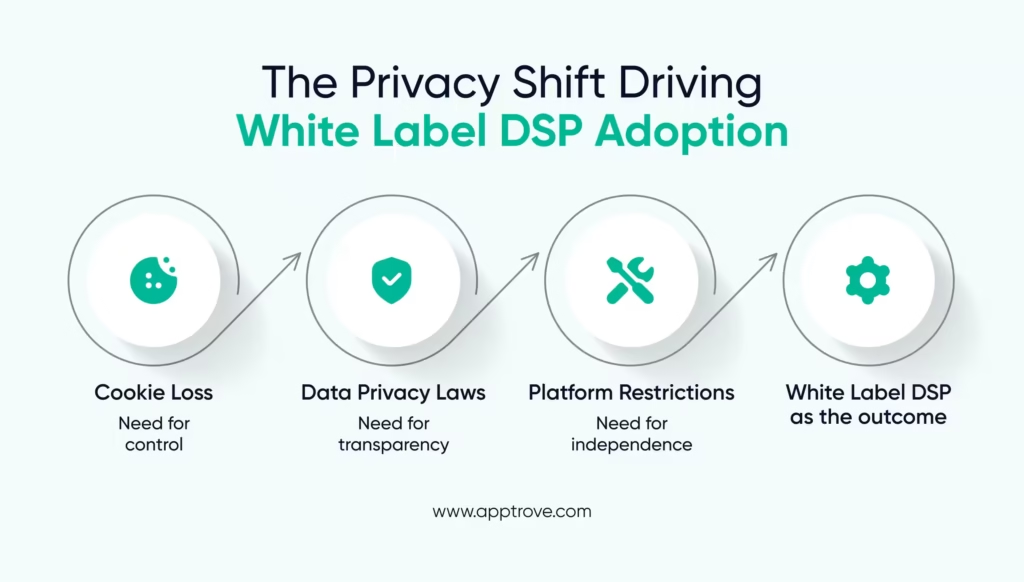
The shift towards a privacy-focused ecosystem means the way you approach programmatic media buying has changed as well; third-party cookies are disappearing, new frameworks such as SKAN (SKAdNetwork) are redefining attribution on iOS, and there are stricter regulations around the use of data and how it can be used. Therefore, traditional advertising models are not as effective. You are no longer simply optimising campaigns for performance; you are also responsible for compliance, transparency, and data ownership.
This is where white label DSPs are gaining popularity – by enabling you to have more control over your campaign execution and measurement without relying heavily on third-party opaque systems. Instead of being limited by systems, you can create strategic plans that comply with corporate data policies and meet consumer privacy expectations.
First-party data is becoming more important than ever, and 88% of marketers say first-party data is more important to their organisation than ever, according to Acquia, which is a clear indication that the industry is moving towards a first-party data focus. By utilising a white label DSP, you will be able to effectively collect, manage, and use your first-party data to create a competitive advantage instead of creating a compliance headache.
The Benefits of Using a White Label DSP for Measurement of Privacy First
By utilising a white label DSP, you are no longer dependent on black-box third-party systems, thus providing an opportunity for complete transparency of data movement through your campaigns. This allows complete visibility into how you create attribution logic within a privacy framework such as SKAN while also providing useful analytics.
Utilising a white label DSP for measurement also ensures better alignment with compliance since you have complete control over how the collection, storage, and use of user data occurs. This ultimately means your advertising strategies can be both successful while remaining focused on user privacy.
How can a white label DSP increase your campaign performance and ROI?
By using a white label DSP, you can move beyond traditional campaign execution and truly optimise for performance. The flexibility provided through a white label DSP offers you the ability to fine-tune every aspect of your campaigns—from your bidding strategies to how you segment your audiences—based on your specific goals, rather than within the constraints of preset parameters.
Enhanced optimisation capabilities are one of the primary benefits associated with a white label DSP. You can continuously modify your campaign parameters via real-time insights in order to allocate your budget to those areas that are generating the most impact. The level of control and transparency that comes with using a white label DSP ultimately contributes to your overall return on investment.
Through real-time bidding customisation, a white label DSP gives you the ability to define the how, when and where of your bids. If you’re focused on prioritising high-value users or optimising for specific in-app actions, you can create a bidding logic tailored to your performance objectives rather than depending on a generic algorithm.
Additionally, using a white label DSP enables you to make decisions based on data, as opposed to guessing. Because you have access to accurate and transparent data, you will have the ability to develop a strategy that allows you to scale your campaigns with confidence and minimise wasted spend.
Utilise Your DSP to Optimise Campaigns
The most important thing to consider when using a demand-side platform is how to optimise your campaigns. One of the best ways to do that is by utilising granular audience targeting, which means you can segment your audiences based on their behaviour and/or intent, or even according to their demographic characteristics, in order to deliver ads to the right people at the correct time.
Monitor the performance of your campaigns continuously by taking advantage of real-time analytics so you can make changes quickly as needed. This will help you remain competitive in a rapidly changing landscape.
Don’t forget to incorporate creative testing into your advertising strategy; test out different creative, format/placement and messaging options until you find something that works best for your target audience. Utilise these insights to improve continual performance.
Key Features to Look for in a White Label DSP
When searching for a white label DSP to evaluate, the features you select have a large effect on how well you can grow, optimise, and manage your campaigns. Therefore, don’t only look at the functionality of the DSP; think about how well it will work with your strategy.
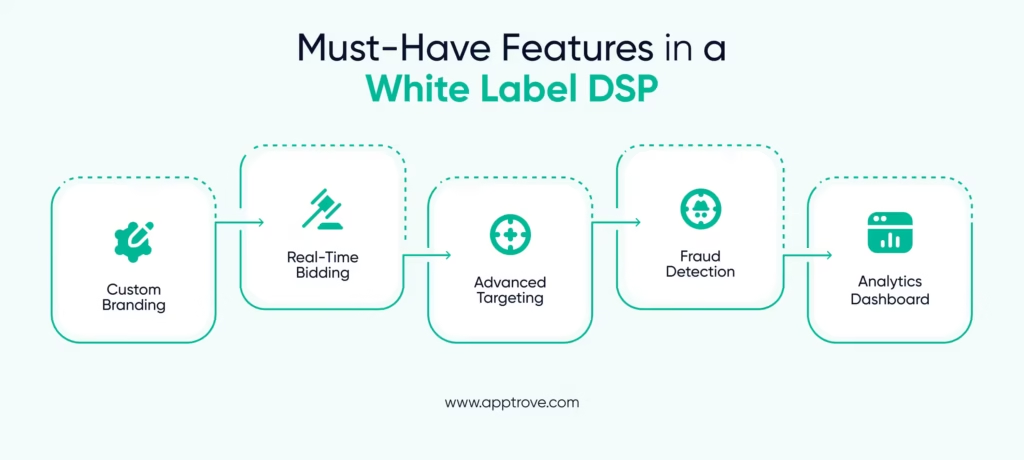
First, consider that a strong white label DSP should be able to provide custom UI/UX capabilities. You want the flexibility to create an interface that fits your operations so that you have an easier time managing your campaigns. This flexibility will prevent your team from having to adapt to a rigidly designed system.
Next, make sure that there are advanced targeting options available, which provide you with strategic advantages. You want to be able to segment your audiences based on their behaviour, the context in which they are located, and the use of first-party data to help you serve relevant, high-performing ads.
You should also consider fraud prevention as a major attribute of a good white label DSP. The growth of the programmatic advertising industry increases the chance of invalid traffic, which is why a quality white label DSP should have built-in methods to flag and prevent fraud, ensuring that you are protecting the money you spend on advertising and maintaining the integrity of your campaigns.
Finally, you should also make sure that a white label DSP provides you with strong reporting dashboards. You need to have clear, real-time information about your performance to make informed business decisions and to continue optimising your campaigns.
What Defines a Scalable Programmatic Advertising Platform?
To define what a scalable programmatic advertising platform looks like, we must first identify the characteristics of the components that create such a platform.
These 3 characteristics are as follows:
1) Seamless API integrations allow for effortless connections into other systems, such as data sources (e.g., databases) and analytical tools.
2) The ability to manage campaigns across multiple environments (i.e., cross-channel) while using a single interface.
3) Automation features streamline redundant workflows, bid optimisation/smart bidding, and overall demand side platform (DSP) efficiency, resulting in a more effective and future-ready solution.
What Role Are White Label DSPs Playing in the Growth of Emerging Digital Markets, Such as the UAE?
As the world continues to develop a digital ecosystem, the emergent opportunities available throughout the established, current, and new emerging markets are opportunities to grow programmatic advertising in the UAE. The constantly growing number of smartphones present in the UAE, coupled with the high numbers of users who are active on digital platforms create an environment where there is a strong trend toward mobile-first user behaviour and thus consumers are communicating with brands more frequently through mobile applications and mobile platforms.
Rapidly adopting digital behaviours is also generating an increased demand for localised advertising solutions, as a single, generic platform does not take into account different regional needs such as language, culture or user behaviour. This is where White Label DSPs Are Providing Value.
White label DSPs allow you to have complete control of how the campaigns you create will be structured and delivered through White Label DSPs to ensure that you can quickly react to regional demand while still providing consistent results, as well as tracking.
The Purpose of a White Label DSP for Regional Advertising
Through the use of a white label DSP, you can localise your advertising campaigns by choosing from a variety of languages and cultures.
In addition to providing the ability to localise the content, this type of platform will allow you to create audience target segments based on geography, user behavior and current market trends.
Another way in which a white label DSP can meet your regional advertising needs is through the ability to change your advertising strategy at any given moment. With this capability, your advertising strategy will be able to change quickly based on the needs of the region, which is especially useful in rapidly evolving markets such as the United Arab Emirates.
What Challenges Will You Face Using a White Label DSP, and Ways To Handle Them?
Although a white label DSP has flexibility and control, there are challenges associated with it, particularly during the beginning stages of usage. One of the main problems encountered is the complexity of initial setup; many different integrations must be made, a well-defined workflow needs to be created, and the overall functionality of the platform must meet your business goals.
In addition, there will be an adjustment period, as employees will have to learn how to take advantage of the features offered in the customised environment. Since employees will have to utilise a variety of features from the creation of campaigns to improving the performance of campaigns, it is essential that they understand how to effectively utilise all of those features. Without proper training, the full potential of the DSP cannot be realised.
Another thing to consider is the reliance on your infrastructure. A white label DSP is so tightly integrated into your overall advertising stack that the effectiveness and performance of it are directly reliant on how easily data can be transferred and processed between your various systems.
Guidelines To Get The Most Out Of Your Demand Side Platform Solution
The first step is to select a scalable architecture designed to enable growth as your company grows while also accommodating any changes in size or structure in the future.
Second, establish a comprehensive data strategy. Ensure your organisation clearly delineates where you will be gathering data, how it will be structured, and how it will be activated—this will help you to guarantee that you have consistent and accurate information.
Last, you should invest time in developing your analytics capabilities. Improving the efficiency of how you analyse your campaign data will allow you to optimise the performance of your demand-side platform solution and make it a sustainable growth engine for your business.
The Future of Programmatic Advertising Platforms Comes Stocked Full Of White Label DSPs
As programmatic advertising continues to grow rapidly and contribute greatly to the revenue of companies large and small, companies are increasingly looking for more control, visibility, and flexibility than ever before. The white label DSP solution provides an effective way to create, run, and scale your advertising campaigns with maximum efficiency and the ability to customise your own advertising system to suit your business needs while maintaining on-demand reporting visibility of performance.
Programmatic advertising is facing several hurdles today, including strict privacy laws and changing attribution models. Insurance is impossible to maintain with an outdated, rigid, and incapable third-party system. Consequently, you need a technology that will allow you to build your own strategies based on your business-specific data and optimise your ad response performance in real time while maintaining compliance and without sacrificing your business.
As your measurement and attribution systems become more complex, having a robust infrastructure that can align to current and future requirements is becoming essential, not optional. The white label DSP solution does just that: allows you to get ahead of the competition and be ready to adapt and grow for many years to come.
Are you ready to see how using a white label DSP can support your overall strategy for growth? Reach out to our team today to learn how you can create, customise, and grow your programmatic advertising confidently.
FAQs
1. What makes a white label DSP different from a traditional DSP?
With a white label DSP, you have the flexibility to fully customise your solution for maximum branding, data control & management, and independence in operation. However, traditional DSP’s have less flexibility, a shared infrastructure, and limit you to using another company’s resources and tools for ownership and optimisation functionality.
2. Why should you consider a white label DSP for long-term growth?
A white label DSP allows you to have complete control over your data, targeting, and optimisation methods so you can develop your own scalable programmatic network without having to rely on an external platform or a restrictive environment.
3. How does a white label DSP support better data privacy compliance?
As you are in control of your data flows and integrations, a white label DSP should enable your compliance with privacy regulations, such that you do not depend on third-party tracking while enhancing the transparency of your campaign measurement.
4. When is the right time to invest in a demand-side platform solution?
The time is right if your campaign needs to grow (scalability), provide better data (insight), and be personalised (customisation). This is especially true as privacy rules change and traditional advertising platforms limit their access to data.
5. How can businesses ensure success with a white label DSP implementation?
To achieve success, it is necessary to utilise an adaptable platform, have solid data strategies, and continuously improve campaigns based on analytics in order to keep your demand-side platform solution evolving with changes in the marketplace and users’ behaviour.