As mobile applications continue to change rapidly, knowing what aspects of your marketing efforts lead directly to growth is more than just helpful; it is essential. As such, only 52% of Senior Marketing Executives feel they are able to show the value of their marketing initiatives through measurement and recognition of their contribution to business results. This disparity between how much effort was put into developing your marketing initiative and how those marketing efforts are being measured externally is why marketing attribution has become an extremely valuable component to growing an app on a profitable basis.
Through an understanding of marketing attribution, marketers can gain meaningful insights into both user behavior, campaign impact, and ROI on the app (i.e., turn what was once simply guesswork into a true competitive advantage). For all app owners, be they start-ups or seasoned growth marketers alike, understanding how attribution works — and how it contributes to increased profits – can be the difference between an app that remains stagnant and one that experiences exponential growth. Nevertheless, attribution can not in and of itself be considered to be “actionable” for marketers.
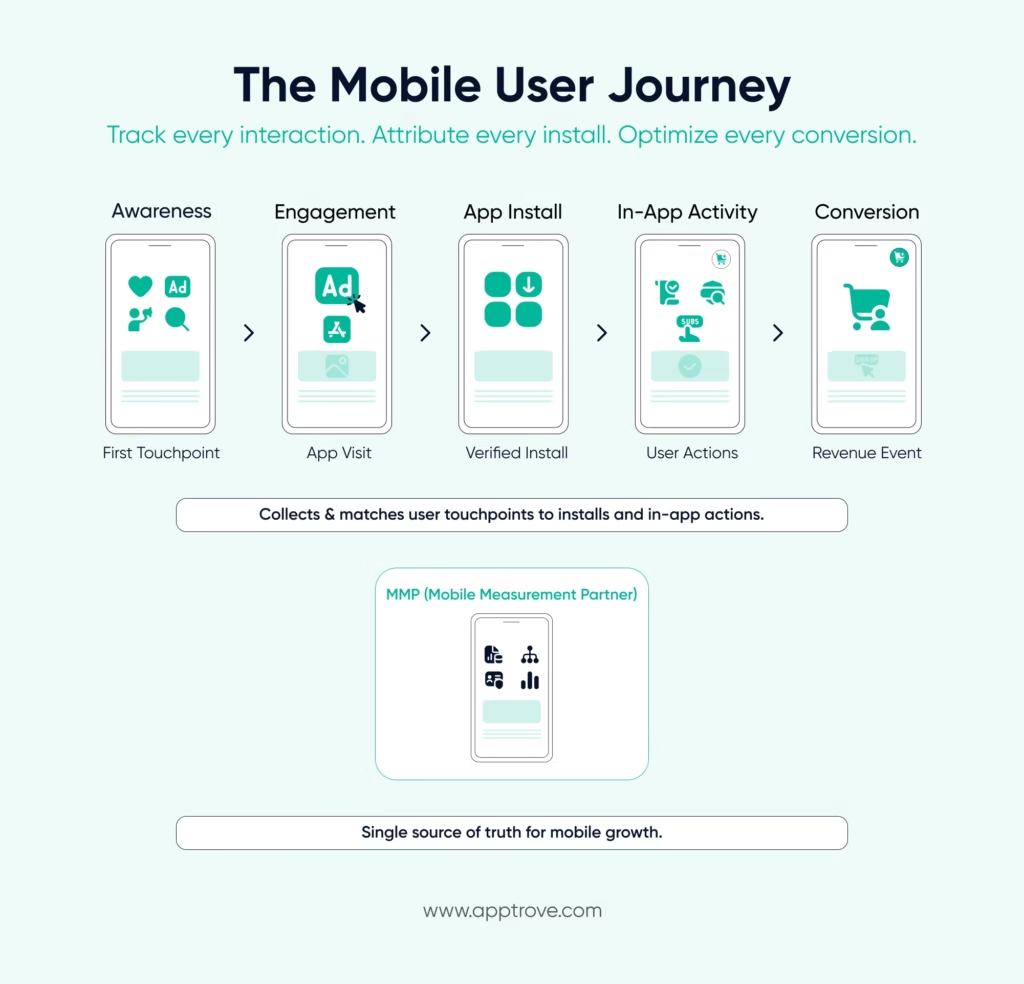
To provide actionable, scalable, and compliant marketing attribution, app companies must work in conjunction with a Mobile Measurement Partner (MMP). An MMP is a specialized platform that connects users from multiple marketing touch points to identify conversions accurately, as well as to aggregate required data into actionable insights so that app marketers can make data-driven decisions. Apptrove enables marketers to create a single source of truth for their app’s acquisition, engagement, and revenue data.
In this guide, we’ll explore why marketing attribution sits at the core of profitable app growth, how modern attribution works in mobile environments, and how a capable MMP like Apptrove empowers marketers to turn attribution data into sustainable business outcomes.
What Is Marketing Attribution? (And Why It Matters)
Essentially, marketing attribution is the method of attributing credit to the touchpoints that users come across when they convert. Attribution gives marketers insight into the sources of influence on a user’s decision by providing data-driven insight into which campaigns, channels, creatives and messages have an effect on that decision instead of attributing all the credit to the last click made by that user. Or worse, to ignore touchpoints altogether.
Why is this important?
Because with no attribution, marketers are ‘flying blind’, spending budget only on gut instincts or basic metrics like impressions and clicks, instead of measurable business outcomes like installs, in-app purchases, or long-term lifetime value (LTV).
Benefits of Attribution
- Identify which channels provide real value to the user.
- Enhance and optimize campaigns for actual revenue, not vanity metrics.
- Increase Return On Ad Spend (ROAS) through accurate insight into campaign performance.
- Have confidence in predicting future growth.
Let’s dive into how the right attribution strategy allows all of those reasons.
How Attribution Transforms App Growth Strategy
1. Gathers Cross-Channel Performance Information
Users interact with applications in a variety of ways: through social advertisements, search sites, influencer marketing, organic content, email, etc. If you are unable to integrate the user’s interactions, there is a risk that you will measure channels in a silo.
Marketing Attribution connects the user data across the various touchpoints in their entire user journey (i.e., from their first click to installing the application). By obtaining a total visual representation of the user’s journey, marketers can improve channel efficiencies, their overall performance and make informed target purchase decisions with greater accuracy.
2. Eliminates Unproductive Spending
You will be able to identify the channels that are actually driving installs, engagement, or conversions for you to move your investment away from those channels that are underperforming. By moving your budget toward the channels that provide you with measurable returns on your investment, you will be able to create more efficient and profitable campaigns.
3. Improves Targeting and Personalization
By utilizing attribution, you will not only know which channels work the best for you, but you will also know which audiences respond the best to your marketing activities. As a result, you will be able to segment your consumer data more effectively and provide them with personalized experiences, thus increasing conversion rates and brand loyalty.
4. Aligns Marketing to Business Results
In the end, marketing is only successful if it creates value. Marketing Attribution enables marketers to connect their marketing efforts to real business outcomes, including revenue, customer retention, and customer lifetime value. After connecting the dots, companies can provide accurate and timely data to their marketing teams for making better decisions and driving impact, rather than making assumptions.
Understanding Attribution Models in Mobile Growth
Attribution models vary widely in their capabilities to measure activity accurately. Choosing one model or several models as a basis for measuring will result in a significant impact on your accuracy in measuring the performance of your efforts.
This is how the attribution models differ:
Last-Touch Attribution:
Attribution is assigned to the last touchpoint interaction that occurred prior to converting. While simple, this method can provide an inaccurate representation of user behaviour as it only considers the final interaction; this is not ideal for long user journeys where numerous influences may have affected their eventual decision (i.e., last touch only takes into account one influence rather than multiple).
First-Touch Attribution:
Attribution is assigned based on the first-time interaction users had with your company. The best insights are from top-of-funnel (first interaction), but this can provide an inaccurate representation of users who may have taken multiple (and possibly critical) actions later.
Linear Attribution:
Attribution is evenly distributed across all interactions (or touchpoints) based on their respective behaviours or patterns. Linear attribution provides a balance of attribution; however, they do not take behaviour patterns and/or actual user influence into consideration.
Time Decay Attribution:
Touchpoints are assigned the most attributed value based on the time the interaction occurred; i.e., the more recent, the more attribution is assigned. While Time Decay provides a good ability for a basis of comparison, this model can provide the least amount of accuracy as it can under-attribute to long-term influences.
Data-driven Attribution:
Using data from multiple sources (as opposed to just multi-channel) to create a more accurate representation of the contribution each source makes to the eventual conversion event. They also use analytics tools that are continuous and remain up-to-date to help you make better-informed decisions about where to place your next advertising dollar.
Because most mobile app user journeys include multiple touchpoints/events on multiple platforms/devices with no clear boundaries, using a data-driven or data integration-based model is typically best for determining your advertising performance.
Key Terms Every Marketer Should Know
Understanding attribution also means speaking its language. Here are some essential terms:
- MTA (Multi-Touch Attribution): Allocating Credit for Multiple Touch Points to Conversion Events
- Conversion Event: Any Defined Actions (Example: Install, Purchase, Register)
- Click Throughs: Recognizing Engagements with Clicks
- View Throughs: Crediting Expose to Ads Without Clicks
- ROAS: Revenue/Unit of Advertising Spend Generated by Ad Spend
- LTV (Lifetime Value): Total Amount of Value Contributed by User Over a Lifetime
Knowing these terms helps teams standardize reporting and avoid misinterpretation of performance insights.
Challenges in Mobile Marketing Attribution
Although attribution provides tremendous value to marketers, there are several obstacles associated with obtaining accurate measurement.
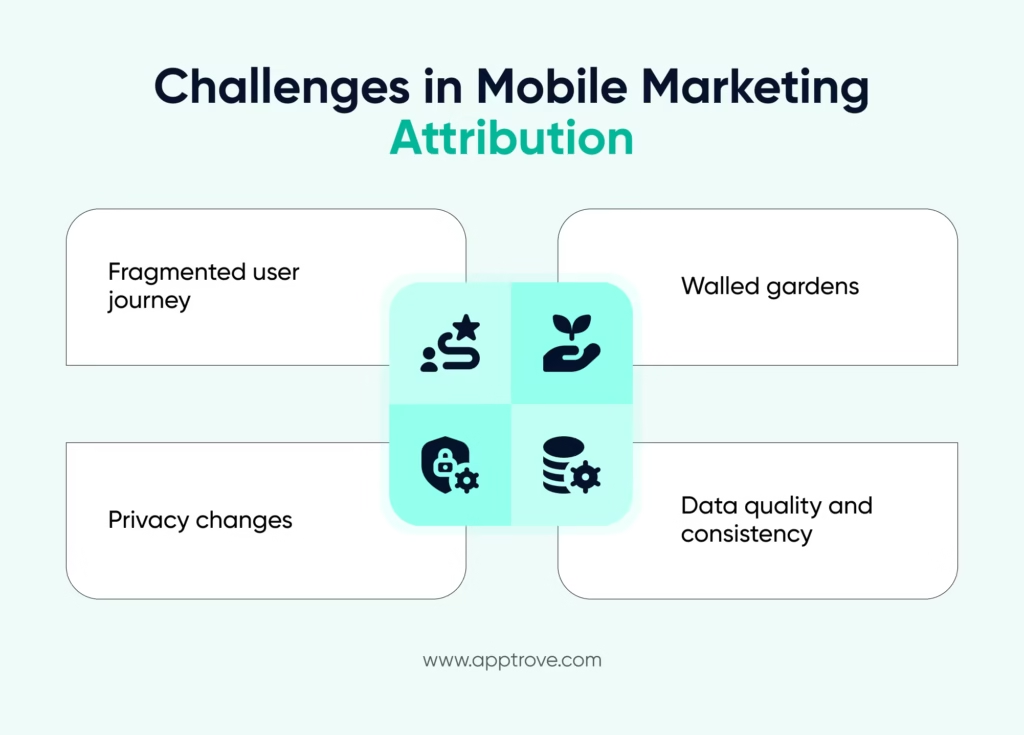
A. Fragmented user journey – mobile users will frequently engage with ads on several applications, browsers, and/or devices before making a conversion. Accurately tracking these separate journeys requires very advanced technologies.
B. Walled gardens – too much of the data on platforms like Facebook and Google is controlled by those platforms, which prevents marketers from seeing how users engage outside of their respective platforms.
C. Privacy changes – current privacy regulations, such as Apple’s app tracking transparency, have reduced the effectiveness of traditional deterministic methods of tracking to a point that marketers now need to utilize more advanced methods of modeling and probabilistic methods of attribution to gain insight into user behavior.
D. Data quality and consistency – inaccurate tagging, inconsistency with event definitions, and duplicate tracking of events can all affect attribution results. Marketers need to maintain good data hygiene to ensure they have reliable attribution results.
Best Practices for Effective Attribution Implementation
Follow these tips to optimize your attribution and reduce inaccuracies:
Centralize Data Collection: All data from all channels should be processed in a single system to create consistency and make it easier to analyze.
Use Multi-Touch and Adaptive Models: Don’t just rely on simple last-click or first-click models; test hybrid models, either using data-driven techniques or developing a custom hybrid, based upon your users’ behavior.
Validate and Regularly Audit Tracking: This will help identify tracking gaps, anomalies and inaccuracies in your data and ensure reporting is accurate.
Align Your Metrics to Business Objectives: Clearly define what success means to your app (installs, purchases, subscriptions, etc.)and ensure your attribution is designed to reflect that outcome.
Integrate LTV (Customer Lifetime Value) and ROAS (Return on Ad Spend) Metrics: You want to track the long-term value of users to boost profitability from your advertising strategy, instead of just measuring user conversions.
Measuring Attribution Success: Metrics That Matter
Here are the key metrics every growth marketer should prioritize:
1. App Install Attribution: Identifies which sources have resulted in app installs.
2. Revenue Attribution: Connects advertising spend to revenue generated by the app, important for determining whether an app can generate a profit.
3. Click-through and View-through attribution: Helps to measure both active engagement as well as passive influence on conversions.
4. ROAS: Provides critical information on the profitability of acquiring customers through paid media and the efficiency of your total media budget.
5. LTV by Source: Identifies which sources of user acquisition provide users who stay longer and generate higher lifetime value.
Tracking these metrics allows you to attribute performance accurately and adjust strategy dynamically for continuous improvement.
Conclusion: Attribution Is the Backbone of Profitable App Growth
In the world of app marketing, understanding which channels, campaigns, creatives, and audiences contribute meaningful value is critical to the profitability of a brand. Without proper attribution, teams make guesses as to where their marketing efforts will bring value, and when they have proper attribution, they can make evidence-based decisions.
However, for app marketers to have accurate attribution, they require the assistance of a third party (“Mobile Measurement Partner” or MMP) that will be able to:
- Collect user data from an expansive number of mobile app ecosystems.
- Piece together incomplete user journeys by matching multiple events.
- Apply complex attribution algorithms to their data to determine the value of each mobile ad touch point.
- Present their attribution data in easy-to-understand reports.
Here’s how our Apptrove supports profitable app growth:
- Unified Cross-Channel Tracking: Apptrove accurately connects touchpoints across dozens of media sources and networks, giving you a complete user journey.
- Advanced Data-Driven Attribution: Our algorithms assign credit with precision, helping you invest in channels that genuinely deliver value.
- Privacy-First Architecture: We balance compliance with performance measurement — meaning you stay ahead of privacy changes without losing insights.
- Real-Time Insights and Alerts: With real-time dashboards, you can detect trends faster, adjust campaigns quickly, and capture opportunities instantly.
- Deep Linking and Engagement Attribution: Understanding not just installs, but how users engage after install, especially key in subscription or high-retention apps.
For these reasons, marketing attribution is the backbone of all of your app company’s profitable growth, so partnering with an MMP like Apptrove is essential to sustaining any successful app marketing efforts moving forward.
FAQs
1. What is marketing attribution and how does it help app growth?
The process in which marketing attribution gives credit for interaction between a user and the app, and multiple users interact with the app, but it is not limited to one action, and normally includes many interactions. This gives app marketers a better overall view of the factors that truly contribute to creating installs, purchasing or retaining users, which ultimately provides the basis for smarter allocation of budget and making growth decisions.
2. Which attribution model is best for mobile apps?
There is no “one size fits all” attribution model, and the attribution model that will yield the best results for a mobile app is often the data-driven attribution model (often referred to as Data Attribution), since it uses data from actual users based on their behavior, as well as how they interacted with different apps and/or platforms, to provide credit across all touchpoints.
3. How does marketing attribution improve ROAS?
Attribution results can help marketers determine which campaigns are truly generating value and to increase their investment in high-performing channels while simultaneously decreasing or eliminating their investment in low-performing channels, as this ultimately improves the Return on Ad Spend.
4. What’s the difference between click-through and view-through attribution?
Click-through and view-through attribution differ in that while click-through attribution credits an interaction when the user clicked on an advertisement or promotion that led to a conversion, view-through attribution credits an advertisement or promotional impression that actually impacted the user converting to a subscriber, but not from an actual interaction (statement above).
5. Can marketers use marketing attribution to measure long-term value?
Yes, attribution will allow you to link touchpoints to downstream metrics such as the lifetime value of the users (LTV) and retention, and assists in the evaluation not only of acquiring but also long-term profitability.