When you have invested time, effort and creativity into creating your mobile application, in many ways; the hardest thing to do is get it off the ground. Based on current statistics within this thriving industry, most mobile applications are not able to keep users engaged over time, even though their initial download numbers may be higher than expected. That being said, launching an app and succeeding at doing so requires more than just optimally preparing for Day 1. It requires having a well thought-out launch and accomplishing a successful post-launch process.
If you’ve already read Apptrove’s ‘Master Application Launch’ and absorbed its proven tactics, this guide will take you deeper, especially into the world of measurement, real-time optimization, and strategic iteration. You’ll learn not just how to launch an app, but how to sustain and scale it using data, insights, and modern analytics approaches.
Why Launching an App Well Matters More Than Ever
Before we unpack tactics, let’s be clear about the landscape you’re entering.
There are millions of apps across the world’s stores. Your rivals are competing to get attention, visibility, and retention, and in the absence of an intelligent launch strategy that will quantify results in terms that get a meaningful difference, even a terrific product may remain on the shelf. Launching an app isn’t a discrete event; it’s a performance curve that starts before the store release and continues long after Day 1.
This perspective shift, from “app release” to ongoing, measurable launch lifecycle, separates successful apps from the rest.
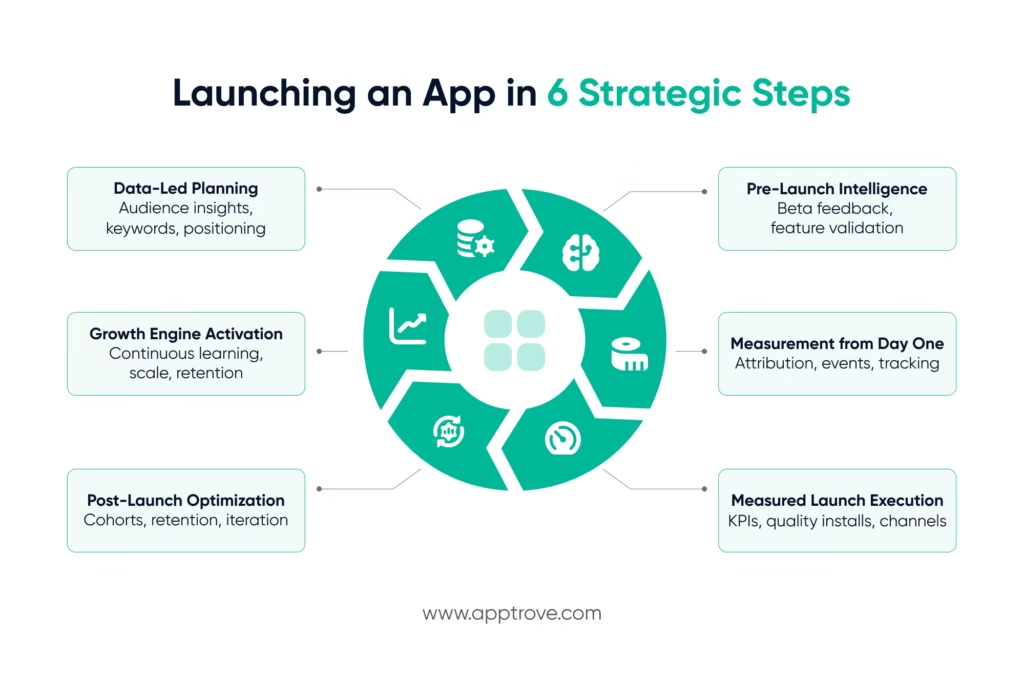
1. Start with Data‑Led Planning, Not Wishes
Conventional launch strategies usually start with creative communications or product attributes. Nevertheless the most intelligent groups start with data:
Audience Intelligence
Before launching an app, analyze who your users actually are, what they search for, and where they discover apps like yours. Consider the demand of a keyword, performance of competitors, and actual store search. This is not a guesswork but groundwork, which has everything that follows afterwards being more efficient.
For example, knowing which search terms drive discovery in your niche helps tailor your app store listing, ads, and promotional content so your app surfaces where real users are looking. This foundational insight feeds directly into how to launch an app successfully, and how to build ongoing discoverability.
Value Proposition and Positioning
You do not launch an app you launch a solution. Consumers do not download the products, they download solutions. The more obvious your core value, the less difficult it is to:
- define your messaging
- create compelling creative
- measure traction against real user signals
Identifying a powerful unique value proposition prior to commencing to promote the app would also enable measures such as retention and engagement to have much more significance.
2. Use Pre‑Launch Intelligence to Shape Your Launch Experience
One thing that’s rarely discussed: launching an app with pre‑launch learnings gives you a massive advantage over others who treat launch as Day 0.
Build and Validate with Real Feedback
Beta or soft release is not only done to QA but it is a method to test real engagement data that helps shape your launch plan before you lay down a big investment on acquisition or paid campaigns.
You get answers to questions like:
- Which features are used the most?
- Where do users drop off?
- Are your onboarding flows intuitive?
It is not only the knowledge that you accumulate here that will get you to solve bugs; it also guides your creative approach, your messaging, and your measurement model.
3. Integrate Measurement From Day One
This is where most teams fail, they consider analytics as something that is added post-launch. That’s backwards.
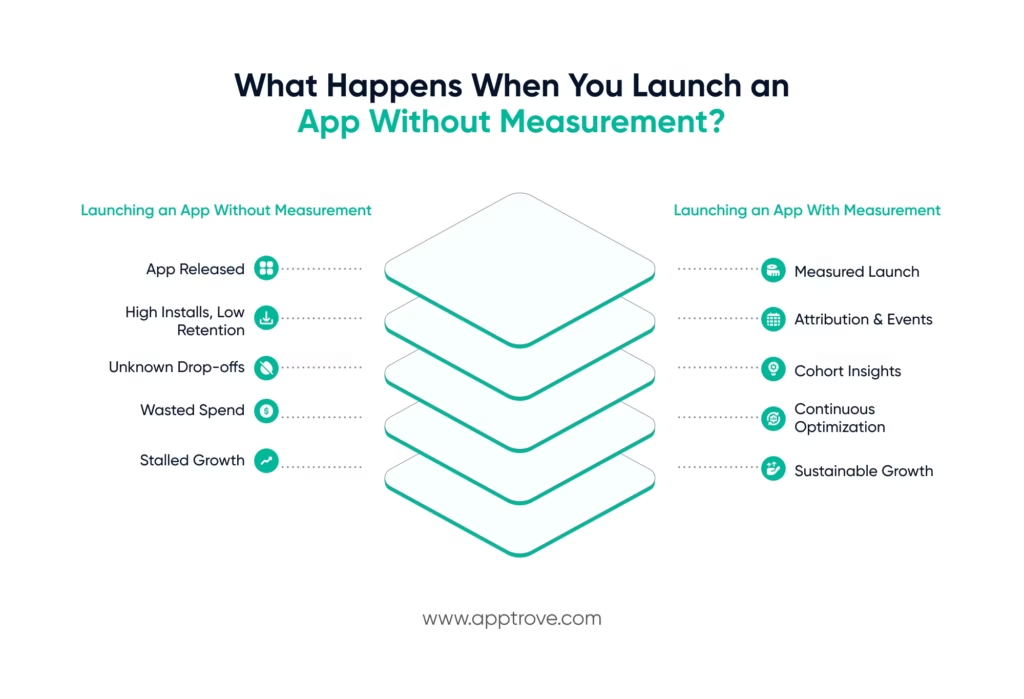
If you wait to measure until after launching an app, you’ve already missed crucial early signals. This is the reason why before launching, it is essential to integrate a Mobile Measurement Partner (MMP).
An MMP does three things you can’t afford to ignore:
- Accurate multi‑channel attribution, Know exactly which channels, creative, and search terms drove real downloads.
- Cross‑platform tracking, Whether users come from organic search, paid ads, or social, you’ll see which sources drive loyal users vs shallow installs.
- Event and behavior tracking, Downloads alone aren’t enough; understanding how users interact with core features post‑install will guide optimization.
Lacking this sort of measurement, you are basically throwing your hat in the dark, you will know the number of installs you received, but not why and where. When refining how to launch an app, this depth of insight makes the difference between guesswork and precision.
4. Create a Measurement‑Driven Launch Execution Plan
With a great app, the success will be determined by how you coordinate the launch in terms of channels and measurements.
Consider not just a Days and tasks timeline. Rather, develop a measurement-based launch strategy:
Define Early Success Metrics
Before users ever see your app in the store, set measurable objectives like:
- Day 1 retention percentage
- Week 1 engagement or critical feature usage
- Cost per quality install
- Keyword ranking velocity
These benchmarks transform your launch into an optimization cycle where every campaign can be adjusted based on performance, not assumptions.
Coordinate Channels Around Meaningful Signals
When launching an app, most teams default to broad acquisition channels like paid ads, influencer shoutouts, or email blasts. These work, but only when tied to tracked outcomes.
For example:
- Paid ads can show a high install count, but if users don’t come back on Day 7, acquisition wasted money.
- Organic search growth is invaluable, but only when you track keyword performance over time and adjust listings accordingly.
Align your channel performance with real retention and engagement insights. This shifts your focus from install volume to user value, a more sustainable indicator of long‑term success.
5. Post‑Launch Optimization Beats Post‑Launch Panic
The week after launching an app should never be a frantic scramble. It must be a data driven optimization sprint.
Here’s how to approach it:
Track Behavioral Cohorts
Analyze cohorts, groups of users who installed on given Days of the week or channels and see the difference in retention and engagement with your MMP. Determine trends and update them in a personalized manner. For instance:
- Did users from social campaigns stick around longer?
- Are certain acquisition sources producing more revenue?
These insights help you reallocate budget and refine messaging rapidly.
Iterate Based on Real User Feedback
Analytics will not give you the reasons as to why users are churning, however, qualitative feedback data and quantitative data will. Focus on introducing fixes and improvements with a direct reduction in friction in the main areas of impact: the onboarding process, core feature interactions, and in-app monetization experiences.
6. Treat Your Launch as the Beginning of a Growth Engine
Many think launching an app is a milestone, but it’s really the start of optimization.
And your initial significant data set on actual user behavior is your launch. When you have real-time tracking in place and have goals that are consistent with meaningful metrics, then that data is the engine of continuous improvement.
For example:
- A drop in Day 1 retention could indicate onboarding confusion, prompting UI/UX refinement.
- A surge in installs from a particular keyword means you should double down on related app store optimization initiatives.
It is this process of continued learning that makes a launch a long-term success.
Conclusion
When launching an app, the goal isn’t merely downloads, it’s sustained engagement and growth. That means that you have to go beyond the common launch lists and adopt a measurement-focused strategy in planning to post-release.
Rather than just targeting spikes in traffic or install numbers, base your strategy on quantifiable user behaviors as well as retention metrics and long-term value metrics. By having a tool such as an MMP as a part of your initial setup you will be able to have the insight to adapt fast, optimize smart and the usual traps of early app attrition will be avoided.
FAQs
1. What is the most important factor when launching an app?
The most important factor when launching an app is having a clear, data-driven launch strategy. A successful application launch goes beyond publishing the app on stores, it requires understanding your target audience, defining success metrics early, and setting up measurement to track retention, engagement, and user behavior from Day One.
2. What is the secret to the successful launch of an app in a competitive market?
A successful launch of an app requires a powerful positioning, pre-launch understanding and ongoing optimization in a saturated market. It will require testing your app in the form of beta testing, incorporating analytics prior to launch, and testing real user data to optimize acquisition channels, onboarding flows, and post-launch engagement solutions.
3. How long does it take to see results after launching an app?
Results from launching an app typically begin to surface within the first 7-30 days. Acquisition quality, feature usage, and Day 1 retention are the good pointers. But you can be successful in the long run as long as you can keep on iterating and optimizing based on post-launch data.
4. Why do most application launches fail after the initial download spike?
Most application launches fail because teams focus only on installs instead of user behavior. It is impossible to infer the reasons behind user churn without the adoption of retention, engagement, and cohort performance tracking. Launching an app without measurement often leads to wasted acquisition spend and poor long-term growth.
5. What metrics should you track when launching an app?
When launching an app, key metrics include Day 1 and Day 7 retention, onboarding completion rates, core feature engagement, cost per quality install, and acquisition source performance. These measures can be used to decide whether your launch is making real user value or superficial downloads.