How Concentrated Marketing Strategy Has Evolved Today
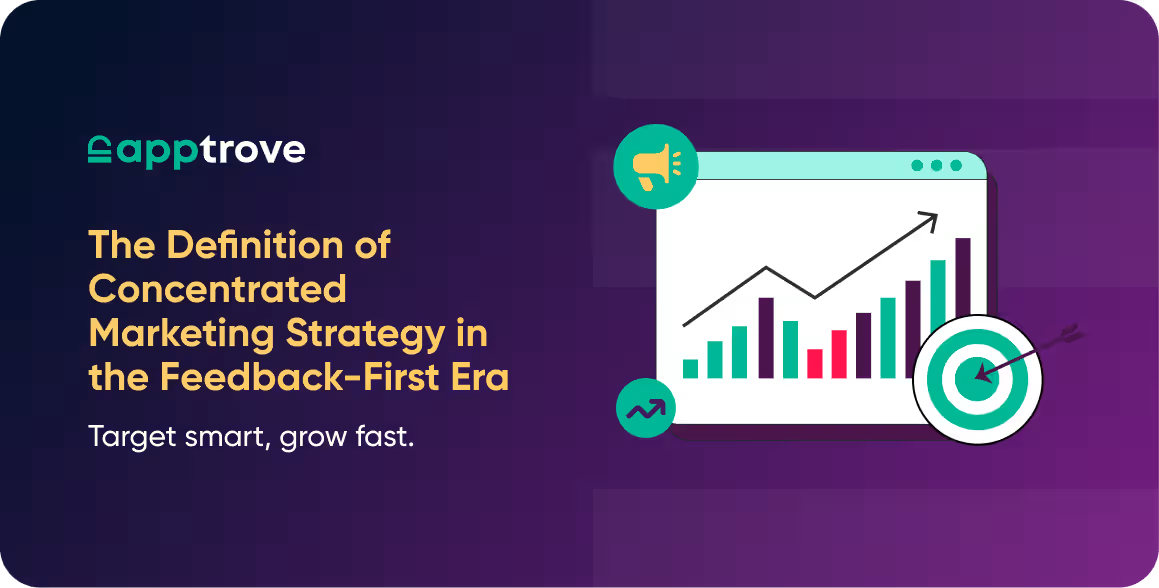
App growth has changed from reaching all potential users to reaching only those who show interest in your product. As a result of this change, app marketers have shifted their focus from broad, unfocused advertising campaigns to focused marketing campaigns concentrating on smaller groups of highly engaged users with the greatest potential for long-term success. Rather than spreading their budgets out over many audiences, app marketers concentrate their spending on the most valuable segments of their target markets.
The rapid transition from acquisition to retention is being driven by numerous factors. These include increased acquisition costs, changes in user expectations, and a growing user base that is becoming significantly less engaged with apps where they don’t feel like they are getting value. Industry data consistently shows that acquiring a new user is significantly more expensive than keeping an existing one. In fact, research indicates that the average cost of acquiring a new customer can be five to seven times higher than the cost of retention. At the same time, user expectations have shifted. Studies also suggest that users are three to five times more likely to engage with an app when the experience feels personalized and responsive to their specific needs.
To truly understand your users’ behavior within your app, in-app feedback provides a much more timely and accurate picture than delayed survey responses or other forms of surface-level metrics. In-app feedback is a real-time indicator of user engagement and why users are engaged with your app in the manner that they are.
Having in-app feedback in combination with accurate mobile measurement and clarity of mobile attributions from trusted platforms, such as Apptrove, provides app owners with the ability to eliminate the noise and make data-based decisions on the user’s actual experience. This article will explain what a concentrated marketing strategy for apps really means and how in-app feedback is fundamental to developing growth strategies that are based on actual signals.
What does a Concentrated Mobile App Marketing Approach Look Like?
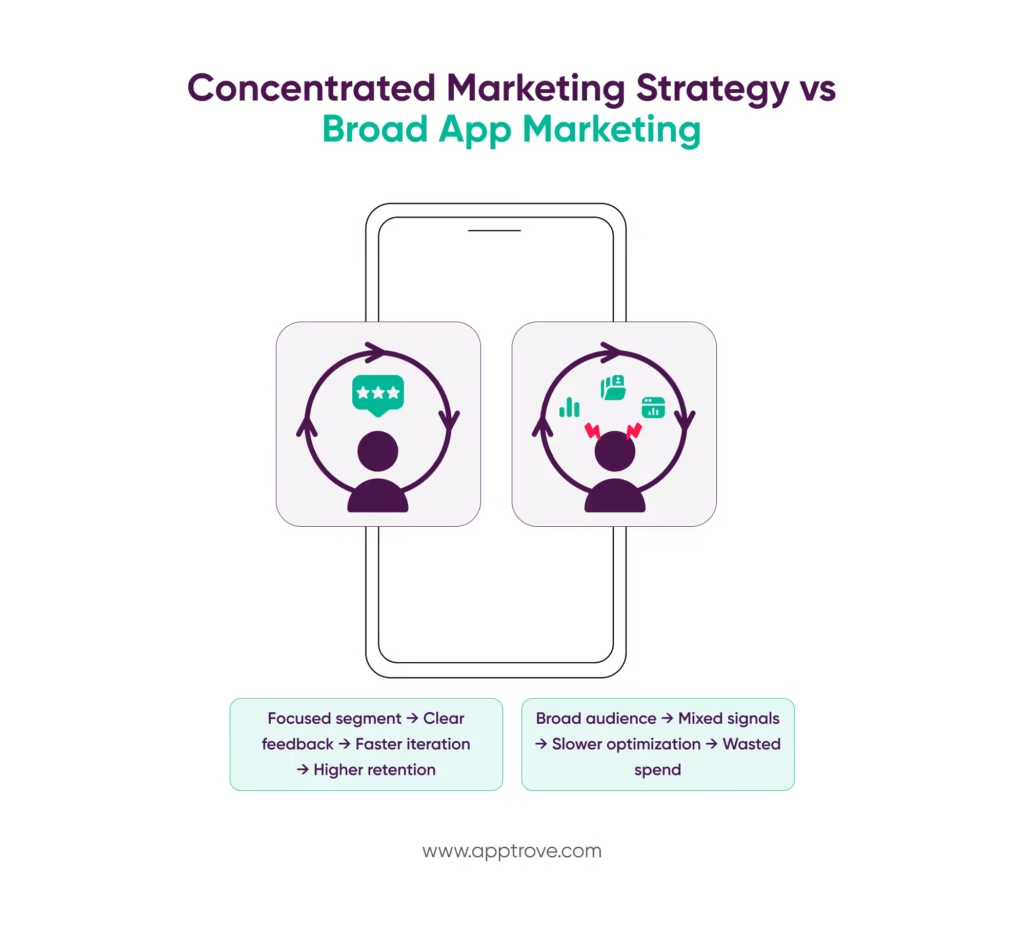
A concentrated marketing strategy essentially means that you don’t have to cover as many potential customers, but instead focus on one specific target audience. This audience is defined by the problem they are facing, and the entire user experience, including customer contact and customer service channels, is geared towards addressing that problem.
When it comes to mobile apps, this kind of approach is very different from the more typical approach of targeting large audiences in multiple ways through multiple channels in order to generate some type of response from each channel. You typically see mobile app marketing that has the same message on every channel, with the hope that something sticks. What this results in is inconsistently branded messages, scattered messaging, and confusion on behalf of the mobile app company regarding what works and what does not.
In contrast, a concentrated marketing strategy considers the process of growing your customer base as an ongoing feedback-driven process. Rather than assuming that you know what your users want, you are instead paying attention to how a particular group of users uses your app, so you can use that information to adjust your marketing initiatives accordingly.
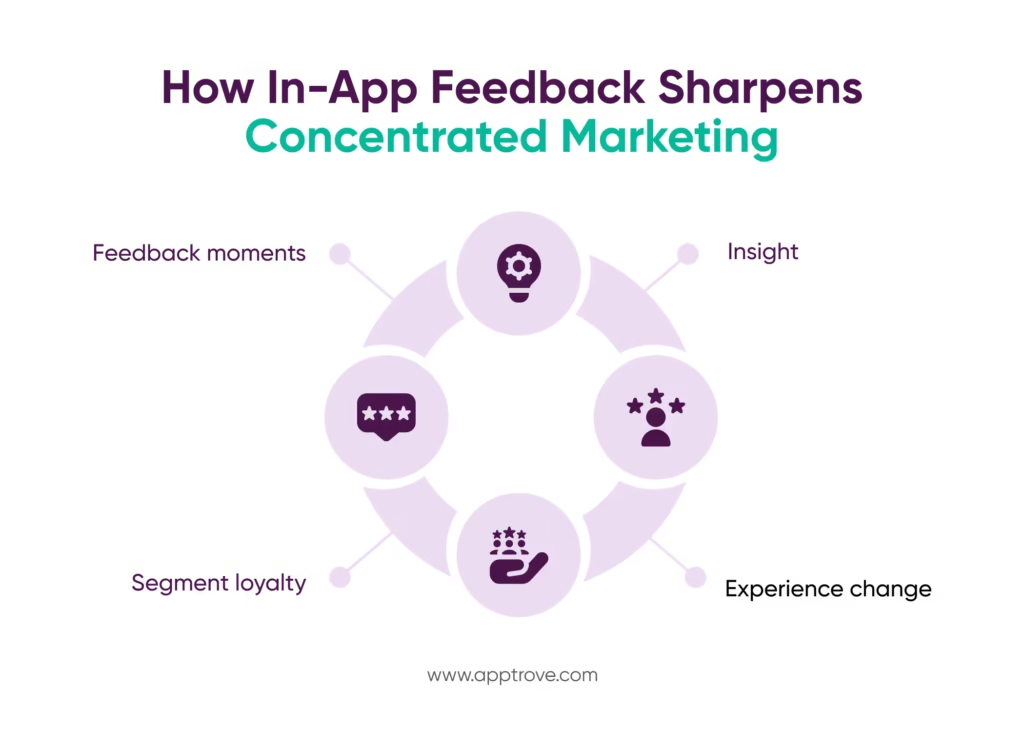
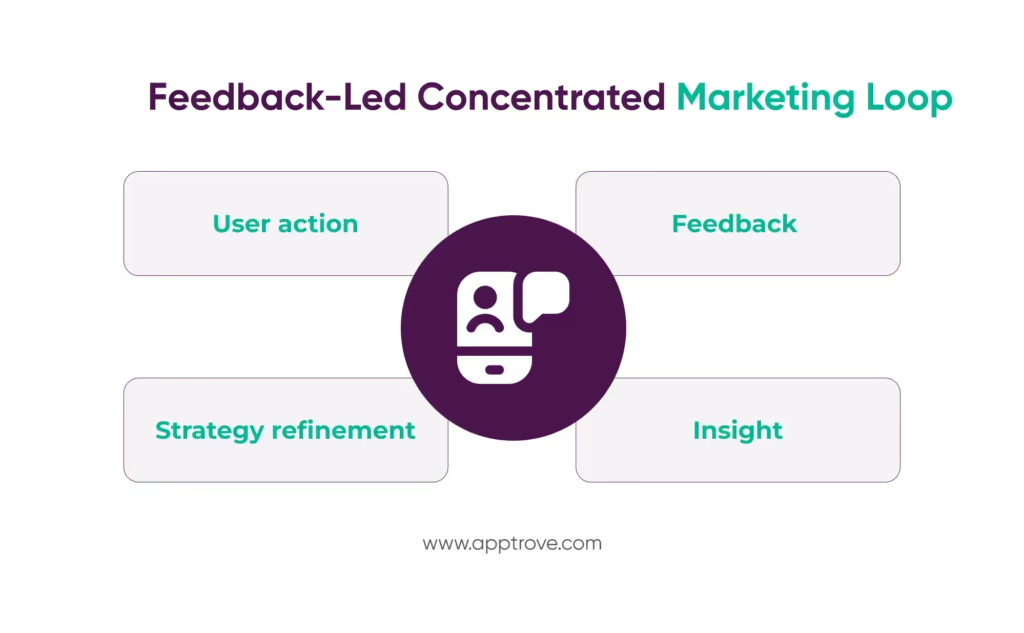
In-app user feedback is instrumental in this instance. If the focus is on a specific segment, there is a greater likelihood that the feedback will be from users whom you are trying to retain. These users’ responses will allow you to better understand if the experience is functioning as expected, locate areas of discomfort, and identify what needs to be improved. As this process is repeated over time, it will produce an increasingly quicker feedback loop that connects insight with action, helping your application evolve toward the needs of your core user base, instead of attempting to create an experience for all of the users at once.
The Need for In-App Feedback As Part of An Effective Concentrated Marketing Strategy
Traditional app metrics like installs, sessions, and views provide insight into how users interact with your app, but they often fall short of explaining why users stay or leave. Industry benchmarks show that nearly 25% of users abandon an app after just one use, and close to 70% churn within the first 90 days, regardless of how frequently they may have opened the app initially. This means that even if users are opening your app dozens of times a week, high activity alone doesn’t necessarily indicate that the app is delivering meaningful value. Without understanding user intent, satisfaction, or friction points, surface-level engagement metrics can create misleading signals of success—masking deeper experience issues that only become visible through contextual insight and in-app feedback.
Using in-app feedback gives you additional context to use alongside the metrics. As you watch users go through each step of the onboarding process, through various features, or abandon certain processes altogether, you are able to see what they are trying to accomplish; furthermore, in addition to seeing where they tap on their screens, in-app feedback also shows you where there are roadblocks or issues that are keeping users from completing a process or using your app as designed.
The most important use of in-app feedback is to substantiate whether your targeted customer segment considers itself to be served. When consistent answers are submitted by a concentration of users (your target market), trends emerge quickly. You can correlate what users believe about your application to how they behave, especially when you have attribution tracking in place that demonstrates how and when users come into contact with your application and how they engage with it through multiple contact points. The result is a direct feedback loop that turns data insights into improvements in the customer experience instead of speculation.
As a marketing specialist or product owner, you are no longer interpreting silent or ambiguous data regarding your target customer segment. You can obtain direct insight into how users feel about your application as they use it, giving you the confidence and accuracy to continuously adjust your marketing approach.
Creating a Concentrated Marketing Strategy from Feedback within the App
When you create a concentrated marketing strategy, it is important to focus on one user segment only instead of trying to reach multiple user segments. To find the right user segment for your concentrated marketing strategy, look at a specific type of user that has shown clear intent within your app (for example, users that are returning to your app and looking at important features, or completing important actions). This may initially feel more like a theory than something you can be quite sure of, which is where user feedback comes into play.
Once you have identified your user segment, you can look closely at their behaviour while they are using your app, along with their feedback (or ‘voice’), to help you understand why they sign up and what their expectations are during the onboarding process. In addition to this being valuable information about what motivates users to sign up, user feedback also provides insight into how users view success and how their behaviour may vary during this process. Rather than simply assuming with respect to things that may seem like they would be important to users (for example, the use of a specific feature), you will begin to see patterns emerging through consistent feedback and sentiment on various specific interactions with the feature.
This collaboration leads to you building a better understanding of your user base, and you can now create deeper and more meaningful communications with them based on the patterns you observe in their behaviour. You also become better equipped to create a smoother onboarding process because no longer do you have to guess at where the friction points may be for your end-users. You will be able to match their personal experiences to your feature priorities.
This experimentation evolves into a more comprehensive strategy, and you are no longer simply guessing as to where the market opportunities for your application may be; now you have a reliable source of information that is available to you through the insight gained from your in-app feedback, as well as having both your marketing strategy and your users’ actual needs aligned.
Retention and Engagement are Enhanced Through a Concentrated Marketing Strategy
The retention rate of the user base will increase due to the concentrated marketing strategy and the immediate relevance of the app to the user’s needs. By creating specific user experiences, the user can interact with the app as an intended user instead of as a general user. Therefore, the user does not have to learn how to use the app; instead, the app is built around the user. This relevance is often the deciding factor for whether or not the user stays with the app for several months or uninstalls the app after only a few uses.
Through in-app feedback, users can provide input and see direct improvements in areas such as ease of use (smoother onboarding and flow) and features that meet their personal goals, thus increasing user trust and reducing churn. Users will feel that the app is evolving in parallel with them as opposed to developing without concern for the user. All these small instances of being recognized as a specific user will ultimately lead to the creation of habits, which will ultimately distinguish casual users from regular users.
Research has repeatedly shown that highly personalized, experience-driven app design has a direct and measurable impact on engagement. Users are far more likely to remain active when an app adapts to their preferences, behaviors, and usage patterns. Studies on adaptive and personalized UI/UX design demonstrate significant improvements in user engagement and satisfaction when interfaces respond to real user behavior. Personalization isn’t just about interface aesthetics—it’s about relevance. When users feel that an app understands their needs and evolves based on their feedback, engagement becomes habitual rather than forced, strengthening long-term retention naturally.
A targeted approach to marketing allows brands to scale personalized apps by leveraging feedback from one concentrated audience, as opposed to feedback from many different, fragmented audiences.
When a brand listens to what a specific segment of users wants and creates an experience based on the feedback from that segment, the brand will develop a cycle of relevance, trust, and Engagement with those users that creates long-term growth without the need to continually reacquire users.
Concentrated Marketing Strategy – When to Use
Concentrated Marketing Strategy is best used when clarity of purpose is more important than achieving scale. The Concentrated Marketing Strategy is particularly useful for new apps that are still in the early stages of development and are looking for a product-market match. By concentrating your marketing effort towards a small target audience, you gain a deeper understanding of their needs and preferences, rather than trying to achieve rapid growth. The concentrated marketing strategy is an excellent way for new apps to gather feedback directly from users within the app regarding what aspects of the app users are most interested in and whether they are experiencing genuine value from using the app.
Conversely, as apps continue to mature, the strategy for growth shifts from acquiring new users to retaining existing users. Therefore, a mature app that is experiencing stable growth and has no or low engagement issues can concentrate its marketing effort on identifying those most valuable users who will continue to return to the app. This concentrated effort will provide feedback focused on improving the experience of this user group through in-app feedback loops. This concentrated feedback is much more relevant to the app than standard metrics for engagement and user growth.
Employing a concentrated marketing strategy is becoming more essential as app developers navigate through the privacy restrictions of collecting user-level granular data. These privacy restrictions make in-app feedback one of the few remaining reliable sources of information to help you determine what to improve and how to enhance the experience of users without violating their privacy rights. Therefore, apps that choose to develop their user experience by focusing on a small target audience of users at the right time will be able to maximize their engagement levels and develop meaningful relationships with their users.
The Effectiveness of a Feedback-Driven Concentrated Marketing Strategy
The most effective concentrated marketing strategy is one driven by feedback rather than assumption. Concentrated marketing strategies focus on a clearly identified user segment, and when paired with in-app feedback, they reduce the uncertainty of determining what this user segment wants by providing real insights based on actual user experiences in authentic moments.
By building user experiences based on user feedback regarding intent, friction, and sentiment, the concentrated marketing approach helps to develop deeper engagement and trust over time, allowing for sustainable growth without the constant pressure to acquire more users or provide more user touchpoints than necessary. Therefore, rather than scaling all of the noise surrounding your product(s), you will instead be scaling the level of relevance.
The feedback-driven concentrated marketing strategy provides teams navigating complex user journeys and privacy-first environments with precise direction and confidence in their decision-making. If you would like to learn more about the value of understanding in-app feedback and accurate measurement and how they can both support focused growth and provide you with greater clarity in making better decisions about your application(s), please contact Apptrove’s team and they would be more than happy to help.
FAQs
1. What makes a concentrated marketing strategy different from traditional app marketing?
With a focused marketing approach, you have the option to develop a strong emphasis on servicing a specific segment of users based on their needs, while, when doing generic or traditional marketing, the marketing team has to spread their efforts over several types of users, leading to less effective messaging and weaker feedback signals.
2. Why is in-app feedback critical to a concentrated marketing strategy?
By providing immediate feedback within the app, you can collect both user intent and sentiment regarding their experience when they interact with your product, allowing you to quickly validate any assumptions or make adjustments to improve experiences for specific users as they occur.
3. How does a concentrated marketing strategy support privacy-first app growth?
The concentrated marketing method uses the use of aggregated behavior & direct feedback from users, allowing marketers to evaluate choices whilst respecting and meeting the current privacy expectations of today.
4. When should an app shift from broad targeting to a concentrated marketing strategy?
Application Software usually goes through transitions when the costs to acquire users increase, when user engagement reaches a plateau, or when retention becomes the key focus of a business, thereby indicating that providing a high-quality experience and relevant functionality has far more value than expanding a company’s user base.
5. How can teams measure success beyond installs in a concentrated marketing approach?
Retention rates, repeated engagement rates, and qualitative user feedback trends are the main indicators used to define whether the targeted user segment discovers continued value in the application experience.