Selecting the appropriate app types determines subsequent steps: the cost of development, the time to market, and, most importantly for growth teams, the precise measurement of post-install events. As stated in 42matters‘ data from 2026, Google Play hosts 2.4 million apps and adds more than 2,400 applications daily. This app catalog can be classified into three specific areas according to: 1) the method of development (native, hybrid, web, cross-platform); 2) the functionality (gaming, e-commerce, fintech, etc.); 3) the system of generating income (subscription, ad-supported apps, etc.). Each classification method has its own peculiarities of attribution and analytics. This is the reason why marketers have to know the classification principles. The guide describes the main types of apps and shows how the choice of one of the app types influences the measurement of marketing performance.
What Are App Types?
An application type is a term that is used to categorize an application along the lines of its making, functionality, or monetization. This is a broad category: a delivery application and a video game may both fall into the definition of an application, but their working is totally different from the marketing viewpoint. Understanding such categories is of importance for three groups of people. One group of people who are affected by knowing the particularization is developers who are able to choose the most suitable technology stack according to their budget and functioning requirements. Another group of people who need this information is product teams that are able to compare their feature sets against those of their rivals. Last but not least are marketers who use this classification in order to define tracking methods of installs, in-app events, and revenue across app stores and browsers.
Mobile App Types by Development Approach
The first and most technical way to classify app types is by how they are built.
Native Apps
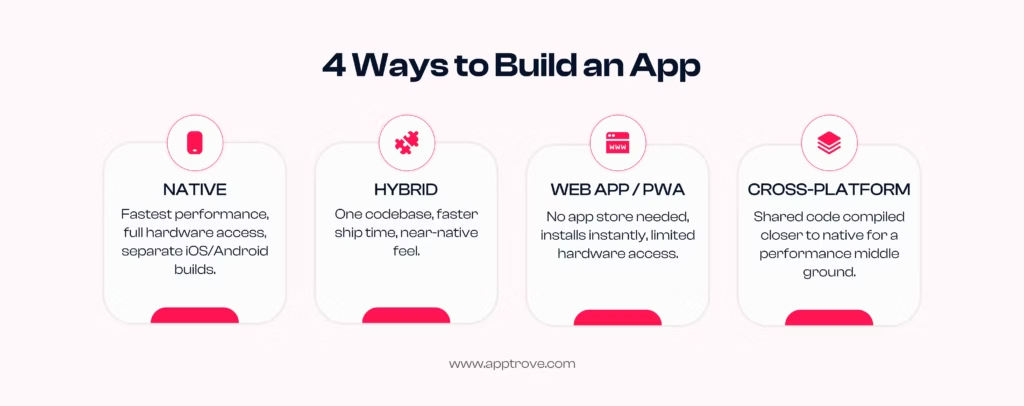
Native apps are created for a specific operating system; Swift or Objective-C for iOS, and Kotlin or Java for Android. Such an approach assures fast operations and provides complete access to the device’s hardware (camera, GPS, or biometric sensors) and provides the best UX possible; however, having separate code bases means higher expenses.
Hybrid Apps
This category is characterized by the combination of a single codebase—developed using something like the React Native or Flutter frameworks, with a thin native wrapper. It tends to involve a compromise on a small amount of performance for much quicker development and maintenance of the application in both iOS and Android, hence its popularity among startups..
Web Apps
Web apps and Progressive Web Applications (PWA) were accessed directly via a web browser on a mobile device instead of having to be downloaded from App Store. This method is lighter, requires no approval from an app store for its use, and is always updated but it has limited access to the native functionality of the device and is less monitorable than conventional mobile app tracking techniques.
Cross-Platform Apps
Cross-platform apps are similar to hybrid apps, but they are closer to native apps in terms of code compilation. Xamarin and some apps created from Flutter technology belong to this category.
Mobile App Types by Function and Category
Once you move past development approach, apps split again by what they actually do for the user, the major functional categories include:
Gaming apps, which range from hyper-casual titles to complex multiplayer experiences and typically monetize through in-app purchases, rewarded video ads, or a mix of both.
Social and communication apps, built around messaging, content sharing, or community features, where engagement metrics matter as much as installs.
E-commerce and shopping apps, which need airtight tracking from ad click to purchase, since a single missed conversion event directly costs revenue.
Fintech and banking apps, which carry strict compliance requirements and need fraud-resistant attribution given the sensitivity of financial data.
Health and fitness apps, often built around subscriptions and habit-forming daily engagement loops.
Education and e-learning apps, which frequently combine free content with paid courses or certifications.
Entertainment and streaming apps, where video quality and buffering performance are as important to retention as the content library itself.
Utility and productivity apps, covering everything from note-taking to file conversion, usually monetized through one-time purchases or light subscriptions.
Travel and on-demand service apps, such as ride-hailing or food delivery, which depend heavily on location data and real-time performance.
Every one of these functional categories can be built using any of the development approaches above; a fintech app, for example, might be native for security reasons, while a simple utility app might comfortably run as a PWA.
Mobile App Types by Monetization Model
The third lens on classification is how the app makes money, and this is where marketing measurement gets the most complicated.
Subscription apps charge users on a recurring basis and require tracking trial starts, conversions, renewals, and churn; not just the initial install.
In-app purchase (IAP) apps, common in gaming and social categories, need event-level tracking tied to specific purchase actions rather than a single install event.
Ad-supported apps monetize through impressions and clicks shown to users, which means the marketing team must track both user acquisition cost and the ad revenue that acquisition eventually generates.
Freemium apps blend a free tier with optional paid upgrades, so measurement has to distinguish between a “free” install that never converts and one that eventually becomes a paying user.
Why Category Choice Affects App Store Visibility
The category you use does not only stay internally but also defines how your app is categorized within the app stores and consequently influences organic ranking. Each app is ranked in its category according to the app store algorithms; hence, a specialized fitness app registered in the broad ‘Health and Fitness’ category will have to deal with very different competition than the same app registered in a narrower subcategory. The category will also influence the keywords your app becomes eligible for and what featured positions it gets on the store. If you make the wrong category choice, this may affect your app’s chances negatively and lead to organic downloads on the App Store even before your advertising campaign starts, which makes it very important to do this part correctly.
How App Type Affects Attribution and Marketing Measurement
This is the part development tutorials skip and growth teams cannot afford to ignore: every app type changes how installs, events, and revenue should be measured.
A mobile application that relies on in-app purchases must ensure that event tracking and fraud prevention tools are put in place to eliminate any click injection or installation farms. An app that is available on major application stores such as the Play Store or other Android marketplaces needs to have a system for attribution that accumulates the data. A subscription service must implement deep linking that makes sure the user gets to the specific subscription they saw, rather than the main screen.
This is the moment when the use of mobile measurement partners like Apptrove becomes relevant. Apptrove’s cross-store attribution feature accumulates all installation and event data from the major app stores such as Play Store and App Store as well as from third-party Android app stores and displays it in a single dashboard. As a result, marketing teams don’t need to deal with various spreadsheets coming from multiple sources to get required information about their product. Thanks to Unilink, Apptrove has achieved a solution for moving the whole context of the marketing about installation into the installation process itself, as it is especially important for subscription and e-commerce apps. Apptrove also provides real-time data reporting, which is crucial for organizations that need to move quickly. In-app purchase and gaming applications are regularly affected by fraud attacks, but thanks to Apptrove, such conversions can be filtered before getting registered in the campaign performance analysis.
How to Choose the Right App Type for Your Business
The process of identifying which type of app in the market to build is not a simple task, but involves a series of choices and compromises. Let us explain how to choose the appropriate type of app by discussing the points given below.
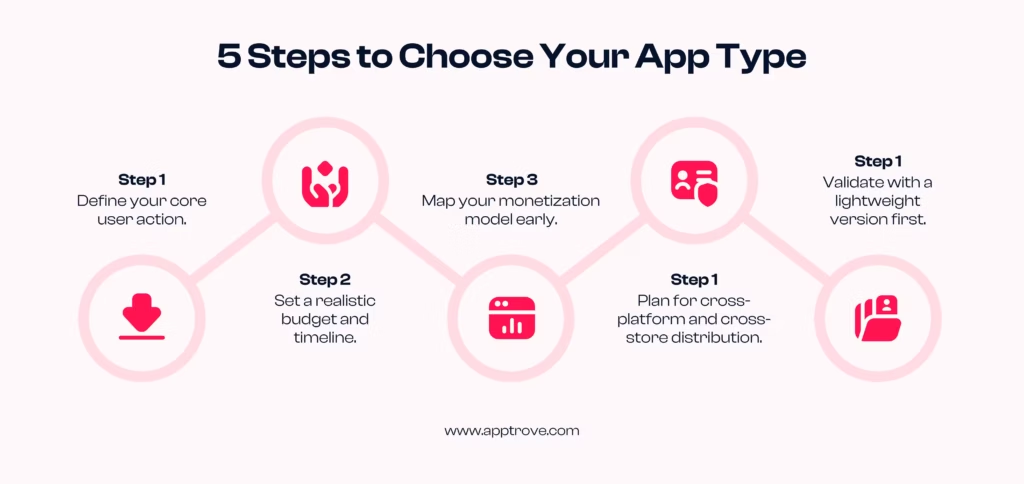
Step 1: Decide on the main function of your app. If you need fast interactions, you can consider using a native app. However, for a more informative app, you can go for either a web or PWA app.
Step 2: Set a budget and timeline. Hybrid applications are always less expensive and quicker to launch in comparison to native versions which is essential for testing the market demand.
Step 3: Define the strategy of your application monetization from the very beginning. It is important to decide whether you are going to use a subscription model for your app or provide your users with an opportunity of in-app purchases.
Step 4: Plan the way of distribution in advance. You will need to be able to collect data regarding iOS, Android, and other platforms from day one if you expect your users to make use of these devices.
Step 5: Test your idea by releasing a minimum viable product. Many businesses release a PWA application to test market demand.
FAQs
What is the most common app type for startups?
Hybrid apps are the most common choice for startups because a single codebase can serve both iOS and Android, keeping development costs and timelines lower during the validation phase.
What’s the difference between a native app type and a hybrid app type?
A native app is built separately for each operating system using that platform’s own language, giving it the best performance and hardware access. A hybrid app uses one shared codebase across platforms, trading some performance for faster, cheaper development.
How do I know which app type is right for my business?
Start with your core user action, your budget and timeline, your monetization model, and your expected distribution across platforms and stores; the answers to those four questions point most businesses toward the right fit.
Is a PWA a real app type or just a website?
A Progressive Web App is a distinct category that runs in a browser but behaves like an installed app, offering offline access and push notifications without requiring an app store download.
Do all app types need the same attribution setup?
No. A subscription product needs trial and renewal tracking, a gaming app needs fraud protection against fake installs, and an e-commerce app needs purchase-level event tracking; attribution should be configured to match the category, not applied generically.
Can one app belong to more than one app type?
Yes. Classifying apps by development approach, function, and monetization model are independent lenses, so a single app is usually described by all three; for example, a native, gaming app with in-app purchases.
Which app type is hardest to track for marketing attribution?
Cross-store apps and apps with heavy in-app purchase activity are generally hardest to track, since data is split across multiple stores or requires granular event-level attribution rather than a simple install count.