Your clients are already looking at their mobile phones; the issue is whether your marketing can keep up.
From the time a consumer downloaded your first app to the time that they received a notification about your latest product, purchased it, and participated in your brand’s re-engagement program, the mobile platform has been an integral part of their customer journey. Mobile devices currently account for more than half of global network traffic, meaning billions of people spend many hours every day using mobile apps, social networks, and mobile websites.
However, reaching mobile users means more than sending them more notifications or running more ads. Today’s marketer needs to be aware of who the customers are, what they are doing, where they are within the buying process, and which message will drive them to action.
That is when the mobile marketing platform can come in handy.
The mobile marketing platform includes various mobile marketing solutions, which help companies to collect customer signals, make audience segments, deliver messages in a customized way, automate campaigns, and evaluate results from one cooperating space.
Consider this system as being the brain of the entire mobile-first
In this guide, we’ll explore how these platforms work, their key features, major benefits, marketing channels, segmentation capabilities, analytics, implementation strategies, challenges, and the role AI is expected to play in their future.
What Is a Mobile Marketing Platform?
A mobile marketing platform is a type of technology that assists businesses in planning, executing, automating, personalizing, and analyzing mobile marketing operations. In lieu of utilizing separate tools for audience management, messaging, analytics, process automation, and tracking campaigns, marketers can apply a fully integrated mobile marketing platform in unison. The primary value of an integrated mobile marketing solution is in the intersection of various aspects of mobile marketing.
For instance, a user might download an app after seeing an ad, review a product, leave a shopping cart, come back after a few days and finally make a purchase after getting a personalized message. An integrated mobile marketing platform keeps marketers in touch with more customer interactions.
Understanding a mobile marketing platform
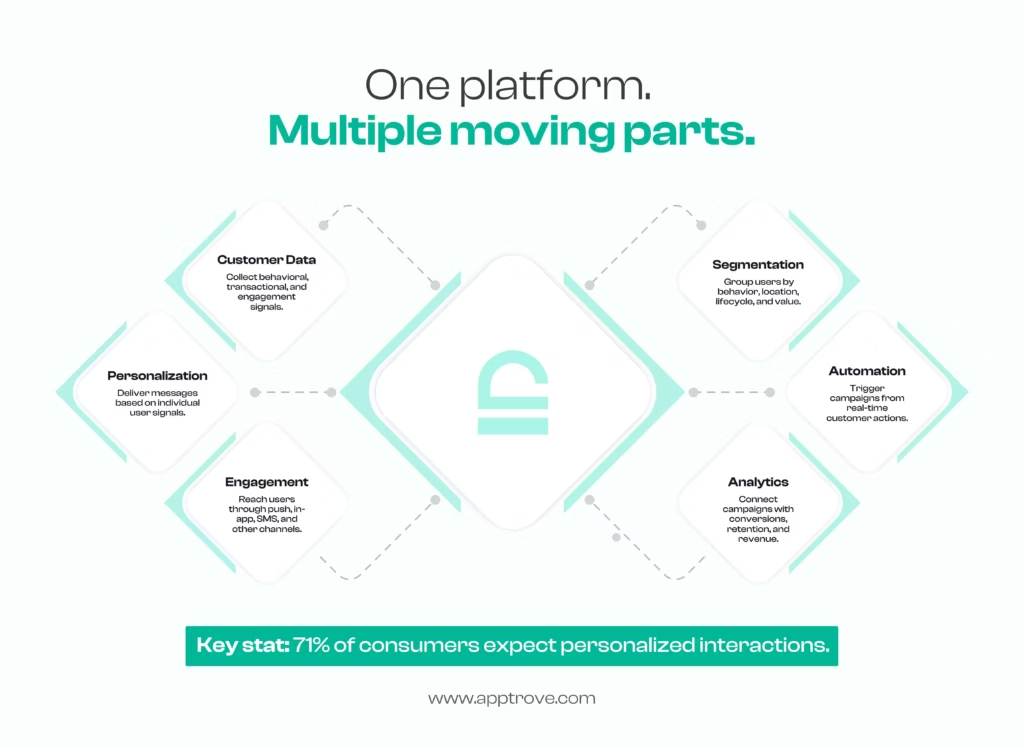
A mobile marketing platform is essentially a solution connecting mobile marketing components such as customer data, mobile channels, campaign automation, and analytics.
The specific capabilities of a mobile marketing platform depend on the features available. Among these features, there could be push notifications, in-app messaging, SMS, audience segmentation and targeting, process automation, tracking of mobile campaigns, etc.
How a Mobile Marketing Platform Works
The usual procedure initiates with the gathering of significant customer and behavioral information.
The platform then utilizes the gathered intelligence to develop audience segments. The marketers can also develop campaigns for particular segments, personalize communications on the basis of the behaviour of customers, automate interactions and analyze the results of every proceeding.
Because of this, the new feedback loop is created.
The campaign gives rise to engagement. Engagement gives rise to data. And that data drives the next campaign.
Mobile marketing platform and traditional marketing solutions
Traditional marketing solutions are normally disconnected. One solution is meant for emails, another is for analytics, another serves ads, and the last one monitors customer interaction.
The primary aim of the mobile marketing tool is to connect all these components.
Rather than asking the question, “Did somebody click?” the marketers can get to a much more useful question:
“What happened to the customer afterwards?”
This change from campaign statistics to customer journeys proves the necessity of mobile marketing platforms among modern marketing professionals.
Why Do Businesses Need a Mobile Marketing Platform?
Mobile audiences should not be regarded as a collective that is awaiting one particular message since they consist of individuals corresponding to different phases of the buyer’s journey. Hence, if one user is checking the application for the first time, the other one may research possible alternatives, while a loyal customer realizes they are ready to make a purchase again. Thus, sending the same message to all users can be a waste of time and resources.
Using the mobile marketing software, businesses can convert the knowledge about the particularities of mobile audiences into actionable marketing strategies that take customer behavior into account and enable brands to move from traditional wide-scale advertising to targeted behaviour-based policy.
Mobile Marketing Strategies
The main place for customers’ search, buying, comparing, and communicating is mobile devices. A proper mobile marketing strategy allows companies to communicate with consumers through several channels, including in-app notifications, messages, mobile advertisements, etc.
Instead of waiting for consumers to make the next step in their journey, marketers can create meaningful marketing touchpoints at every stage of the customer journey.
Making Marketing More Personalized
Personalizing the messages does not necessarily mean they will be efficient unless
Someone might discover a brand through an ad, install its app, interact with a push notification, visit a product page, and complete the purchase later.
Connecting these interactions gives marketers a clearer picture of what is actually driving results.
Improve Campaign Efficiency
Through automation, team members are able to start campaigns based on a specific action rather than sending each message themselves.
Marketers can find very valuable audiences, automate repetitive work processes, experiment with different strategies, and analyze their efforts.
Sending marketing is not the only aim–the aim is to make every interaction via mobile device valuable.
Mobile Marketing Platform Features
Modern platforms for mobile marketing can do more than simply plan notifications. They connect customer data with channels for messaging, campaigns, and results. The best features give marketers an opportunity to analyze the audience’s behavior and act instantly depending on it.
Advertising in Mobile Applications
There’s a lot of useful information when a mobile app works–from the moment it is downloaded to the moment it is used in the required ways. The platform services can process this information and set up appropriate campaigns for attracting, working with, maintaining, and re-attracting users.
For instance, the marketers can create different experiences for a new and a returning customer.
Push Notifications and In-App Messaging
Push notifications are capable of drawing users back to applications even if those users are not currently interacting with the app. In-app messages convey messages to users already using the app.
We can use both tools together to facilitate onboarding, promotions, reminders, product introductions and re-engagement. The most important part is relevance: the notification should stimulate the users’ interest, not just make them swipe away.
Audience Segmentation and Personalization
Not all users require the same message.
Audience segmentation helps marketers combine consumers into groups based on demographics, geography, behavior, purchase history, engagement, or lifecycle stage. Personalization then adapts marketing campaigns’ messages among those groups.
In this way, a wider mobile audience is transformed into a more narrow consumers’ journey.
Automation of Campaigns
Thanks to automation, marketers can react to consumers’ actions without managing all the interactions manually.
For example, a user can receive a purchased app confirmation. A person who abandoned the shopping cart may enter the reminder journey. Inactive consumers may be offered a re-engagement campaign after some time.
Analytics and Reporting
Campaign efforts are meaningless without measurement. Analytics and reporting capabilities allow marketers to track engagement, conversion, retention, revenue, and a number of other performance metrics. Linking campaign efforts to results allows companies to figure out what works, what to improve on and what marketing budget brings the most results.
The real value of the best platforms doesn’t lie in simply describing what has happened; they can also help marketers figure out why an event has occurred and what actions should be taken next.
Mobile marketing platforms can be developed in many different shapes and forms, for not every company needs the same mobile marketing equipment. Some marketers, for example, want only to reach app users, while others require more sophisticated attribution and automation capabilities.
Types of Mobile Engagement Platforms
Mobile engagement platforms are geared towards communication of the users with the help of notifications and messages that follow customers along their mobile journey. Among the top features of these platforms, one can find mobile push notifications, in-app messaging, segmentation, or automation.
Companies that need to boost app usage can benefit the most from the platforms in question as they allow businesses to improve user onboarding, reactivate users that have not
They connect marketing interactions with user actions, allowing teams to evaluate acquisition channels and optimize advertising spend. These platforms are especially important for app marketers running campaigns across multiple paid and organic sources.
Mobile Marketing Automation Platforms
Automation platforms emphasise creating customer journeys in response to certain triggers.
For instance, a customer downloading an app may be led into an onboarding journey, while a customer who abandons a shopping cart may be reminded later. These mechanisms lead to the reduction of manual efforts in a campaign and promote the brand’s engagement.
All-Inclusive Mobile Marketing Platforms
All-inclusive platforms provide multiple mobile marketing options within one environment.
Among possible functions (depending on the platform), there may be engagement, segmentation, automation, attribution, analytics, personalization and campaign management.
A key benefit of having a multi-functional platform is connectivity. Instead of having to move the customer data among different systems, marketing teams can carry out most of the customer journey within one system.
However, having more functionalities does not guarantee better decisions. Businesses need to look for a platform according to its actual marketing needs, its technology infrastructure, the channels it requires, the type of information it needs and the growth potential.
What is important in case of a mobile marketing platform?
The mobile marketing platform enables transforming client actions into actionable marketing impulses.
The process usually passes through several interconnected stages, from gathering data to assessing outcomes.
Gathering Customer Data
The first stage is the collection of certain relevant customer and behavior data.
These data might include app installs, app sessions, purchases, browsing actions, and devices used, along with customer engagement level and history of interaction with previous campaigns.
Depending on the type of platform and integrations, data may come from apps, websites, advertising systems, CRM systems, and some marketing tools.
It is important to note that the goal is not to gather all possible data but rather pertinent information relevant for marketers to get better insights for their work.
Creation of Audience Segments
Once the data is available, marketers can sort users into meaningful segments.
For instance, a mobile application could identify the following segments: new users, active customers, inactive users, and users who abandoned their shopping carts.
These segments are important for the foundation of efficient communication.
Creating Mobile Campaigns
Marketers are able to design campaigns relevant to a targeted audience and their objectives.
The purpose of the campaign can be to onboard the new users, promote
Delivering Personalized Messages
The platform delivers communication through selected mobile channels, such as push notifications, in-app messages, or SMS.
Automation can ensure that messages are triggered by specific customer actions or conditions.
For example, completing a purchase could trigger a confirmation message, while abandoning a cart could trigger a reminder sequence.
Tracking and Measuring Results
The final stage is measurement.
Marketers can monitor metrics such as opens, clicks, conversions, purchases, retention, and revenue to understand campaign effectiveness.
These results then feed back into the process.
A campaign generates data, the data reveals customer behavior, and those insights help marketers improve the next campaign.
That continuous cycle is what turns a mobile marketing platform from a messaging tool into a system for ongoing customer engagement and optimization.
How Does a Mobile Marketing Platform Work?
Mobile marketing platform transforms consumer interactions into marketing opportunities. Instead of regarding every click, installation, purchase, and use of the app as a separate event, it connects all of these signals to form the complete story of customer journey.
The process usually involves several interconnected phases that cover collecting information and analyzing campaign results.
Collecting Customer Data
The first stage is collecting all the necessary data related to consumers and the ways they behave.
This data includes information about their app installs, sessions, purchases, browsing, devices used, level of engagement, and interactions with the previous campaigns. Data is gathered from mobile phones, websites, advertising sources, CRM systems, and other platforms that use information provided by consumers.
The aim is not to gather as much data as possible, but to collect information that would make marketers’ decisions more efficient.
Creating Audience Segments
When the data is collected, marketers can divide consumers into meaningful groups.
For example, the application can create segments based on the usage history of the customers, for example, new users, frequent buyers, inactive customers, and people who left items in their shopping carts.
Building Mobile Campaigns
A marketer can create campaigns that fit their target customers and goals.
For instance, a campaign could be targeted to new users, promote a product, persuade consumers to buy again, or bring back users who are less active at the app.
Various aspects of the campaign, such as offers, messages, channels, and timings change according to the audience.
Personalized Messaging Process
The platform works through specific mobile channels used to communicate; they include SMS, push notifications, and in-app messages.
With the help of automation, marketers can send messages reacting to customer actions in real-time.
For instance, sending a message as a confirmation of purchase or reminding the customer who abandoned the shopping cart.
Analysis of Results
Measurement is another important stage of marketing campaigns.
Marketers can keep track of the numbers related to opens, clicks, conversions, purchases, and profits in order to assess the efficiency of the campaign.
The information gained from the measurement stage of one campaign may be utilized in the next campaign.
Mobile Marketing Channels You Can Manage
There are several channels to deliver the message within the marketing strategy. Customers switch between mobile apps, messages, and social platforms during their day, and by having effective management of these touchpoints companies can create a cohesive customer experience.
push notifications
Push notifications are among the most efficient channels to interact with the users of the applications. They can be reminders, alerts, product news, messages about abandoned shopping carts, and advice concerning personalized offers.
In this case, timing is just as essential as the message. Too many notifications will lead to exhaustion, while valuable and timely notification will make the customer open the application.
In-app messages
In-app messages are sent to customers when they use the application.
This type of messaging can be used to make the audience familiar with a new feature, brief about products, guide through onboarding, advertise timely deals, or make the user do a targeted action.
The customer is already engaged in the app, so the message is highly contextual.
SMS marketing_
SMS marketing is often used by companies for direct communication.
The messages can be sent to inform the customer about order updates, appointments, short-time promotions, and other time-sensitive notifications.
Mobile Advertising
Mobile advertising provides the opportunity for brands to attract potential clients prior to the customers becoming buyers.
Advertisements can be seen in apps, mobile sites, search results, social networks as well as other digital platforms. With the help of audience data and campaign performance information marketers can consequently develop targeting and allocate the advertising budget effectively.
Attribution plays an important role as marketers need to understand which campaigns help to generate install, make conversions, and bring profits.
Mobile Social Media Marketing
Social platforms serve as important means of discovering and connecting with customers.
Short videos, stories, influencer work, social advertising, and interactive content make it possible for brands to be able to attract customer attention and get users excited about installing apps, using websites, buying products, etc.
The best mobile ads combine the channels they use instead of making them separate campaigns. A customer could come across a product in an ad, the app could be installed afterwards, the message will be sent through push notifications and the customer could purchase something.
Increase Customer Engagement
The right communication serves as an effective means for customers to interact with a particular brand.
Using tailored push notifications, in-app messages, and time-sensitive deals can get users to return to an app and make them want to try more products or features.
The focus should be on value, not merely on means of getting increased volume of messages to customers.
Make More Sales
A mobile marketing platform can enable marketers to spot customers who have high intent to buy and thus communicate accordingly.
For example, a person engaged in viewing a product many times over or abandoning their shopping cart is more likely to respond to a relevant reminder than to generic promotional materials.
Increase Retention
Gaining new customers is just the beginning.
User onboarding with automation and targeted offers leads to more repeat customers after their first transaction.
Increase Customer Lifetime Value
Engaged customers tend to buy more from a particular brand.
The best method for marketers to efficiently sell to their customers is to keep them connected through mobile methods of communication.
Make Data-Driven Decisions
One of the biggest advantages is visibility.
Instead of looking at individual campaign metrics in isolation, marketers can connect engagement data with conversions, retention, and revenue. This helps teams understand which audiences, channels, messages, and campaigns are actually contributing to business outcomes.
That information can then guide future decisions about budget allocation and campaign strategy.
Scale Mobile Campaigns
Manual marketing becomes difficult as an audience grows.
Automation allows teams to create workflows that can communicate with thousands or even millions of users based on predefined triggers and conditions. Marketers can therefore scale personalized experiences without manually managing every customer interaction.
The result is a more efficient marketing operation that can grow alongside the customer base.
Mobile Marketing Platforms and the Customer Journey
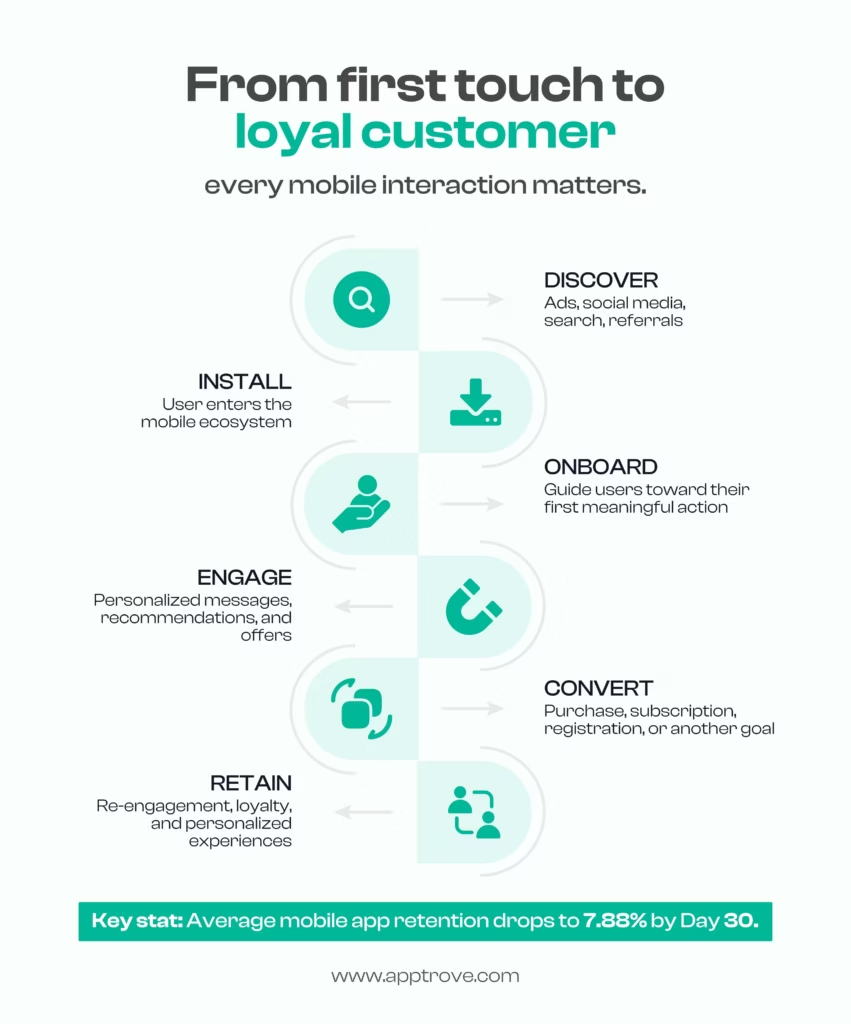
A customer rarely moves from seeing an advertisement to purchasing one straight line. There are usually several interactions in between: discovering the brand, installing an app, browsing products, receiving a reminder, making a purchase, and eventually deciding whether to return.
A mobile marketing platform helps marketers connect these moments and create experiences that match each stage of the journey.
Acquiring New Mobile Users
The journey often begins with acquisition.
Mobile advertising, social media campaigns, search, referrals, and app store discovery can bring new users into the ecosystem. Attribution helps marketers understand which channels and campaigns are contributing to those acquisitions.
This makes it easier to invest in channels that attract valuable users rather than simply chasing higher install numbers.
Onboarding New Customers
The first few interactions can determine whether a new user stays or disappears.
Brands can use push notifications, in-app messages, tutorials, and personalized content to guide users through onboarding. The goal is to help customers reach their first meaningful action as quickly and smoothly as possible.
Increasing App Engagement
Once users are onboarded, the next challenge is keeping them active.
Behavior-based campaigns can introduce relevant features, recommend products, remind users about unfinished actions, or highlight new content. Instead of communicating on a fixed schedule, marketers can respond to what users actually do.
Re-Engaging Inactive Users
Not every inactive customer is lost.
A user who has stopped opening an app may simply need a relevant reason to return. Re-engagement campaigns can use previous behavior, preferences, or lifecycle stage to create targeted messages.
A personalized reminder can be far more effective than sending the same promotion to an entire customer base.
Driving Retention and Loyalty
The final goal is not simply another click. It is a lasting relationship.
Loyalty campaigns, personalized recommendations, exclusive offers, and timely communication can encourage repeat purchases and continued engagement.
By connecting acquisition, onboarding, engagement, re-engagement, and retention, marketers can move from isolated campaigns to a connected customer journey—one where every interaction has a purpose and every new interaction provides insight for the next one.
Audience Segmentation in Mobile Marketing
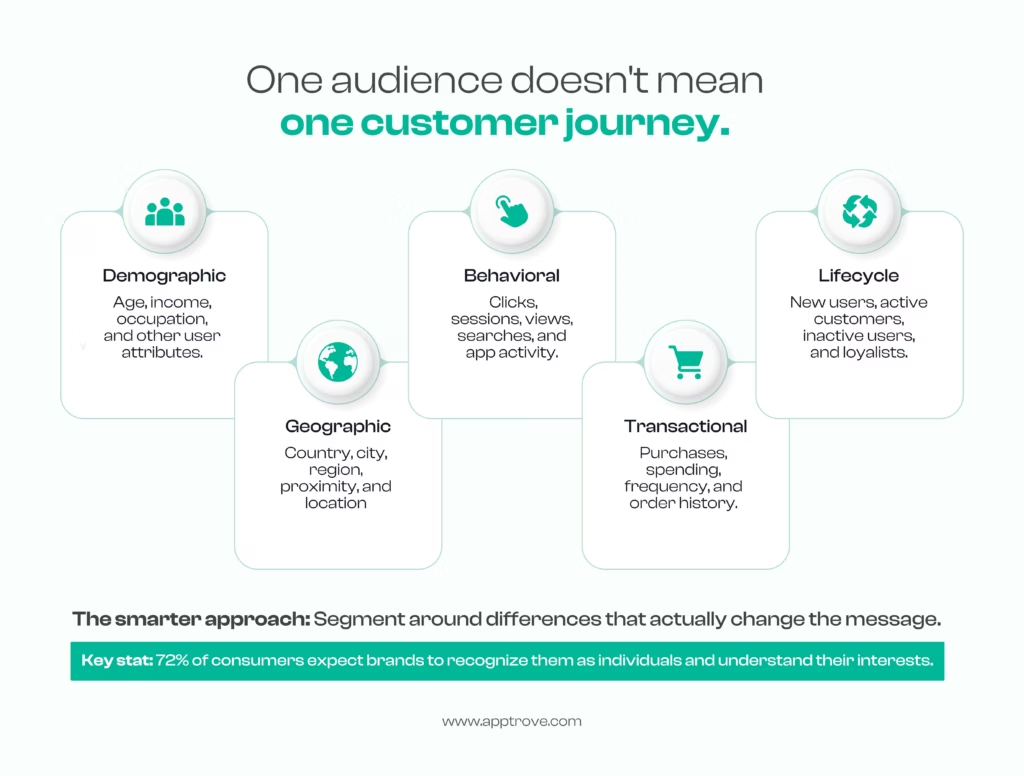
A mobile audience may look like one large group inside an analytics dashboard, but the people behind those numbers can have completely different needs, behaviors, and purchase intentions. Audience segmentation helps marketers turn that broad user base into smaller, meaningful groups that can receive more relevant experiences.
Demographic Segmentation
Demographic segmentation groups users according to characteristics such as age, gender, income, occupation, education, or family status.
For example, a financial app might communicate differently with college students than with working professionals. The underlying product may be the same, but the messaging, offers, and priorities can vary significantly.
Geographic Segmentation
Where a customer lives or spends time can influence what they need.
Marketers can create segments based on countries, cities, regions, neighborhoods, climate, or proximity to a physical location. A food delivery app, for instance, can promote restaurants and offers based on a user’s location.
Location can also make campaigns more timely. A retailer could promote a nearby store or location-specific promotion instead of sending a generic nationwide message.
Behavioral Segmentation
Behavior often tells marketers more than assumptions.
Users can be grouped based on actions such as app sessions, product views, purchases, clicks, content consumption, notification engagement, or cart abandonment.
A user who repeatedly views a product but has not purchased it represents a very different opportunity from someone who has never interacted with that product.
Transactional Segmentation
Purchase history provides another powerful way to organize audiences.
Customers can be divided based on purchase frequency, average order value, products purchased, spending patterns, or recency of transactions.
This can help marketers identify high-value customers, repeat buyers, first-time purchasers, and customers who may be at risk of becoming inactive.
Lifecycle-Based Segmentation
Customers also change as they move through their relationship with a brand.
A mobile marketing strategy can distinguish between prospects, new users, active customers, inactive users, and loyal customers.
Each group requires a different approach. New users may need onboarding, while loyal customers may respond better to rewards or exclusive experiences.
The objective is simple: segment customers according to differences that actually matter. When segmentation is connected to campaign strategy, marketers can replace generic communication with experiences that feel timely, relevant, and useful.
Personalization in Mobile Marketing
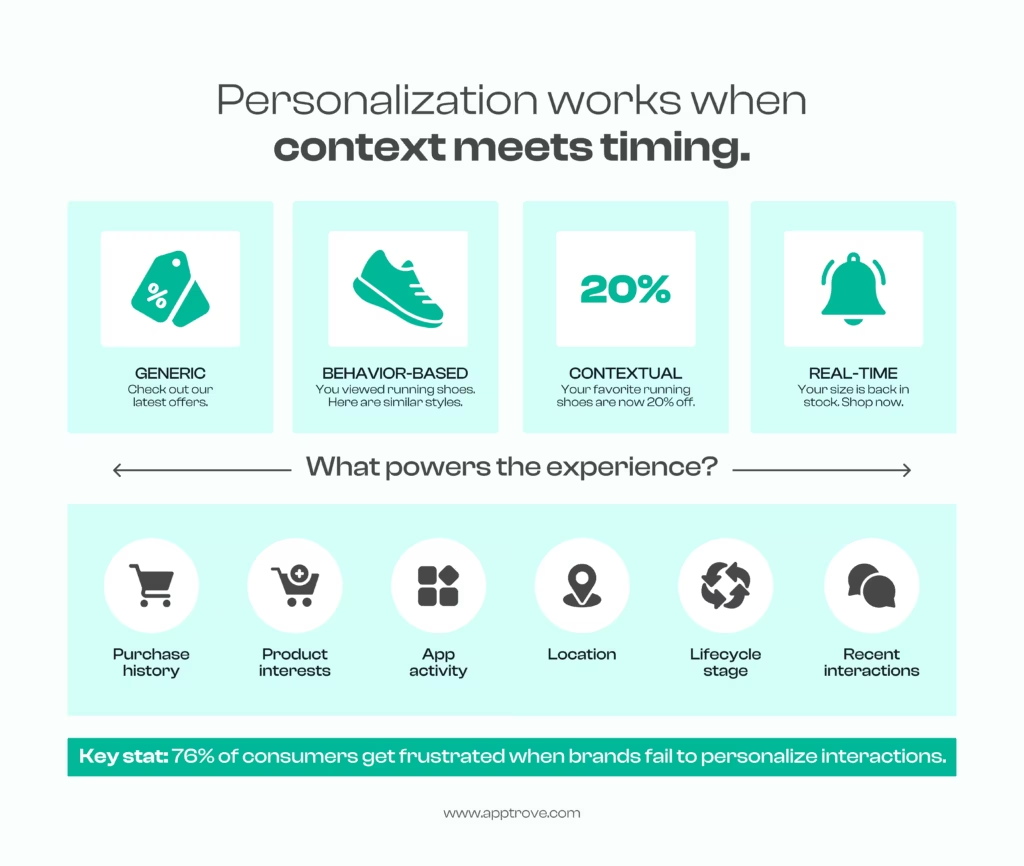
Personalization is what turns mobile marketing from a broadcast into a conversation. Instead of showing every user the same notification, offer, or recommendation, brands can use customer data to make each interaction more relevant.
The difference can be surprisingly simple: “Here’s our latest offer” versus “The product you viewed is now available at 20% off.” The second message has context—and context gives customers a reason to care.
Personalized Push Notifications
Push notifications can be tailored according to user behavior, preferences, location, purchase history, or lifecycle stage.
A new user might receive an onboarding reminder, while an existing customer could receive a notification about a product related to their previous purchase.
Timing matters too. Sending a relevant message when a user is most likely to engage can make the interaction more useful while reducing notification fatigue.
Behavioral Personalization
Customer behavior provides some of the strongest signals for personalization.
A marketer can respond to actions such as product views, searches, app sessions, abandoned carts, purchases, or content interactions.
For example, someone who repeatedly explores running shoes could receive recommendations related to running rather than a generic promotion covering the entire product catalog.
Location-Based Personalization
Location adds another layer of context.
Businesses can use geographic signals to promote nearby stores, region-specific products, local events, or offers available in a particular area.
A restaurant app, for instance, could highlight nearby restaurants during lunch hours instead of showing users options several kilometers away.
Personalized Product Recommendations
Recommendation engines can use previous purchases, browsing behavior, preferences, and similar customer behavior to suggest relevant products.
This helps customers discover products without forcing them to search through an entire catalog.
Real-Time Personalization
The most advanced mobile experiences can react to what users are doing right now.
A customer’s current session, recent action, or interaction with a campaign can trigger a relevant experience almost instantly.
That makes personalization less about predicting what someone might want someday and more about responding intelligently to what they appear to need right now.
Mobile Marketing Analytics and Attribution
Running a mobile campaign without measuring its impact is like driving at night without headlights. You may be moving, but you have no clear idea where you’re going.
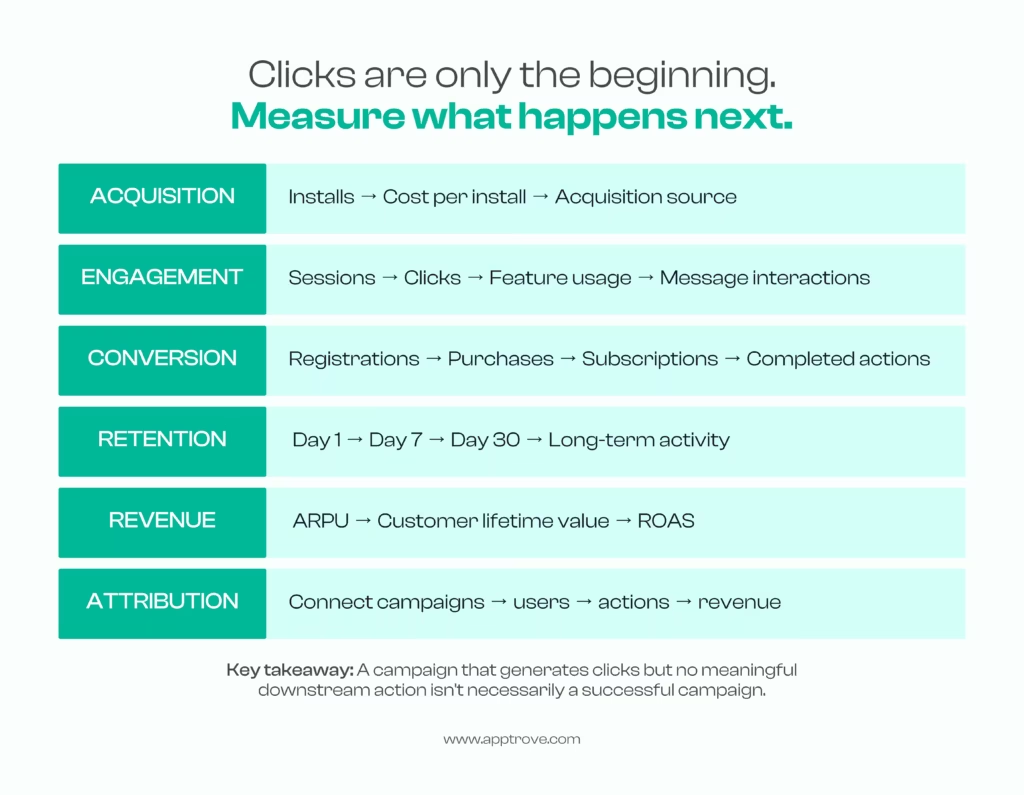
Analytics and attribution give marketers the visibility needed to connect campaigns with actual user actions. Instead of stopping at impressions or clicks, teams can investigate what happened after a user interacted with an advertisement, notification, or other marketing touchpoint.
Mobile Marketing Metrics to Track
The right metrics depend on the campaign objective, but marketers commonly monitor impressions, clicks, click-through rate, installs, engagement, conversions, retention, revenue, and return on advertising spend.
Looking at these metrics together is important. A campaign may generate thousands of clicks but very few conversions, while another may attract fewer users but generate significantly more revenue.
Acquisition and Engagement Metrics
Acquisition metrics help marketers understand how effectively campaigns bring new users into the mobile ecosystem.
Common indicators include installs, cost per install, acquisition cost, and conversion rate.
Engagement metrics then show what those users do after acquisition. Sessions, session frequency, feature usage, notification opens, and in-app interactions can reveal whether newly acquired users are actually finding value.
Conversion and Revenue Metrics
Clicks and installs are useful, but business outcomes ultimately matter more.
Conversion metrics help identify actions such as registrations, purchases, subscriptions, or completed checkouts.
Revenue metrics take the analysis further by showing how much value campaigns generate. Metrics such as average revenue per user, customer lifetime value, and return on advertising spend can help marketers evaluate campaign profitability.
Retention Metrics
Acquiring users is only one part of mobile marketing.
Retention metrics show whether customers continue returning after their first interaction. Marketers can track retention rates across different time periods and compare how different acquisition sources or campaigns perform over time.
A high install count means little if users disappear shortly afterward.
Mobile Attribution
Mobile attribution connects marketing touchpoints with user actions.
It helps marketers understand which campaigns, channels, advertisements, or sources contributed to an install or conversion. This is especially important when users interact with multiple channels before completing an action.
With stronger attribution, marketers can move beyond vanity metrics and make more informed decisions about campaign budgets, audience strategies, and channel performance.
The ultimate goal is not simply to collect more numbers. It is to turn those numbers into better marketing decisions.
How to Choose the Right Mobile Marketing Platform
Choosing a mobile marketing platform is not about picking the one with the longest feature list. It is about finding the platform that fits your marketing goals, customer journey, existing technology, and future growth.
A platform can have dozens of impressive capabilities, but if your team cannot integrate it smoothly or use its data effectively, those features quickly become expensive decoration.
Define Your Marketing Goals
Start with the problems you want to solve.
Do you want to improve app engagement? Increase retention? Automate customer journeys? Improve attribution? Personalize communication? Or bring multiple marketing channels into one ecosystem?
Clear objectives make it easier to identify the capabilities you actually need.
Evaluate Features and Channels
Look beyond the feature checklist.
If push notifications, in-app messaging, SMS, audience segmentation, campaign automation, analytics, or attribution are important to your strategy, make sure the platform supports them effectively.
The goal is to match capabilities with your actual workflows rather than paying for features your team will rarely use.
Check Integrations
Your marketing platform should work with the rest of your technology stack.
Consider integrations with your CRM, analytics tools, advertising platforms, customer data systems, app infrastructure, and other marketing technologies.
Strong integrations reduce data silos and make it easier to create connected customer journeys.
Assess Analytics and Automation
A platform should make it easy to understand what campaigns are achieving.
Look for flexible reporting, real-time or near-real-time insights, audience analytics, attribution capabilities, and the ability to connect engagement with conversions and revenue.
Automation is equally important. Trigger-based workflows can reduce manual work while helping brands respond to customer behavior at the right moment.
Consider Scalability, Security, and Pricing
The platform should work not only for your current audience but also for the audience you expect to have in the future.
Consider user volume, campaign complexity, data requirements, performance, security controls, privacy capabilities, and pricing structure.
Most importantly, evaluate total cost rather than headline pricing. Implementation, integrations, support, additional usage, and operational requirements can all affect the real cost.
The best choice is ultimately the platform that provides the right capabilities, reliable data, manageable complexity, and room to grow.
How to Implement a Mobile Marketing Platform
Choosing the right platform is only half the job. The real value appears when the platform is connected to your data, aligned with your customer journey, and used consistently across campaigns. A thoughtful implementation can prevent fragmented data, broken workflows, and campaigns that generate activity without meaningful results.
Define Your Mobile Marketing Strategy
Start by identifying what the platform needs to accomplish.
Set clear objectives around acquisition, engagement, conversion, retention, or revenue. Decide which customer journeys matter most and identify the mobile channels that will support them.
A clear strategy gives the implementation a direction instead of turning it into a technology project with no measurable destination.
Connect Your Data Sources
Bring together the data needed to understand and engage customers.
Depending on the business, this may include app events, website activity, purchase information, CRM data, advertising data, and customer profiles.
Before connecting everything, establish which data is essential and make sure events and attributes are defined consistently. Clean inputs are critical because inaccurate data can lead to inaccurate targeting.
Set Up Tracking and Attribution
Configure the events and tracking mechanisms required to measure customer actions.
Track meaningful milestones such as app installs, registrations, product views, purchases, subscriptions, and other conversion events. Attribution should also be configured where needed to understand which acquisition and marketing activities contribute to those outcomes.
Build Campaign Workflows
Once the foundation is ready, create audience segments and map them to specific customer journeys.
Start with practical workflows such as onboarding, abandoned-cart reminders, purchase follow-ups, re-engagement, and loyalty campaigns.
Define the trigger, audience, message, timing, and desired action for each workflow.
Test, Launch, and Optimize
Do not launch everything at once.
Test campaigns with smaller audiences first and check whether events, segmentation, personalization, links, and tracking work correctly. Monitor engagement and conversion data after launch.
Then optimize based on actual results.
A successful implementation is not a one-time setup. It is an ongoing process of testing, learning, refining, and expanding as customer behavior changes.
Common Mobile Marketing Platform Challenges
A mobile marketing platform can bring customer data and campaigns together, but technology alone does not eliminate marketing problems. Poor data, disconnected systems, excessive messaging, and unclear measurement can still undermine an otherwise sophisticated mobile strategy.
The trick is to recognize these challenges early and build processes that address them before they become expensive.
Fragmented Customer Data
Customer information often lives across multiple systems.
CRM platforms, analytics tools, advertising networks, websites, and mobile apps may each hold different pieces of the customer profile. When these systems do not communicate properly, marketers can struggle to build a complete picture of user behavior.
Connecting data sources and maintaining consistent event definitions can help reduce these gaps.
Poor Audience Segmentation
A campaign can only be as relevant as the audience behind it.
If segments are too broad, users may receive generic communication. If they are overly complicated, marketers may struggle to manage campaigns effectively.
The solution is to build segments around meaningful differences in customer behavior, intent, lifecycle stage, or value.
Notification Fatigue
Mobile users can quickly become overwhelmed by constant messages.
Too many push notifications, irrelevant offers, or poorly timed reminders can cause users to mute notifications, disengage, or uninstall an app.
Frequency controls, behavioral triggers, personalization, and clear value propositions can help brands communicate without becoming noise.
Attribution Gaps
Understanding which campaigns actually drive conversions can be difficult when customers interact with multiple channels before taking action.
Attribution gaps can lead marketers to overvalue certain channels and underestimate others. Reliable tracking and consistent conversion events are therefore essential for making informed budget decisions.
Privacy and Compliance Challenges
Mobile marketing depends heavily on customer data, making privacy an important consideration.
Businesses need clear consent practices, responsible data handling, appropriate access controls, and compliance with applicable privacy regulations.
Trust should be treated as part of the marketing strategy, not simply as a legal requirement.
Ultimately, the strongest mobile strategies recognize that technology is only one piece of the puzzle. Good data, thoughtful targeting, responsible communication, and continuous measurement are what turn a platform into a genuinely useful marketing system.
Best Practices for Mobile Marketing Platforms
Having the right technology does not automatically create great mobile marketing. The platform is only as effective as the strategy behind it. The strongest campaigns combine useful data, relevant messaging, smart timing, and continuous experimentation.
Send the Right Message at the Right Time
Timing can determine whether a mobile message feels helpful or intrusive.
Use customer behavior, lifecycle stage, time zones, and previous engagement to determine when a message should be delivered. A cart reminder shortly after abandonment can be useful; the same message weeks later may feel completely disconnected.
Personalize Without Overdoing It
Personalization should add value, not demonstrate how much data a brand has collected.
Use relevant information such as purchase history, product interests, app activity, or preferences to make communication more useful. Avoid unnecessary personalization that can feel intrusive or uncomfortable.
Use Behavioral Triggers
Behavioral triggers allow campaigns to respond to what customers actually do.
An app install can trigger onboarding. A completed purchase can start a post-purchase journey. A period of inactivity can trigger a re-engagement campaign.
These automated responses make communication more contextual than fixed, one-size-fits-all campaigns.
Test Campaign Variations
Never assume the first version of a campaign is the best version.
Experiment with headlines, messages, offers, visuals, timing, frequency, and calls to action. A/B testing can reveal subtle differences in customer behavior that intuition alone may miss.
Small improvements can become significant when applied across a large audience.
Measure and Continuously Optimize
Track outcomes that connect marketing activity to business goals.
Instead of focusing only on opens and clicks, evaluate conversions, revenue, retention, customer lifetime value, and return on marketing investment where appropriate.
Use those insights to refine audiences, adjust messaging, change campaign timing, and eliminate ineffective workflows.
Mobile marketing is not a “set it and forget it” activity. Customer expectations change, behavior changes, and channels evolve.
The best teams therefore treat every campaign as a learning opportunity—and every new piece of data as a chance to make the next customer interaction a little smarter.
The Role of AI in Mobile Marketing Platforms
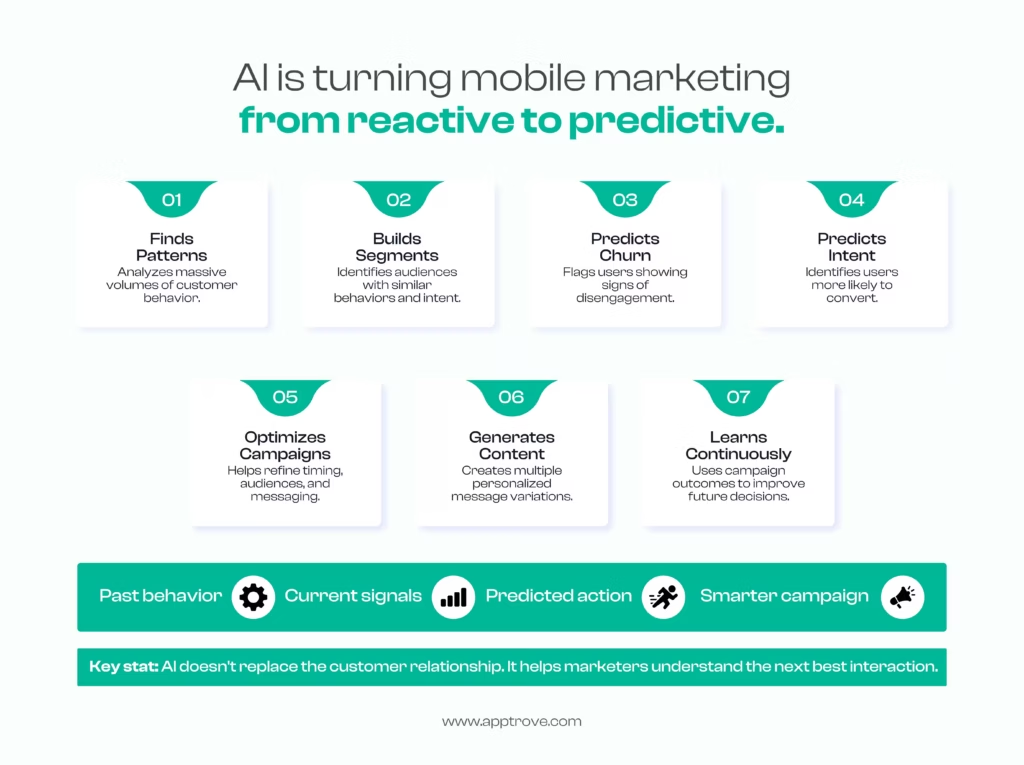
Artificial intelligence is changing mobile marketing from a system that reacts to customer behavior into one that can increasingly anticipate it. Instead of relying entirely on marketers to identify every audience, trigger, and campaign variation manually, AI can analyze large volumes of behavioral data and surface patterns that would be difficult to spot otherwise.
AI-Powered Audience Segmentation
AI can analyze signals such as app activity, purchase history, engagement patterns, browsing behavior, and customer lifecycle stages to identify meaningful audience groups.
Rather than creating segments entirely through fixed rules, marketers can use machine learning to discover behavioral patterns and identify users who share similar characteristics or are likely to respond similarly.
Predictive Customer Behavior
AI can also help marketers estimate what customers may do next.
Predictive models can identify users who are more likely to purchase, disengage, convert, or churn. These predictions allow marketers to prioritize audiences and create campaigns around potential future behavior instead of only reacting to past actions.
Automated Campaign Optimization
Campaign performance can change rapidly.
AI can analyze engagement and conversion signals to help optimize elements such as audiences, timing, messaging, and campaign allocation. This can reduce the amount of manual analysis required and help marketing teams respond more quickly to changing performance.
Generative AI for Mobile Content
Generative AI can accelerate the creation of mobile marketing content, including notification copy, campaign variations, product descriptions, and personalized messaging.
Instead of creating every variation manually, marketers can generate multiple versions and test which ones perform best with different audiences.
Predictive Churn and Purchase Intent
One of the most valuable applications is identifying intent before it becomes an obvious action.
AI can analyze behavioral patterns to flag customers who may be losing interest or users showing signs of purchase intent. Marketers can then trigger appropriate retention or conversion campaigns.
The future of AI-powered mobile marketing is therefore not simply about automation. It is about making faster, more informed decisions while keeping the customer experience relevant and human.
Mobile Marketing Platform vs. Mobile Measurement Platform
The terms mobile marketing platform and mobile measurement platform can sound interchangeable, but they solve different problems. One focuses primarily on engaging and converting customers, while the other focuses on understanding where users came from and what marketing activities influenced their actions.
Understanding the distinction helps businesses build a technology stack without expecting one tool to do another tool’s job.
What Is a Mobile Measurement Platform?
A mobile measurement platform is primarily designed to measure and attribute mobile marketing performance.
It helps marketers understand where app users originated, which advertising campaigns generated installs, and what users did after installation. Depending on the platform, it can also support fraud detection, attribution modeling, campaign analytics, and post-install measurement.
Its central question is:
“Which marketing activity contributed to this user action?”
What Does a Mobile Marketing Platform Do?
A mobile marketing platform focuses more broadly on customer engagement and communication.
It can help marketers segment audiences, personalize experiences, automate campaigns, send push notifications, deliver in-app messages, and manage customer journeys.
Its central question is:
“How should we engage this customer next?”
That distinction is important. Measurement tells marketers what happened and where results came from. Marketing engagement tools help marketers decide what to do with those insights.
Key Differences Between the Two
A mobile measurement platform is generally centered around attribution, measurement, and campaign performance analysis.
A mobile marketing platform is centered around engagement, communication, personalization, and customer journeys.
There can be some overlap. Modern platforms increasingly combine analytics, segmentation, and engagement capabilities, which can make the boundaries less obvious.
Can Businesses Use Both?
Absolutely.
In fact, using both can create a stronger mobile marketing ecosystem.
A measurement platform can reveal which acquisition sources bring valuable users. That information can then inform audience segmentation and engagement strategies.
For example, if users acquired through one campaign demonstrate stronger retention and higher purchase value, marketers can use those insights to optimize future acquisition and engagement efforts.
Think of the two platforms as different parts of the same engine:
Measurement explains what worked. Engagement helps turn those insights into action.
Conclusion: Building a Smarter Mobile Marketing Strategy
Mobile marketing is no longer just about reaching people on their phones. It is about understanding what they need, recognizing where they are in their journey, and creating useful interactions that move the relationship forward.
A modern mobile marketing platform brings these pieces together. It can connect customer data, audience segmentation, personalization, automation, engagement channels, analytics, and attribution within a more coordinated marketing ecosystem.
Turning Mobile Data Into Action
Data only becomes valuable when marketers can act on it.
A customer’s app activity, purchase history, engagement, and campaign interactions can reveal important signals. When those signals are connected, marketers can identify high-value audiences, recognize changing customer behavior, personalize communication, and optimize campaigns based on actual outcomes.
The objective is not to collect the largest possible amount of data. It is to turn meaningful data into better decisions.
Creating More Relevant Customer Experiences
The future of mobile marketing will be increasingly personalized, automated, and predictive, but relevance should remain at its centre.
Customers do not want more notifications simply because technology makes them possible. They want useful information, timely recommendations, smoother experiences, and communication that respects their attention. That is where the real value of a mobile marketing platform lies. The strongest mobile strategies will not be the ones that send the most messages. They will be the ones that understand when to speak, what to say, and when to stay silent.
In a mobile-first world, better marketing is not about being louder. It is about being more relevant.