In terms of their ability to create loyalty, engagement, and discovery inside the app stores, mobile applications today are more about being a catalyst for growth than simply producing digital products.
With user attention spans decreasing and app download rates increasing, speed and scalability have become two of the greatest expectations that developers must deliver.
The mobile app market is projected to reach over $613 billion in revenue globally (according to Statista), making it one of the fastest-expanding digital platforms.
However, when every company faces the dilemma of developing high-quality performance apps across platforms, it takes a long time, a lot of money and multiple teams to produce them. By the time an app is developed for the existing marketplace, that marketplace has already been moved on from by a faster-shipping app.
This is where the evolution of the hybrid application type becomes one of the most strategic decisions made when developing applications today. Businesses that want to build and deploy their apps quickly and easily (without damaging any of their existing systems or budgets) will find that hybrid applications provide a unique mixture of balance.
As companies are changing the way that they create mobile experiences, platforms like Apptrove are helping companies connect development, attribution and engagement of users with the goal of producing fast growth as well as measurable growth.
What is a Hybrid Application?
Hybrid applications are mobile applications that use some of the same underlying technology as native applications (which are apps written specifically for a single operating system) but also utilize some of the underlying technology of web applications (which are apps that run through a web browser). The basic difference between these two types of applications is how they are built and what technologies are used to build them.
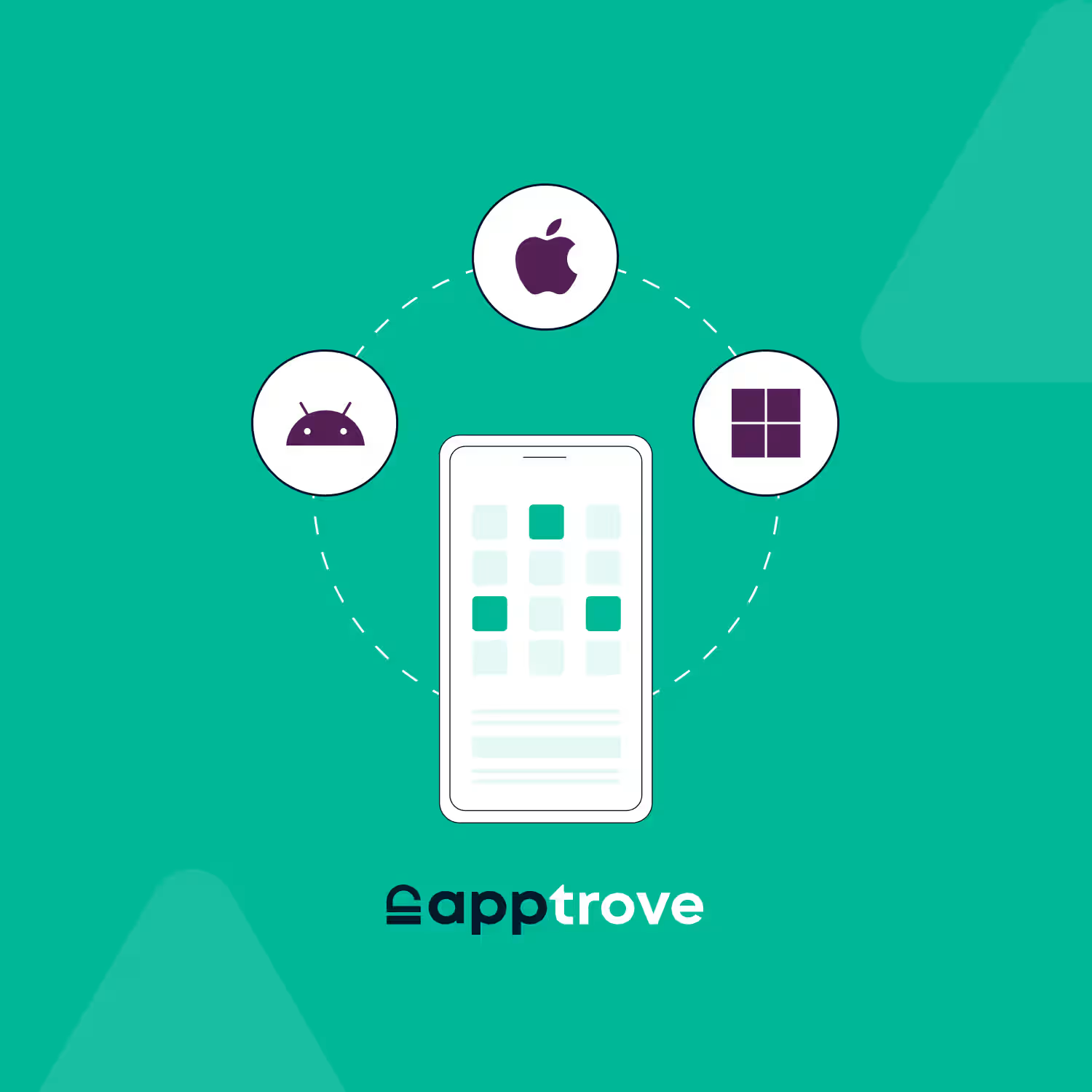
In constructing a hybrid application, an application developer uses standard web development technologies (HTML, CSS, and JavaScript) to create the web-based component of the application. Then the web-based component is wrapped in a native “shell” so that the application can be executed on multiple platforms (such as iOS, Android, and Windows) without needing to build the entire application again for each platform.
You can think of a hybrid app as a bridge between the web and the native capabilities of the device. A hybrid app runs in a native shell, which gives them access to the device’s hardware capabilities (like the camera, GPS, and storage) via plugins and APIs. Therefore, hybrid apps can perform and function like native apps, while still having the same level of cross-platform compatibility as web apps.
The Importance of Using Hybrid Apps to Build Fast and Scalable Applications
The Evolution of Digital Space has put pressure on companies to develop Apps that can be developed quickly at a very low cost while also providing their customers with a great experience. The two biggest challenges in building Apps is how to build an App that will run seamlessly across all platforms without taxing the Dev Team or exceeding their budget. Hybrid applications offer the perfect solution.
1. Speed: Get to the Market Quicker
Every business today depends on speed when it comes to launching new products and services. Developing a hybrid app will help your team reach that goal by allowing them to write code once and deploy it to several operating systems. So you don’t have to spend time developing separate apps for iOS and Android; a hybrid app allows you to develop one app that works on both platforms, thus dramatically reducing your time to get to market.
To use an example: Imagine your company wants to launch an e-commerce application; instead of having separate development teams for iOS and Android, your development team could create a single hybrid application that works on both platforms using just one team, allowing your company to very quickly create a larger customer base without the hassle of creating multiple apps at the same time.
In addition, since you have shorter development cycles using hybrid apps, you can quickly implement updates and fixes to your applications. If you have a bug in your application that needs to be fixed or if you need to roll out a new feature, hybrid apps can be updated once and the change will immediately reflect on all of the operating systems where your app is available.
2. Scalability: One Codebase, Infinite Growth Potential
As your company expands, so do all aspects associated with the app-business correlation, ranging from devices and features to target population markets etc, needing scalability. One remarkable feature that supports scalability is the ability of hybrid applications to be reused or easily reutilized in different areas or segments of an organization/business.
For example: When launching your App at the beginning on iOS devices – as your business develops, one way would be to leverage the growth of your iOS App by releasing and expanding it onto Android users as new potential end-users at the same time! Because hybrid applications only require one codebase for multiple reusable implementations, you do not learn a new way of coding for the addition of a new platform (iOS or Android), but rather you keep on modifying the existing code as needed throughout all platforms being available for use (iOS and Android users) and add on to those previously existing platforms (i.e., by adding new functionality).
Adding functionality or features across all of the previously existing hybrid platforms (phone, tablet, web) can happen very quickly since hybrid applications allow for such rapid success. Hence, if you wish to add new functionality or feature to your application, then you can do so very quickly as you no longer have to duplicate what you did for one platform (iPhone or Android) at two different times by having to create a completely new mobile application. With hybrid app designs, you only have to create a new component of your application once (with no re-vamps of the same-type of work across all platforms), and many times this happens automatically (without additional coding), due to code base sharing.
Hybrid Application Key Features
1. Cross-platform Functionality
Hybrid applications support cross-platform functionality for iOS Android and Windows Platforms with minimal changes to the original app. Hybrid Applications utilize a shared web-based coded system thus allowing for easy access to platform-specific capabilities via a Native Layer.
2. Cost-Effective Development
Hybrid Apps also save companies on development costs by utilizing one code base across multiple platforms, thus eliminating expensive development costs for each platform and reducing the amount of time to maintain and update.
3. Access to Hardware Features
Hybrid applications have access to hardware features on devices such as Cameras, GPS, Address Book/Contacts list and Storage through API interfaces or Plug-ins. Hybrid Apps will be able to provide comparable performance and Functionality to their Native counterparts therefore providing end-users with an excellent experience.
4. Offline Functionality
Hybrid mobile apps are created to provide some functionality when the device is not connected to the Internet. Through local storage, data for the app is stored locally until the user can connect to the Internet and log into the application so the data can be synchronized.
5. Update & Maintenance
Because hybrid apps use the same codebase for both iOS and Android, updates and bug fixes can be deployed at a much faster rate. Developers only have to make changes to a single application codebase, which reflects the same changes to both iOS and Android applications. This makes updating and maintaining the applications simple.
Hybrid vs. Native vs. Web Applications – A Comparative Overview
It is important that you understand the differences between hybrid, native and web application types so that you can make an educated decision on which type is most suitable for your business needs. Let us review the major differences:
| Feature | Native Apps | Web Apps | Hybrid Apps |
| Performance | High | Moderate | Moderate |
| Cost | High | Low | Moderate |
| Development Time | Long | Short | Short |
| Cross-Platform | No | Yes | Yes |
| Access to Device Features | Full Access | Limited | Full Access |
| Offline Functionality | Yes | Limited | Yes |
- Native Applications are constructed to be used exclusively with one operating platform (i.e., Mobile / Tablet / Desktop). They provide the highest performance but will require the longest and most costly amount of development time.
- Web Applications are accessible via an Internet browser. They provide a low implementation cost. However, they do not provide any ability for access to hardware features or function when disconnected from the Internet.
- Hybrid Applications represent hybrid forms of native and web applications. They provide cross compatibility of usage between operating platforms (i.e., Mobile/Tablet/Desktop) while having the ability to access native features and having low implementation costs.
Tools and Frameworks for Hybrid App Development
In recent years, a number of tools and frameworks have surfaced to support the development of hybrid applications. Among the most popular are:
- React Native: A library created by Facebook for developing mobile apps with JavaScript and React. This allows you to build both iOS and Android applications by developing one codebase.
- Flutter: A UI toolkit developed by Google that is completely open source. Flutter enables developers to develop natively compiled applications while using a single codebase to create applications on mobile, web and desktop.
- Xamarin: A cross-platform app development framework from Microsoft that employs C# as its primary programming language. Xamarin enables developers to reuse their code across iOS, Android and Windows.
- Ionic: An application development framework that leverages web-based technology (HTML, CSS, JavaScript) to create applications capable of running on iOS, Android and the web. Ionic is both highly flexible and easy to use.
Guidelines & Techniques for Successful Hybrid App Development
To create a successful hybrid application, you should consider using one or more of these guidelines and techniques:
- Selecting The Right Framework – Choosing the correct framework to build a hybrid app will influence how it performs. Common frameworks for hybrid app development include React Native, Flutter, and Xamarin.
- Performance Optimisation – Your hybrid app may have performance problems if you do not optimise its performance appropriately. Be sure to reduce superfluous code and utilise efficient algorithms when performing tasks such as processing data or providing animations.
- Consider Multiple Resolutions / Screen Sizes – Design your application to function correctly on different resolutions/sizes of device screens.
- Test Thoroughly Before Launch – Conduct extensive testing using various devices and platforms to verify that all users experience the application equally across all conditions prior to launching your hybrid app.
- Periodic Updates – Regularly updating an application ensures ongoing security and performance while also maintaining relevance for users.
The Hybrid App Development Process
Ideation and Planning
The first step in the development of a hybrid app is ideation, where businesses define the purpose, features, and user experience.
Design and Prototyping
In the design phase, UI/UX designers create wireframes and prototypes that define the app’s look and feel.
Development
Using hybrid development frameworks, developers write the code, integrating the necessary APIs, plugins, and tools to enable cross-platform functionality.
Testing
Testing is crucial in the development process to ensure that the app functions properly across all platforms and devices.
Deployment
After rigorous testing, the app is deployed to app stores such as the Apple App Store or Google Play Store.
Why Hybrid Applications Matter More Than Ever
The challenge is not just building an app, but keeping users engaged. Studies show that 21% of users abandon an app after just one use, making performance and experience critical from day one.
The mobile ecosystem is becoming more fragmented, more competitive, and more demanding. Users expect seamless experiences. Businesses expect faster growth. Teams are expected to deliver both.
Hybrid applications sit at the intersection of these expectations. They allow businesses to move quickly without sacrificing quality. They support growth without requiring constant reinvention. And they make it possible to build meaningful user experiences without overwhelming development resources.
A hybrid application is not a technical choice but a strategic one. It reflects how a business approaches speed, scalability, and sustainability in a competitive market. For companies that want to launch faster, iterate smarter, and scale efficiently, hybrid applications offer a path that is both practical and powerful.
And in a world where timing often matters more than perfection, that path can make all the difference.
FAQs
What is a hybrid application?
A hybrid application is a mobile app built using web technologies such as HTML, CSS, and JavaScript, then wrapped inside a native container. This approach to hybrid application development enables a single app to run on multiple platforms like iOS and Android while accessing device features such as the camera, GPS, and storage.
What is the difference between a hybrid app and a native app?
A native app is built specifically for a single operating system, whereas a hybrid app uses one shared codebase that works across multiple platforms. Businesses often choose hybrid application development because it reduces development time and costs while providing broad platform compatibility.
Are hybrid applications suitable for large-scale businesses?
Yes. Hybrid applications are ideal for businesses seeking scalable solutions for hybrid app delivery. A shared codebase makes it easier to expand to new platforms, add features, support growing user bases, and simplify long-term maintenance.
What are the advantages of hybrid application development?
Hybrid application development offers several benefits, including:
1. Faster time-to-market
2. Lower development and maintenance costs
3. Cross-platform compatibility
4. Easier updates and bug fixes
5. Access to native device features
6. Scalable architecture for business growth
Do hybrid apps perform as well as native apps?
Modern hybrid applications offer excellent performance for most business and consumer use cases. Frameworks like React Native and Flutter deliver near-native performance, making hybrid application development a practical choice for many organizations.
When should you choose a hybrid application instead of a native application?
Choose a hybrid application when your business needs:
1. Faster product launches
2. Lower development costs
3. A single codebase for multiple platforms
4. Easier maintenance
5. Scalable solutions for hybrid app delivery that support long-term business growth