What Is In-Game Mobile Advertising?
In-game mobile advertising is a monetisation strategy that game inventors use to boost their game’s profit. Game developers earn money and get paid by showing mobile game advertisements to their users. Many gamers are happy with the ad-based model of games today.
There are different types of mobile game advertising strategies and ad formats that inventors can integrate into their games to drive mobile game advertisement profit, similar to rewarded video ads, offerwall ads, and interstitial ads.
The ads that perform stylishly and deliver the highest eCPMs are the ones that are integrated directly into the game circle and complement the in-game economy – in other words, advertisements that work as an element of your game. This way, the in-game advertisements become a part of the user experience and can help improve app engagement and retention rates.
Different Formats Of In-Gaming Advertisement
Static in-game advertising
Static ads are embedded into the game during the app’s development stage. As the name suggests, the advertisements can not be changed in static in-game advertising. Similar to product placement in a movie or music video, static advertisements frequently appear in the games on billboards or signs.
Given that these advertisements can not be changed, they haven’t been as popular as the dynamic advertisements, which we will discuss below. However, static in-game advertising is added as newer iterations allow for lesser customization.
Dynamic in-game advertising
In contrast to static ads, dynamic Advertisements are banners displayed in a game that can be streamlined in real-time. Dynamic in-game advertisements give advertisers a great deal of flexibility and are easy to gauge. They can also be used to geo-target decided-in users.
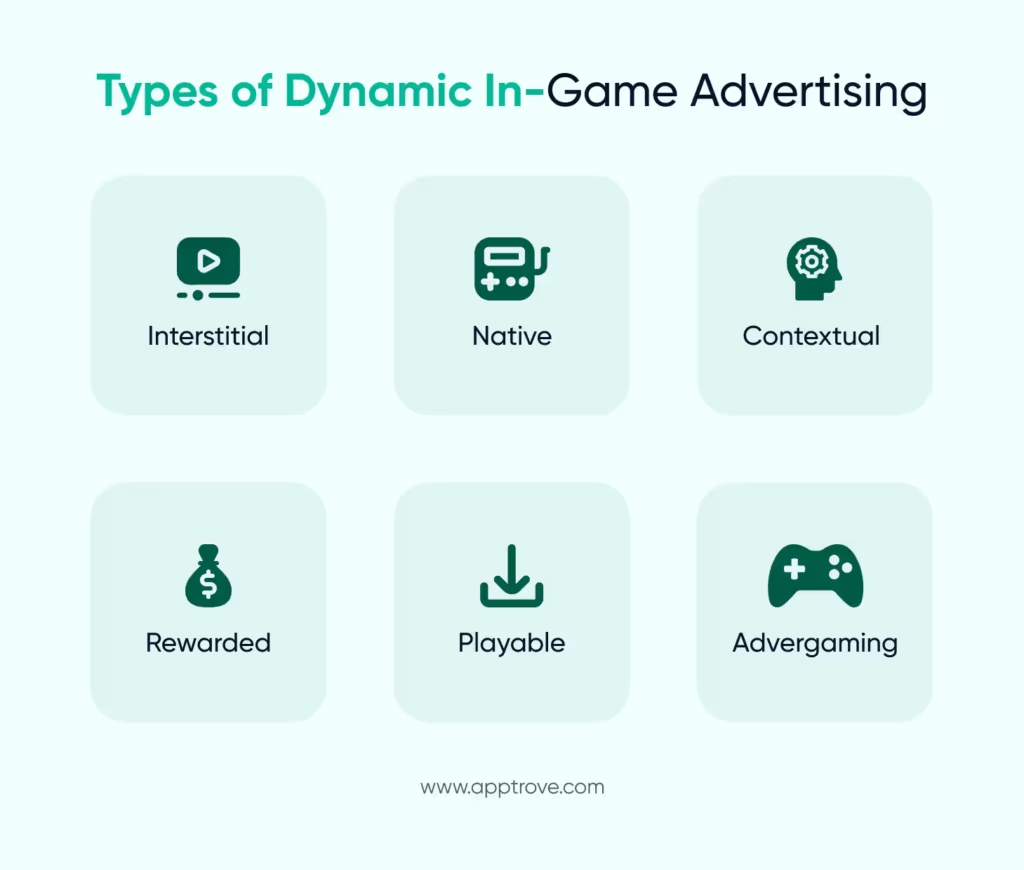
The diversity of ad formats is another reason dynamic advertisements are the popular choice among advertisers. Below, we’ll cover the six most common types of dynamic advertisement formats.
– Interstitial Advertisements
Interstitial ads are rich, interactive ads covering the entire screen. These advertisements take advantage of natural pauses in the user’s gaming experience, similar to the break between situations. As they don’t interrupt the user experience, interstitial advertisements generally induce high engagement and conversions. The creativity and timing of an interstitial advertisement are critical to its success.
– Native Ads
Native banners appear similar to web banner advertisements in that they blend seamlessly into the background in which they’re placed for an invisible advertisement experience. Unlike display banners, native ads are embedded and thus appear as part of the content.
The increase in ad spend for this ad type is due to continued specialised invention, similar to in-feed native ads, which are completely integrated with content.
– Contextual ads
Contextual advertisements are delivered to users based on the user’s state at the time the advertisement is served. Advertisers partly set motifs and keywords to their digital media source, which also uses algorithms to match the advertisement with applicable content, keywords, motifs, and images.
– Awarded video advertisements
Awarded videos and advertisements allow users to watch a full-screen advertisement. After users watch a 15- 30 alternate videos advertisement, they’re given in-game currency, redundant lives, further situations, etc. Users tend to prefer awarded video advertisements to in- app purchases, and inventors reported increased user retention after introducing awarded video advertisements.
– Playable advertisements
According to Statista, mobile game player penetration worldwide was projected to reach 53.3% by 2025, meaning roughly 5 out of 10 people would be mobile gamers. Playable advertisements are interactive video ads that let users try part of a game before downloading it. In this form, users can play a short exercise of the gaming app before deciding to download it. This pruned-down interpretation offers the app’s essential features so that users can “ try before they buy ”. By allowing gaming cults with regard to how the app works, playable advertisements tend to reduce uninstall rates and increase retention.
– Advergaming
Technically speaking, advergaming isn’t a single dynamic advertisement, but rather an entire game erected specifically to promote a company or product. In advergaming, advertisements are embedded throughout the game, all pointing to the singular brand that erected the game.
Best Strategies To Practice
- Monetize early
Don’t leave monetisation until the end. It’s important to think about mobile game monetisation as you’re designing your game. This way, you can incorporate your announcement units into the game circle, which will ameliorate announcement engagement and thus drive the most in-game advertising profit possible.
- Trial and A/ B test advertisement placements
You should always be changing your advertising strategy and indulge in A/B Testing to see how to stylishly balance the stoner experience and mobile game announcement profit. Focus on placement, frequency and circumscribing, and indeed cloverleaf different kinds of announcement units.
- Segment your users
You can use parts to tailor the announcement experience to different kinds of users. For illustration, you can serve smaller advertisements to users who constantly make IAPs, or you could serve advertisements within the first 3 minutes to users who only play for 5 minutes.
Why Are Businesses Relying On In-Gaming Advertisements These Days?
– Induce more mobile game ad profit
Unfortunately, most gamers don’t pay to play. But mobile game advertising is a great monetisation strategy inventors can use in addition to in-app purchases.
– Increase in-app purchases
In-game advertisements coupled with the proper mobile game strategy can boost in-app purchases by 6x. Ad units that work as a part of your in-game economy, like awarded video advertisements, give users a taste of the IAPs you offer and show them the value of in-game goods. Soon, gamers end up paying for IAPs rather than engaging with the rewarded videos.
– Enhance the user experience
Ad units that are incorporated into your game circle produce a stylish experience for your users. For example, you can offer users free prizes like coins in exchange for watching or interacting with advertisements at specific points in the game. 71% of gamers said watching video ads is their preferred way to ‘ pay ’ for in-game content.
– Boost game engagement and retention
You can use mobile game advertisements as a retention tool to encourage users to come back to your game by giving them prizes for engaging with advertisements. You can also use advertisements as an engagement tool by prompting users to engage with an awarded advertisement unit that gives them the exact number of coins they need to continue playing the game.
Bottomline
We have helped various app owners in estimating and upgrading in-game promotion drives. Not only with the MMP highlights referenced above, but Apptrove helps you with understanding the client venture from each conceivable channel and allows you to construct your attribution rationale and apply it across partners with our adaptable settings and elements.
To find out how we can help your in-gaming advertising succeed, plan a call with us to avail of a free trial. So, book your demo directly from here.
FAQs
1. What is In-Game Mobile Advertising, and how does it work?
The process of using in-game mobile advertisement means that you can earn revenue from the time users spend playing the game. You will see ads as part of your actual gameplay, like through a rewarded video or a banner, which makes it seem like they are part of the game and don’t interrupt it as much as regular advertising does.
2. Why is In-Game Mobile Advertising important for app growth?
Developers can use in-game mobile advertising to earn revenue and get more people to play their game. Brands can connect with very involved users, keep them interested in their product, and make more money beyond what they charge for in-app purchases through their in-game ads.
3. How does In-Game Mobile Advertising improve user experience?
In-game mobile advertising, when implemented properly, improves the gaming experience by offering players the opportunity to earn rewards or receive pertinent content. Rewarded ad formats, which are a form of in-game advertising, add value to ads and make them seem like an organic component of the overall gaming experience.
4. What are the most effective types of In-Gaming Advertisement formats?
Rewarded video ads, interstitial advertising, native advertising, and playable advertising are all popular formats for in-game mobile ads. These ad formats generate user engagement in a variety of ways while also balancing revenue with user experience.
5. How can brands optimise their In-Game Mobile Advertising strategy?
To maximise performance in regard to In-Game Mobile Advertising, it is essential to segment the audience, conduct A/B tests for placement of ads and placement timing, and develop a solid in-game advertising strategy that provides users with a relevant, non-intrusive advertisement experience in an appropriate manner.