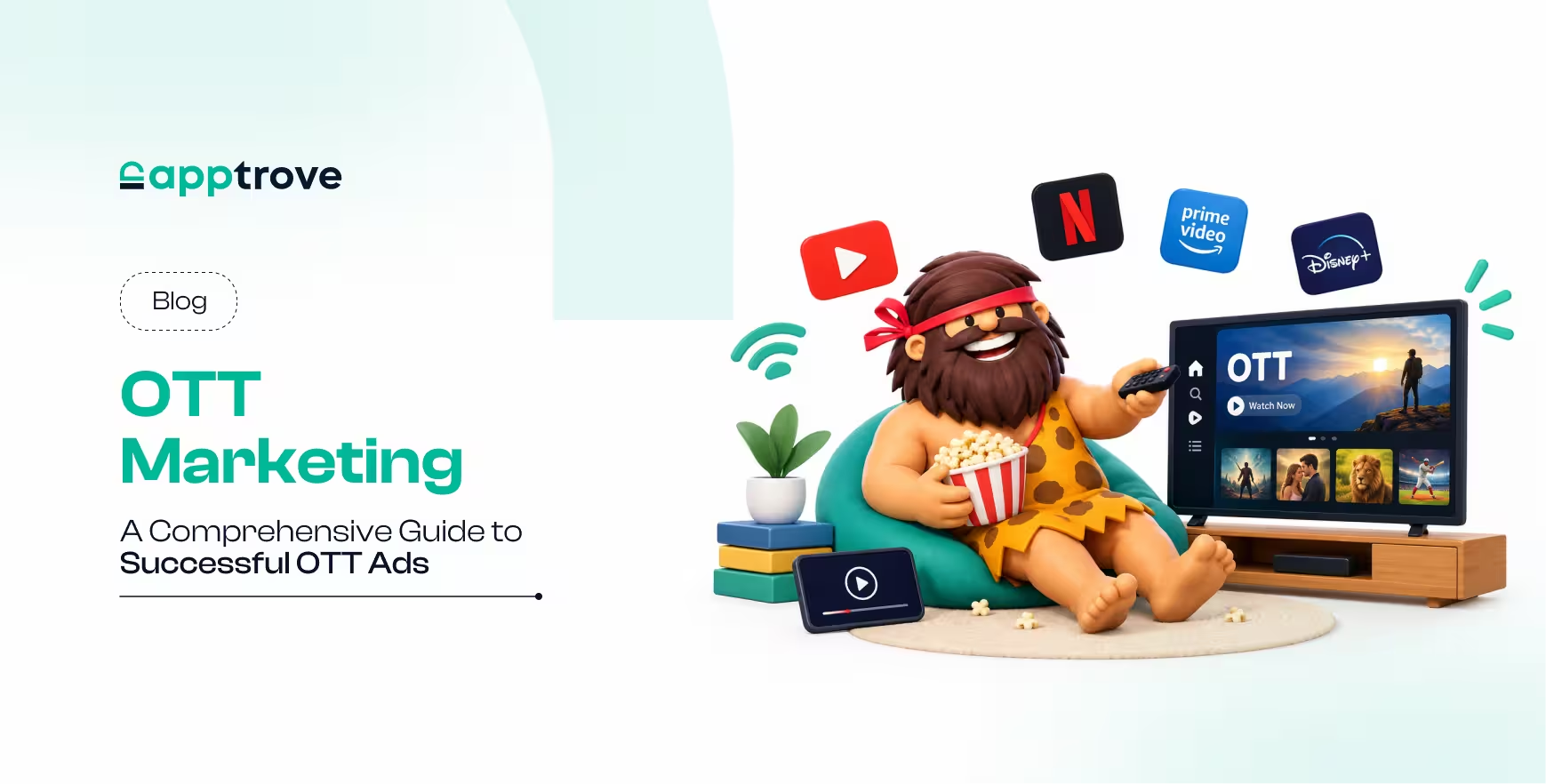
OTT ads has evolved from being an alternative to traditional television into a major part of the modern digital advertising ecosystem. As audiences continue shifting from linear TV to streaming and connected devices, advertisers have more opportunities to reach specific audiences with relevant, measurable video ads.
In 2026, this shift is becoming even more significant. According to the IAB, U.S. digital video ad spending is projected to surpass $80 billion in 2026, growing 11% year over year. CTV, online video, and social video are all contributing to this growth, with CTV ad spending projected to increase by 11% in 2026. Source: IAB
The opportunity is also growing rapidly in India. The latest FICCI-EY report found that Connected TV reached approximately 40 million units in 2025, up from 30 million in 2024. The report estimates that active Connected TV homes could reach 67 million by 2028. Source: EY India
For marketers, this means OTT is no longer simply about putting a video ad in front of a streaming audience. A successful OTT marketing strategy needs to consider audience targeting, creative, OTT ad inventory, programmatic buying, measurement, attribution, and continuous optimization.
In this guide, we’ll explore how OTT advertising works, the opportunities it creates for advertisers, and the key trends shaping the industry in 2026.
In this blog, we will explore the quickly changing landscape of OTT marketing, its current impact, and the expectation to continue to grow in power in the future. Please join Apptrove in looking at how this new advertising strategy will help guide the face of digital marketing into the future.
OTT Ads: The Process and Opportunities to Succeed
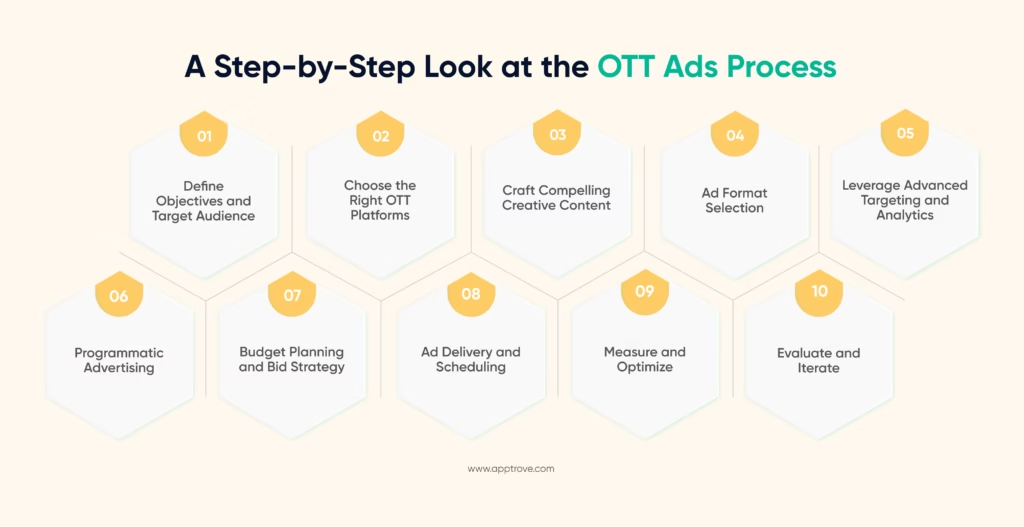
Define Objectives and Target Audience
Before diving into OTT advertising, advertisers should clearly define their campaign objectives and identify their target audience.
Your objective could be to:
- Increase brand awareness
- Reach a new audience
- Drive website visits
- Generate app installs
- Increase conversions
- Improve customer engagement
- Support retargeting campaigns
Understanding the campaign goal helps determine which platforms, formats, targeting options, and measurement methods make sense.
Audience definition is equally important. Advertisers can use demographic, geographic, behavioral, contextual, and device-level signals to reach audiences that are more relevant to their campaign.
For app marketers, OTT can also become part of a broader acquisition strategy. Connecting OTT exposure with downstream app activity can help marketers understand whether video campaigns are contributing to installs, registrations, purchases, or other valuable actions.
For more information, see our guide to mobile attribution.
Choose the Right OTT Platforms
OTT platforms vary significantly in terms of audience, content, pricing, targeting capabilities, and available OTT ad inventory.
Advertisers can choose from subscription-based, ad-supported, and hybrid streaming platforms. Many major streaming services now offer advertising-supported plans, giving brands more opportunities to access premium streaming audiences.
Instead of choosing a platform simply because it has a large audience, marketers should consider:
- Audience demographics
- Geographic reach
- Content categories
- Available ad formats
- Inventory quality and scale
- Targeting capabilities
- Measurement options
- Pricing and buying models
- Brand suitability and content environment
The right platform is ultimately the one that gives advertisers access to the audience they need while supporting their campaign objectives.
Craft Compelling Creative Content
The creative remains one of the most important components of OTT advertising.
Viewers are exposed to an enormous amount of video content, so advertisers need to capture attention quickly while delivering a clear message.
Effective OTT creative should:
- Establish the message quickly
- Communicate a clear value proposition
- Be relevant to the target audience
- Use strong visual storytelling
- Include recognizable branding
- End with a clear call to action when appropriate
- Be adapted to the viewing environment
Creative should also reflect the platform and device. A video designed for mobile viewing may not work exactly the same way on a large connected-TV screen.
Ad Format Selection
OTT advertising provides advertisers with multiple formats, including:
- Pre-roll ads
- Mid-roll ads
- Post-roll ads
- Pause ads
- Interactive video ads
- Overlay ads
- Shoppable video formats
- Sponsored content
The appropriate format depends on the campaign objective and the viewer experience.
For example, pre-roll can be useful for generating awareness, while interactive formats can encourage viewers to take an action. Advertisers should balance campaign objectives with user experience to avoid creating unnecessary ad fatigue.
Leverage Advanced Targeting and Analytics
One of the biggest advantages of OTT advertising is the ability to combine the reach of television with digital-style targeting and measurement.
Depending on the platform and buying method, advertisers can target audiences based on factors such as:
- Demographics
- Location
- Interests
- Viewing behavior
- Device type
- Household characteristics
- Context
- First-party data
- Purchase or engagement signals
Analytics then help advertisers understand how audiences responded to the campaign.
For app-focused campaigns, measurement becomes even more important. Marketers need to understand what happens after an ad impression or click—not just how many people watched the ad.
A mobile measurement partner (MMP) can help connect advertising activity with downstream app events and provide a clearer picture of campaign performance. Learn more about mobile app attribution.
Programmatic Advertising
Programmatic advertising has become a major component of OTT and CTV buying.
Instead of manually purchasing individual placements, programmatic buying uses automated technology to purchase advertising inventory based on predefined audience, campaign, and bidding parameters.
This can help advertisers:
- Access inventory across multiple publishers
- Automate the buying process
- Apply audience targeting
- Adjust bids based on campaign conditions
- Optimize budget allocation
- Scale campaigns more efficiently
Programmatic buying is particularly valuable when advertisers need to manage large volumes of OTT ad inventory across different platforms and audiences.
However, automation does not eliminate the need for strategy. Advertisers still need to evaluate inventory quality, audience overlap, frequency, brand safety, measurement, and incremental reach.
Budget Planning and Bid Strategy
A successful OTT marketing strategy requires a clear budget and bidding approach.
Advertisers should determine how much they are willing to spend based on their campaign objectives, expected reach, audience value, and available inventory.
Budget planning should account for:
- Media spend
- Creative production
- Platform or technology fees
- Data costs
- Measurement
- Testing
- Optimization
Rather than focusing exclusively on impressions, marketers should evaluate whether the investment is producing meaningful business outcomes.
Ad Delivery and Scheduling
OTT advertising allows advertisers to control when and where their ads appear.
Campaigns can be scheduled according to:
- Time of day
- Day of week
- Geography
- Audience availability
- Content category
- Device
- Campaign stage
Frequency management is particularly important. Showing the same ad too frequently can lead to ad fatigue, while insufficient frequency may limit campaign impact.
Advertisers should therefore monitor reach and frequency together rather than optimizing one metric in isolation.
Measure and Optimize
Measurement is where OTT advertising increasingly differentiates itself from traditional television advertising.
Advertisers can track metrics such as:
- Impressions
- Reach
- Frequency
- Completion rate
- View-through rate
- Click-through rate
- Conversions
- Cost per acquisition
- Incremental lift
- Return on advertising spend
For app marketers, OTT measurement should extend beyond the initial ad interaction. The important question is not simply whether someone saw an ad, but whether that exposure ultimately contributed to valuable user activity.
An attribution platform can help marketers connect campaign activity with downstream app events and make better budget decisions.
Evaluate and Iterate
OTT campaigns should not be treated as a set-it-and-forget-it activity.
After a campaign ends—or even while it is running—advertisers should evaluate performance and identify:
- Which audiences performed best?
- Which creatives generated stronger engagement?
- Which platforms delivered the most valuable users?
- Which placements were inefficient?
- Where was frequency too high?
- Which segments should receive more budget?
- Which parts of the campaign should be tested again?
These insights can then feed into the next campaign, creating a continuous cycle of testing and optimization.
A Peek into the Future: OTT Advertising Trends to Look Out For
OTT advertising is moving toward a more measurable, personalized, and automated ecosystem. Here are the trends marketers should watch in 2026.
Hyper-Personalization
Artificial intelligence is increasingly being used across the video advertising ecosystem to improve audience segmentation, creative development, personalization, bidding, and campaign optimization.
In 2026, the opportunity is moving beyond simply targeting the right audience. Advertisers are increasingly looking at how AI can help determine which message, creative variation, placement, and moment are most relevant to different audiences.
The IAB’s 2026 Digital Video Ad Spend & Strategy Report also highlights the accelerating adoption of AI; including generative and agentic AI, across digital video advertising. Read the IAB’s 2026 report.
Interactive Ads
Interactive advertisements are gaining prominence as advertisers seek to create a more engaging and immersive experience for viewers. With the ability to click, swipe, or participate in polls and quizzes directly within the ad, viewers become active participants in the advertising experience. This trend not only captures attention but also provides valuable data for advertisers to refine their targeting strategies.
OTT Ad Inventory Is Expanding
The growth of ad-supported streaming services is creating more opportunities for advertisers to access premium video inventory.
As more streaming services adopt advertising-supported business models, marketers have access to a wider range of audiences, content environments, and inventory types.
This expansion also makes inventory quality and transparency increasingly important. Advertisers need to understand where their ads appear, who they reach, and how much incremental audience they are actually buying.
CTV Becomes More Important in India
India’s Connected TV ecosystem is expanding rapidly.
According to the 2026 FICCI-EY report, India’s Connected TV base reached approximately 68 million unique sets connecting to the internet each month, with around 40 million connecting weekly. EY estimates that active Connected TV homes could reach 67 million by 2028. Source: EY India
The report also found that 66% of viewers consumed both OTT and linear TV on Connected TVs, highlighting how audiences increasingly move between traditional and digital viewing environments.
For advertisers, this creates an opportunity to build campaigns that complement rather than completely replace traditional television activity.
Programmatic Buying Continues to Grow
Programmatic buying is expected to remain central to OTT advertising as advertisers demand greater efficiency, targeting, and control.
However, the focus in 2026 is increasingly shifting from simply automating media buying to improving the quality of the decisions being automated.
Better audience signals, improved measurement, AI-powered optimization, and greater transparency can help advertisers make more informed decisions about where their budgets go.
Measurement and Incrementality Matter More
As OTT budgets increase, advertisers are asking harder questions about performance. Reach and impressions remain important, but marketers increasingly want to understand whether OTT campaigns actually influenced business outcomes.
This is pushing the industry toward stronger attribution, incrementality testing, cross-channel measurement, and outcome-based optimization. For app marketers, connecting OTT exposure with app installs, engagement, purchases, and retention can provide a much clearer picture of campaign value.
Privacy and First-Party Data Become More Important
The advertising ecosystem continues to move toward greater privacy and reduced dependence on traditional third-party signals. As a result, advertisers are increasingly focusing on first-party data, contextual targeting, consent-based measurement, and privacy-conscious attribution.
This makes data quality just as important as data volume. Brands need measurement systems that can provide actionable insights while respecting the privacy expectations of their audiences.
Putting it Together
As the OTT process continues to gain momentum, advertisers must focus on creating engaging and personalized content to capture the attention of their target audience in this highly competitive space. The integration of advanced analytics and data-driven insights plays a pivotal role in refining ad strategies and optimizing performance. Embracing innovative formats, leveraging programmatic advertising, and prioritizing seamless user experiences are key considerations for success in the ever-expanding realm of OTT advertising. By staying informed and adopting a dynamic approach with the help of a reliable MMP, advertisers can navigate the challenges and unlock the full potential of OTT advertising in reaching and resonating with their desired audience.
FAQs
1. What does OTT advertising mean, and how is it different from traditional TV ads?
OTT advertising means advertising on streaming platforms that provide a substitute for cable or satellite. Unlike TV advertising, OTT advertisements can be extremely targeted, can provide personalization, and can offer measurement with advanced analytics, meaning broadcasters have more control of the platform and advertisers have superior ROI.
2. How to buy OTT advertising for the first time as a brand or marketer?
To purchase OTT advertising, the initial step involves establishing your campaign objectives, determining your audience, and selecting OTT platforms that suit your objectives. Many advertisers are opting for programmatic platforms or media partner firms to facilitate more efficient ad purchasing and targeting.
3. What budget should I set if I want to know how to buy OTT advertising effectively?
Your budget will depend on what your campaign goals are, size of the audience, and the platform you have chosen. Some OTT platforms require minimum spends, while programmatic buying generally allows you to bid on an auction basis. Having a clear bidding strategy will help you drive a balance between reach, engagement, and conversions.
4. Why is programmatic buying a popular method for those learning how to buy OTT advertising?
Programmatic advertising streamlines the buying process with real-time bidding, sophisticated audience segmentation, and data-driven optimization. This process ensures brands pay the correct price to the correct viewer-client, making programmatic buying one of the most efficient ways to buy OTT advertising.
What are the key factors to consider when deciding how to buy OTT advertising in 2026?
Marketers should consider:
1. Target audience and reach
2. Platform and inventory quality
3. Available ad formats
4. Programmatic versus direct buying
5. Targeting capabilities
6. Budget and bidding strategy
7. Frequency management
8. Brand safety
9. Measurement and attribution
10. Privacy and data requirements
11. Incrementality and business outcomes
The most effective OTT campaigns are not necessarily the ones that generate the most impressions. They are the ones that reach the right audiences, deliver relevant creative, and provide enough measurement to understand what those exposures actually contributed to.