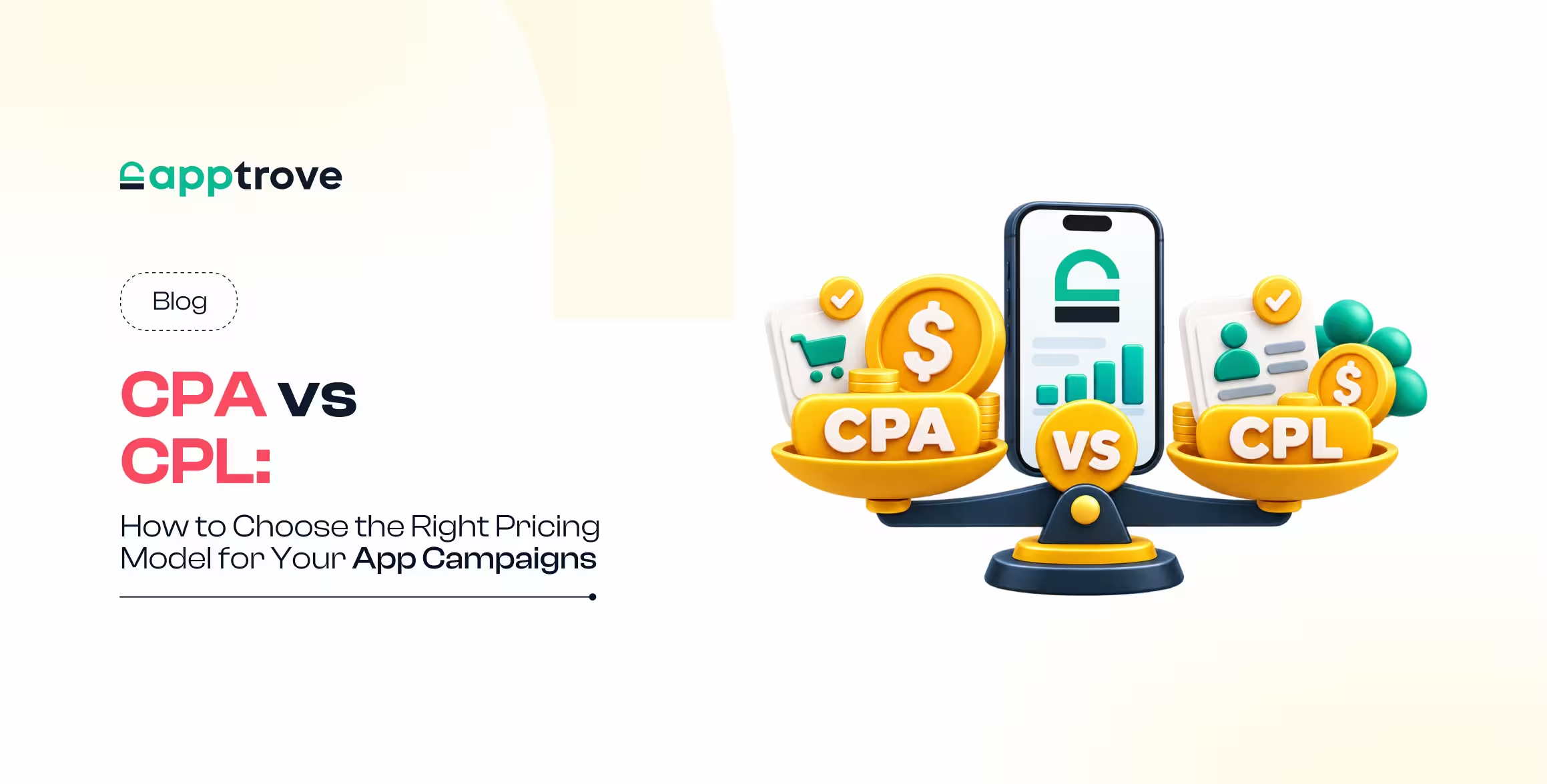
All campaigns begin with a determination of how much you are willing to pay. There are some advertisers that pay for when a user takes an action within the app. Others are paid on a lead basis when a user fills out information. The CPA vs CPL decision will affect your budget, your partner list and the kind of users you get, and thus deserves more consideration than it often receives.
CPA means “Cost Per Action,” and CPL means “Cost Per Lead”. These are two sounds that are very similar and quite a few teams use them interchangeably, but they measure different touchpoints in the user journey. This guide will describe what each one is, how to get it, where the two are different and how to choose between them. Additionally, it demonstrates how a mobile measurement partner (MMP) such as Apptrove can assist in tracking both from the same data. If you’re looking for a next step after connecting paid results to actual business impact: Our guide to incrementality in marketing is a great read. Google Ads Help gives this definition of Average CPA: Average CPA is calculated as the total cost of conversions divided by the number of conversions.
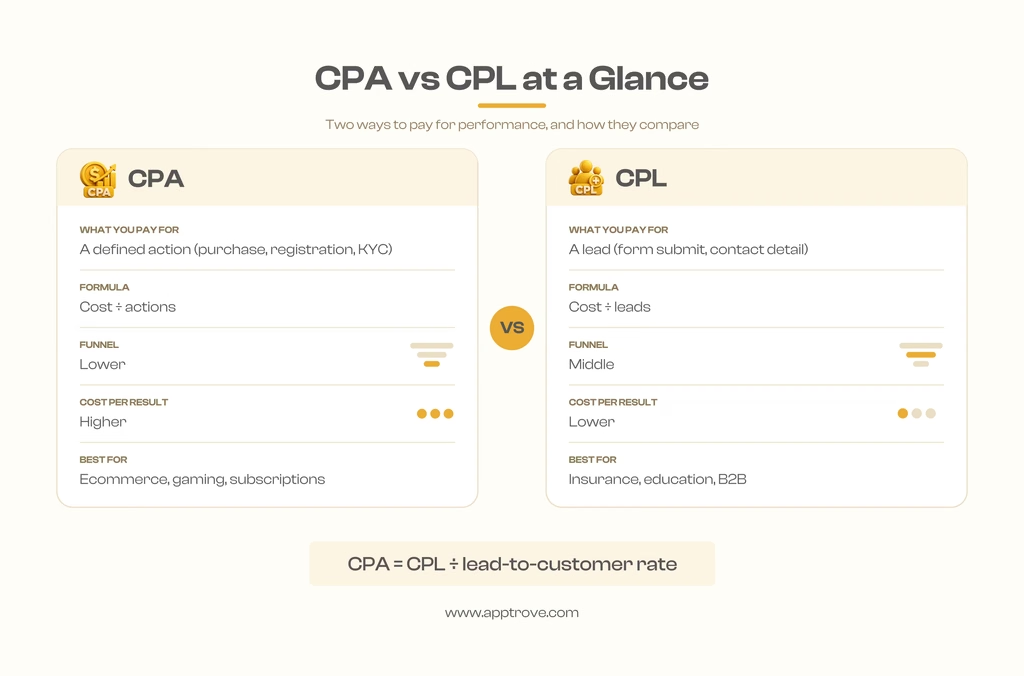
CPA vs CPL at a Glance
CPL stands for cost per lead, or the cost of a person who expressed interest and provided their contact information or filled out a signup form. CPA is the cost incurred for every user who performed a certain action you’ve set, for example, a purchase, a registration or the completion of a KYC check.
CPL is placed at the top of the funnel and typically an inferior cost structure compared to CPM. CPA is paid later, and typically represents a higher cost per unit, but has a higher correlation with revenue. When you’re looking for a constant stream of interested users to follow up with, choose CPL. Choose CPA for situations where you’re only interested in paying for behaviours that pay you money.
What Is CPA (Cost Per Action)?
Cost per action is a pricing and measurement model under which you have to pay for an event a user takes after viewing your ad. In in-app marketing, it’s typically an in-app event like registering an account, making a first purchase, starting a subscription, or filling out a profile. The user decides the action and the ad partner gets paid only if the user takes the action.
The cost per acquisition (CPA) will also be referred to in CPA. In many app campaigns, the two coincide since the acquisition is merely the motion you deem a brand new shopper. For this article, CPA is termed as the cost per action.
The CPA formula is simple:
CPA = Total campaign cost ÷ Number of completed actions
If you spend $5000 and 250 users make their initial buy, then your CPA is $20. As per the Google Ads documentation on target CPA, installs and in-app actions are treated equally when using the target CPA feature in an app campaign.
What Is CPL (Cost Per Lead)?
Cost per lead is the price paid for each lead that a campaign generates. A lead is a person who has made a small step towards becoming a customer: filling out a form, giving a callback telephone number, scheduling a demo or email address. Examples of categories that rely on leads are fintech, insurance, education, real estate and B2B software, where a conversation typically occurs before the sale.
The CPL formula looks like this:
CPL = Total campaign cost ÷ Number of leads
If you spend $6,000 and collect 300 leads, your CPL is $20. Your definition of a lead is the result that will be meaningful. This is because a newsletter sign-up is a lead, and a demo request is a lead, but they’re worth vastly different numbers of points, so make sure you agree on one definition ahead of your campaign.
CPA vs CPL: Key Differences
The distinction between CPA vs CPL is the definition of a successful result and the stage in the funnel that it’s at.
| Factor | CPA (cost per action) | CPL (cost per lead) |
| What you pay for | A defined action, such as a purchase or registration | A lead, such as a submitted form or contact detail |
| Formula | Campaign cost ÷ actions | Campaign cost ÷ leads |
| Funnel position | Lower funnel | Middle funnel |
| Cost per result | Usually higher | Usually lower |
| Link to revenue | Close | Indirect, depends on follow-up |
| Who carries the risk | Mostly the ad partner | Mostly the advertiser |
| Common in | Ecommerce, gaming, subscriptions, fintech transactions | Lead generation, insurance, education, B2B |
| Main weakness | Fewer partners accept it, payouts are higher | Lead quality can be uneven |
Let’s take a closer look at the risk row. With CPL, the advertiser is charged regardless of whether the lead becomes a customer or not, meaning that poor leads will not save you money, they will cost you money. CPA means that the partner only makes when they take action, which means that they have to bear more of that risk. Partners are aware of this, and for this reason CPA payouts per action are greater, and less of them want to implement CPA deals for complex actions.
Where CPA vs CPL Sit in the Funnel
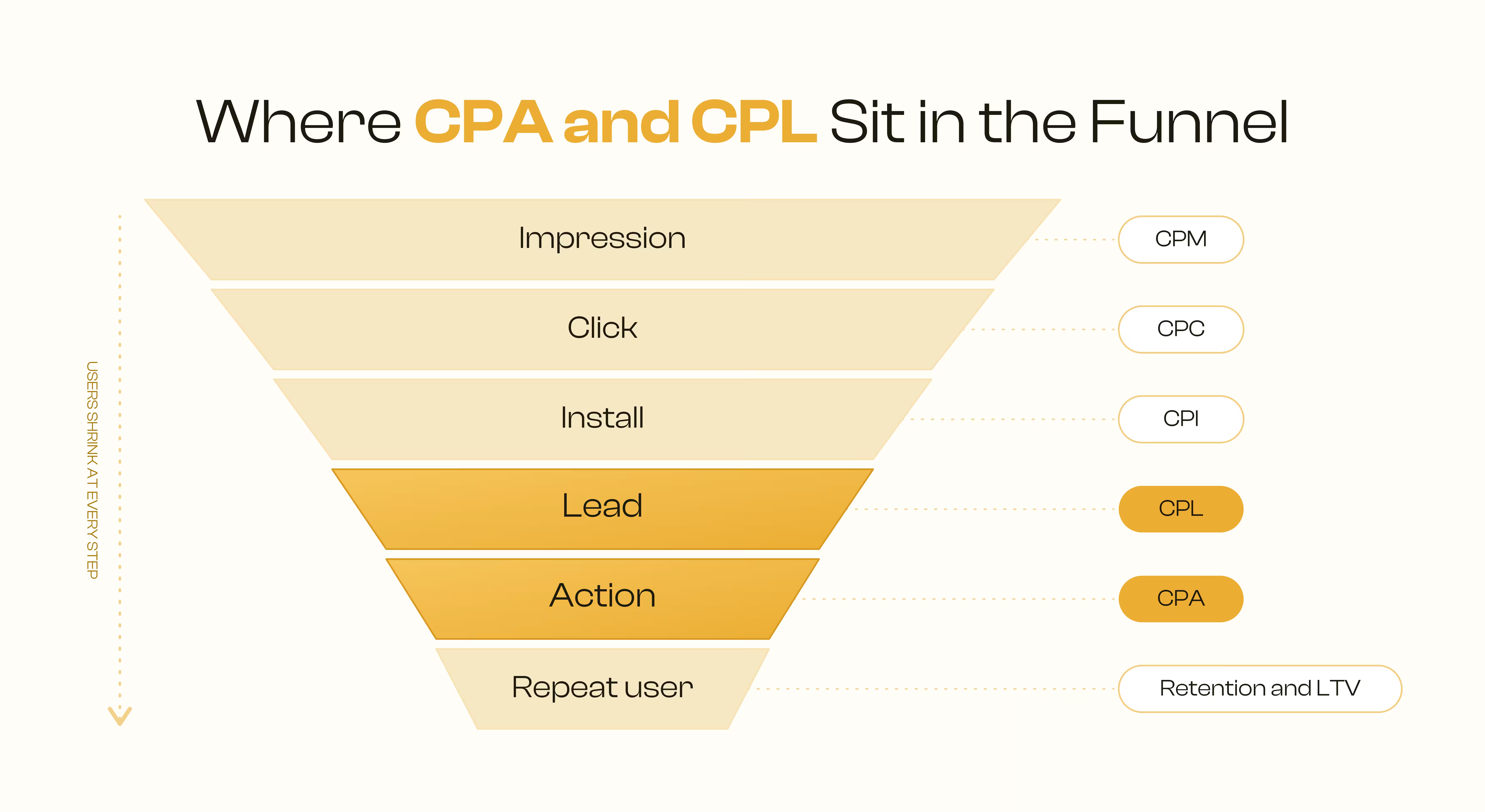
The pricing models used in performance marketing align with the user journey in an app, and any mobile app user acquisition strategy culminates with the use of some combination of the listed models. CPM is charged based on impressions, CPC is charged based on clicks and CPI is charged based on installs. CPL charges once a user turns into a lead and CPA charges when the user completes the action that you are most interested in. The more you pay, the closer to a real customer’s costs, and the fewer users that get there.
The install is only part of the picture; what happens after it is installed? When thinking about the action to pay for, it may be helpful to read our post on app engagement metrics that indicate if acquired users are staying engaged.
How CPA and CPL Are Connected
The two metrics are linked by the lead-to-customer rate, which is the share of leads that go on to complete the action.
CPA = CPL ÷ Lead-to-customer rate
Here is a worked example with made-up numbers. Two partners each deliver leads for a loan app.
| Partner A | Partner B | |
| CPL | $20 | $12 |
| Lead-to-customer rate | 20% | 8% |
| Effective CPA | $100 | $150 |
This means that Partner B will have a lower price per click but will cost 50% more per click per paying customer on the CPL report. A team that only watches CPL will be diverting funds to the wrong partner. Treating both of these numbers together is the primary reason, because you buy it on just one of them.
Which Should You Choose, CPA vs CPL?
When it comes to debating CPA vs CPL, there is no clear answer. The best one to choose will depend on your business and what you’re willing to do once the click happens.
Choose CPL when:
- Your sale needs a human step, such as a sales call, advisor visit or document check.
- You have a team ready to contact leads quickly.
- You are testing a new market and want volume to learn from.
- The action you care about happens days or weeks after signup, so waiting for it would slow your learning.
Choose CPA when:
- A clear in-app event, such as a first purchase or subscription, tells you a user is valuable.
- You want a firm cap on what you pay per customer.
- You have enough conversion data to set realistic targets.
- You can attract partners willing to carry risk on your action.
Many teams have both running. They purchase leads on a low cost basis to fill the funnel, and evaluate each and every partner based on the CPA the leads generate once they are funneled. This helps to maintain a healthy volume without busting the budget.
Common Mistakes When Comparing CPA vs CPL
Evaluating just on CPL. In the same way, a low CPL may mask a high CPA as seen in the example above. Always watch what the leads do next!
Running the lead definition with its ends open. The CPL values of two partners cannot be compared if one partner counts any email address and the other counts verified phone numbers.
Ignoring fraud. CPL can appear to be a great way to fill a lead form, but it can be done at virtually no cost by bots or incentivised traffic – which means real conversions remain flat. Fraud filters must be active prior to readers reading the numbers.
Using a short window of attribution. With users typically performing the action several days after click, a short window will lead to a lower action count and a higher CPA on paper.
Analysis of CPA without retention. A bad result is a low CPA by users who churn in less than 1 week. Use it in conjunction with retention and revenue (as discussed in our Mobile Marketing Mix guide).
How to Track CPA and CPL With Apptrove
No matter what model you go with, you must have one source of truth of what each partner contributed. Apptrove is a mobile measurement partner that attributes installs and in-app events to the campaign, network partner and channel that drove them. That helps in comparing CPA and CPL in the following ways:
- Define both events. Now set up your lead event (such as form submit, registration) and your action event (such as first purchase, KYC complete) in Apptrove – both of these will be recorded as occurring against the same user.
- Attribute by partner and campaign. Every lead and action is given to the originating source, so that you can compare partners on an even playing field.
- Compare cost against results. Real-time dashboards, partner performance views and custom reports allow you to analyze the cost and events generated by each partner, and then calculate CPL, CPA and the lead-to-customer rate for every partner.
- Filter out bad traffic. Fraud prevention settings can be set per campaign, network partner, and channel, and if suspicious installs or fake leads are detected, they will be removed before they impact the accuracy of your cost data.
- Send users to the right screen. Deep linking drives the user straight from the ad or message to the step where he/she will take the action, thus lowering the drop-off rate between lead and action.
- Re-engage leads who stalled. By segmentation, you can create a segment of users who exited the funnel as a lead but haven’t taken the action, and reach them again.
Teams that are reviewing these numbers every week will typically see the weak partner in one campaign cycle and not the one after the budget. For an in-person demo of this setup on your own campaigns, book a demo with the Apptrove team.
Conclusion
CPA and CPL are answering two different questions. CPL tells you the price you have to pay to get a person to show interest in you, while CPA tells you the price you have to pay to get a user to take some kind of valuable action. Without one, the other, you’re seeing half of the picture: set a lead and action, and measure the effectiveness of the result that’s relevant to your business based on the cost of that result.
FAQs on CPA vs CPL
What is the difference between CPA vs CPL?
CPL is the cost of generating a lead, such as a form submission or a signup. CPA is the cost of getting a user to complete a defined action, such as a purchase or registration. CPL sits earlier in the funnel, so it is usually lower per unit than CPA.
Which is better, CPA vs CPL?
Neither is better in every case. CPL works well when your sales process includes a follow-up step, and you want volume. CPA works well when a clear in-app action signals value and you want to pay only for that action. Many advertisers use CPL to fill the funnel and CPA to judge partner quality.
Is CPA always higher than CPL?
When the action sits later in the funnel than the lead, CPA is higher because fewer users reach it. The relationship is CPA = CPL ÷ lead-to-customer rate. If you define the action as something easy, like an install, CPA can be lower than the cost of a demo-request lead.
How do you calculate CPA vs CPL?
Divide total campaign cost by the number of completed actions to get CPA. Divide total campaign cost by the number of leads to get CPL. Include every cost in the total, such as ad spend, platform fees and creative production, so the numbers reflect the real price.
Can you use CPA and CPL in the same campaign?
Yes. You can buy leads on a CPL basis and measure the CPA that those leads produce. Some advertisers also set different payouts for different events within one partner deal. Your measurement tool needs to track both events accurately for this to work.
Does CPA mean cost per action or cost per acquisition?
Both readings are common. Cost per action covers any event you define, while cost per acquisition usually points to a new customer. In app marketing the acquisition is often just the action you decided to count, so the two overlap. Always confirm which one a partner means before signing a deal.
Is CPA the same as CPI?
No. CPI charges for an install, while CPA charges for an action you choose, which can include an install but usually refers to an event after it. CPI is often treated as a specific case of CPA.