Today, every click matters. Yet, businesses often overlook one of the simplest elements that can influence whether a user engages with their content: the URL itself. Whether it’s an email campaign, a social media post, an SMS promotion, or a referral link, the URL is often the first thing users notice before deciding to click. If it appears unfamiliar or suspicious, even the most compelling offer can go unnoticed.
With phishing attacks, spam messages, and fake websites becoming increasingly common, internet users have become more cautious about the links they interact with. Generic shortened URLs or long, cluttered tracking links rarely inspire confidence. Instead, they create uncertainty, making users question where the link will take them and whether it can be trusted.
This is where a branded URL proves its value.
A branded URL is much more than a cleaner link. It reinforces your brand identity, increases user confidence, and creates a consistent experience across every marketing touchpoint. It also allows marketers to measure campaign performance without compromising the user experience. For businesses focused on mobile marketing, branded URLs become even more powerful when combined with deep linking and attribution, helping users reach the right destination while enabling marketers to understand what drives installs, engagement, and conversions.
In this guide, we’ll explore what a branded URL is, why it’s becoming an essential part of modern marketing, and how it can help businesses build trust while increasing clicks and conversions.
What Is a Branded URL?
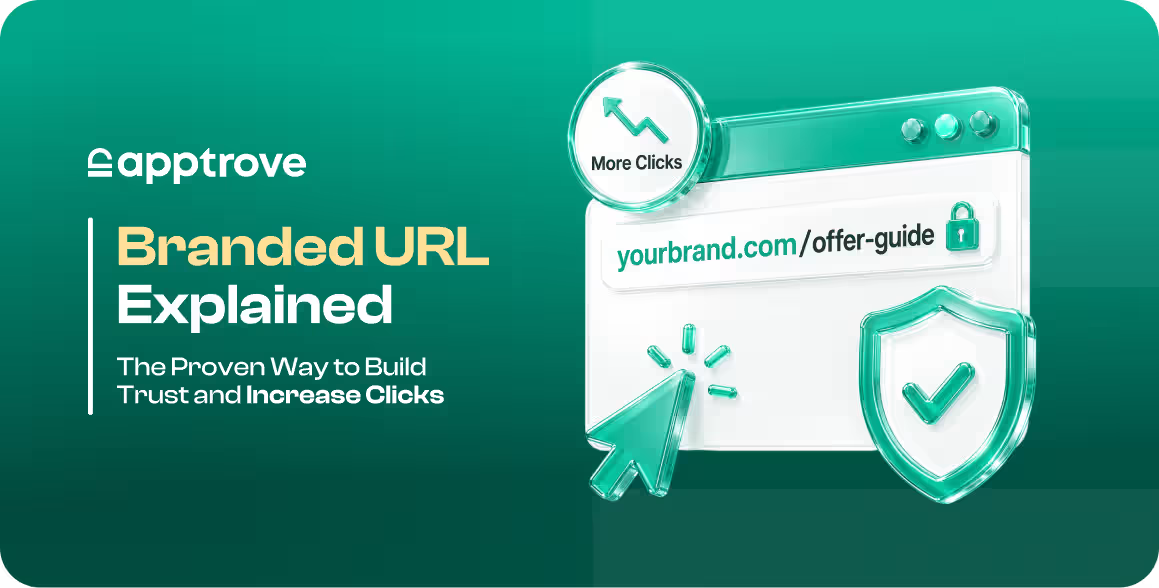
A branded URL is a customized web link that uses your company’s own domain name instead of a generic URL shortening service. Rather than directing users through a third-party domain, branded URLs incorporate your brand into the link itself, making it immediately recognizable.
For example, instead of sharing a link such as bit.ly/3xYk8A, a company can use go.yourbrand.com/download or links.yourbrand.com/refer. Both links may direct users to the same destination, but the branded version immediately establishes credibility because users can identify the sender before they click.
Unlike traditional shortened links that simply reduce the length of a URL, branded URLs strengthen brand recognition while maintaining a clean, professional appearance. They are widely used across email marketing, social media, referral campaigns, paid advertising, influencer marketing, QR code campaigns, and mobile app promotions.
Behind the scenes, branded URLs can also contain attribution parameters and campaign data that help marketers measure performance without exposing users to lengthy tracking strings. The result is a seamless experience for customers and richer insights for marketing teams.
Why Branded URLs Matter More Than Ever
Digital trust has become one of the biggest factors influencing customer behavior. Users are constantly exposed to fraudulent emails, fake websites, and misleading advertisements, making them naturally skeptical of unfamiliar links.
A generic shortened URL offers little reassurance. Since it hides the destination, users often hesitate before clicking, especially when the link appears in emails or text messages. That hesitation can significantly affect campaign performance, reducing click-through rates and ultimately lowering conversions.
Branded URLs solve this challenge by making the destination feel familiar before the user even visits the page. Seeing a recognizable brand name within the URL immediately creates a sense of legitimacy, helping users feel more confident that they’re interacting with an authentic business.
For marketers, this trust translates into measurable results. Higher confidence often leads to more clicks, greater engagement, and improved campaign performance across multiple channels.
The Benefits of Using a Branded URL
One of the biggest advantages of branded URLs is the trust they establish. Every branded link reinforces your company’s identity, creating familiarity with every interaction. Instead of promoting the domain of a URL shortening service, every shared link strengthens your own brand.
This consistency has a direct impact on click-through rates. Users are naturally more inclined to click links from brands they recognize. Whether they’re reading an email, scrolling through social media, or receiving a referral invitation, a recognizable URL reduces uncertainty and encourages engagement.
Branded URLs also improve the overall user experience. Long URLs filled with tracking parameters can appear cluttered and confusing. A short, meaningful branded URL is easier to read, remember, and share, making it especially valuable for offline marketing materials, QR codes, presentations, podcasts, and printed advertisements.
Another significant benefit is improved brand recall. Marketing is built on repetition, and every branded URL becomes another opportunity to reinforce your business name. Even if users don’t click immediately, repeated exposure to your branded domain helps strengthen recognition over time.
Branded URLs also simplify campaign management. Instead of exposing long URLs with multiple UTM parameters, marketers can create clean links that maintain a professional appearance while still collecting detailed attribution data in the background. This allows teams to monitor campaign performance, traffic sources, installs, conversions, and revenue without sacrificing the user experience.
For referral marketing, branded URLs can have an even greater impact. Referral campaigns rely heavily on trust because users are sharing links with friends, family, or colleagues. A recognizable branded URL appears more legitimate than a generic shortened link, making recipients more comfortable clicking and increasing the likelihood of successful referrals.
Branded URLs and Mobile Marketing
As businesses continue shifting toward mobile-first experiences, branded URLs have become an essential component of app marketing strategies.
A user clicking an app promotion expects a seamless journey from the advertisement to the desired in-app content. Without deep linking, users may land on a generic homepage or app store listing, creating unnecessary friction and increasing the chances of abandonment.
When branded URLs are combined with deep linking, users can be directed straight to the most relevant destination within the app. Existing users can open specific product pages, promotional offers, referral screens, or personalized content immediately. New users who haven’t installed the app can first be redirected to the appropriate app store before being taken to the intended in-app destination after installation through deferred deep linking.
This seamless transition creates a significantly better customer experience while improving conversion rates across acquisition campaigns.
Branded URLs and Attribution Go Hand in Hand
A branded URL may appear simple on the surface, but behind it lies a powerful source of marketing intelligence.
Every click can reveal valuable information about campaign performance, including where users came from, which marketing channels generate the highest engagement, how many installs resulted from a campaign, and which sources ultimately drive revenue.
Accurate attribution allows marketers to understand the complete customer journey instead of relying on assumptions. By connecting branded URLs with attribution technology, businesses can identify high-performing campaigns, allocate budgets more effectively, and continuously optimize user acquisition efforts.
Instead of choosing between clean branding and detailed analytics, marketers can enjoy both through branded URLs that integrate seamlessly with attribution platforms.
Best Practices for Creating Effective Branded URLs
Creating a branded URL involves more than simply replacing a generic domain with your own. The best branded URLs are short, memorable, and easy to understand. Keeping links concise improves readability and makes them easier to share across digital and offline channels.
Meaningful words should replace random strings of characters whenever possible. A URL ending with “/refer,” “/download,” or “/offer” instantly communicates what users can expect after clicking, improving clarity and confidence.
Consistency is equally important. Using the same branded domain across campaigns strengthens recognition and creates a unified brand experience. Frequently switching between different domains can confuse users and dilute brand identity.
Businesses should also ensure their branded URLs are connected to reliable attribution and deep linking infrastructure. A visually appealing link loses much of its value if marketers cannot accurately measure performance or deliver users to the right destination.
Finally, marketers should continuously monitor link performance. Metrics such as click-through rates, installs, conversions, engagement, and return on ad spend provide valuable insights that help optimize future campaigns.
How Businesses Use Branded URLs
Branded URLs have become a standard practice across modern marketing.
E-commerce brands use them to promote seasonal sales and exclusive offers. SaaS companies include them in onboarding emails and product updates. Mobile apps rely on branded URLs for app install campaigns, referral programs, and re-engagement initiatives. Financial services, healthcare providers, travel companies, and educational platforms also use branded links to build trust while maintaining a professional online presence.
Influencers and affiliates frequently share branded URLs to promote products while ensuring followers recognize the source. Email marketers use them to improve deliverability and encourage engagement. Even QR code campaigns benefit from branded URLs because they provide a trustworthy destination behind every scan.
Regardless of the industry, the objective remains the same: creating links that users feel comfortable clicking.
How Apptrove Helps You Create Branded URLs
Building trust is only one part of successful mobile marketing. Businesses also need accurate attribution, seamless user journeys, and actionable insights into campaign performance.
Apptrove’s Unilink enables marketers to create branded URLs that do far more than redirect users. These links support deep linking, deferred deep linking, and attribution, ensuring users reach the right destination regardless of whether the app is already installed.
At the same time, marketers gain complete visibility into campaign performance by measuring installs, conversions, engagement, and return on ad spend across multiple channels. This allows businesses to create personalized user experiences while making informed decisions backed by reliable attribution data.
Instead of relying on generic shortened links that do little beyond redirecting traffic, businesses can use branded URLs powered by Unilink to strengthen their brand, improve customer trust, and optimize every stage of the mobile user journey.
Conclusion
A branded URL may seem like a small detail, but it has a meaningful impact on how users perceive your brand. Every shared link represents an opportunity to build trust, reinforce brand recognition, and encourage engagement. In an environment where consumers are increasingly cautious about what they click, recognizable and trustworthy URLs can become a powerful competitive advantage.
When combined with deep linking and attribution, branded URLs go beyond aesthetics. They create seamless customer experiences, support accurate campaign measurement, and help marketers optimize performance with confidence.
For businesses investing in digital and mobile marketing, branded URLs are no longer just a branding enhancement. They’re an essential tool for building credibility, increasing clicks, and driving measurable growth.
Frequently Asked Questions (FAQs)
1. What is a branded URL?
A branded URL is a custom web link that uses your business’s domain name instead of a generic URL shortening service. It makes links more recognizable, trustworthy, and consistent with your brand while supporting campaign tracking and analytics.
2. Why should businesses use branded URLs?
Branded URLs improve brand visibility, increase user trust, and encourage more clicks. They also provide a cleaner user experience and help marketers track campaign performance without displaying long, complex tracking links.
3. How is a branded URL different from a generic short URL?
A generic short URL uses a third-party domain, such as a public URL shortener, whereas a branded URL uses your own branded domain. This makes branded URLs more professional, memorable, and trustworthy for users.
4. Are branded URLs good for mobile app marketing?
Absolutely. When paired with deep linking, branded URLs can direct users to specific in-app content instead of a generic landing page. They also support deferred deep linking, creating a smoother experience for new and existing app users.
5. How does Apptrove help businesses create branded URLs?
Apptrove’s Unilink enables businesses to create branded URLs that support deep linking, deferred deep linking, and mobile attribution. This allows marketers to deliver seamless user journeys while accurately measuring installs, conversions, engagement, and campaign performance.