Picture a space every week where your target audience would willingly spend hours on end consuming content – without skipping your ads, without banner blindness, and without fighting for your customers’ eyes in an overcrowded social media feed!
This is one of the main reasons that, at this time in our history, in-game advertising is becoming one of the most exciting marketing channels for companies to pursue.
Video gaming is no longer a niche category; it is now a worldwide entertainment ecosystem. Billions of people play games on mobile devices, consoles, PC/vi, and even through clouds; in fact, in your everyday life, many people play games on their commute, after work as relaxation, connecting with friends, and while attending virtual events. As the behaviours of consumers are changing, so too are outdoor marketing tactics, which require brands to interrupt users, rather than being immersed in their gaming experiences.
You can also learn about In-Game Marketing through this guide, which explains what in-game marketing is, how it works, the benefits of in-game marketing, some examples, common in-game advertising formats, and the current challenges facing brands when investing in gaming environments.
What Is In-Game Marketing?
In-game marketing refers to the placement of products, services, or brands within video games as a form of advertising.
Unlike traditional outdoor media channels, in-game marketing integrates brand messaging into gameplay; therefore, brands do not have to rely upon external means for promoting their products or services, but instead, have one direct method for promoting. Instead of your customers being interrupted to view advertisements, the products/services become part of their experience while playing video games.
A player might encounter:
- A billboard promoting a brand inside a racing game
- A sponsored virtual event inside an online game
- A branded character skin
- A rewarded video advertisement
- A product placement inside a sports game
- A special challenge sponsored by a company
In-game marketing’s purpose is to establish a link with gamers in a manner that relates to the gaming experience and appears more organic than disruptive.
Why Gaming Is the New Gold Standard for Marketing?
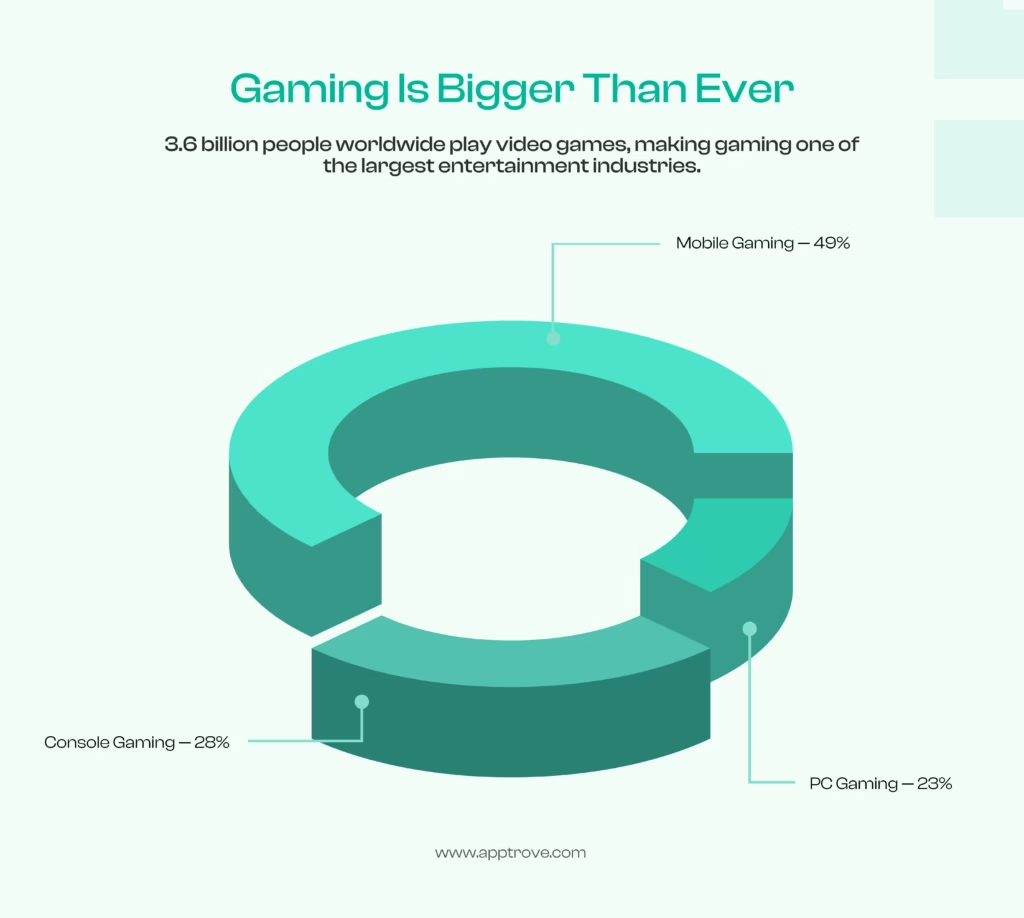
Over the last decade, the gaming industry has become one of the largest entertainment industries.
Gamers around the globe play games daily on every type of device, while users of most forms of digital media have short attention spans and scroll through their feeds quickly; gaming usually involves longer periods of focused engagement.
- Players are engaged.
- Players are involved.
- Players are absorbed.
By creating a unique opportunity for in-game marketing, brands are able to deliver their advertisements when the user is completely focused on their surroundings. Now, brands look to games as more than just platforms for entertainment. They see games as media channels that have a highly engaged audience.
How In-Game Marketing Has Evolved
In the past, in-game marketing included simple forms of product placement. A brand could be seen as a logo on a racetrack, as a billboard inside a sports video game, or as a sponsored item located somewhere inside the gaming environment.
Today, through advances in technology, in-game marketing is now much more sophisticated. Brands can do the following:
- Make live changes to their advertisements throughout the game.
- Target a location with greater specificity.
- Measure the visibility and engagement of their advertisements.
- Create interactive marketing campaigns.
- Reward users for playing video games.
- Offer a branded virtual experience.
Types of In-Game Marketing
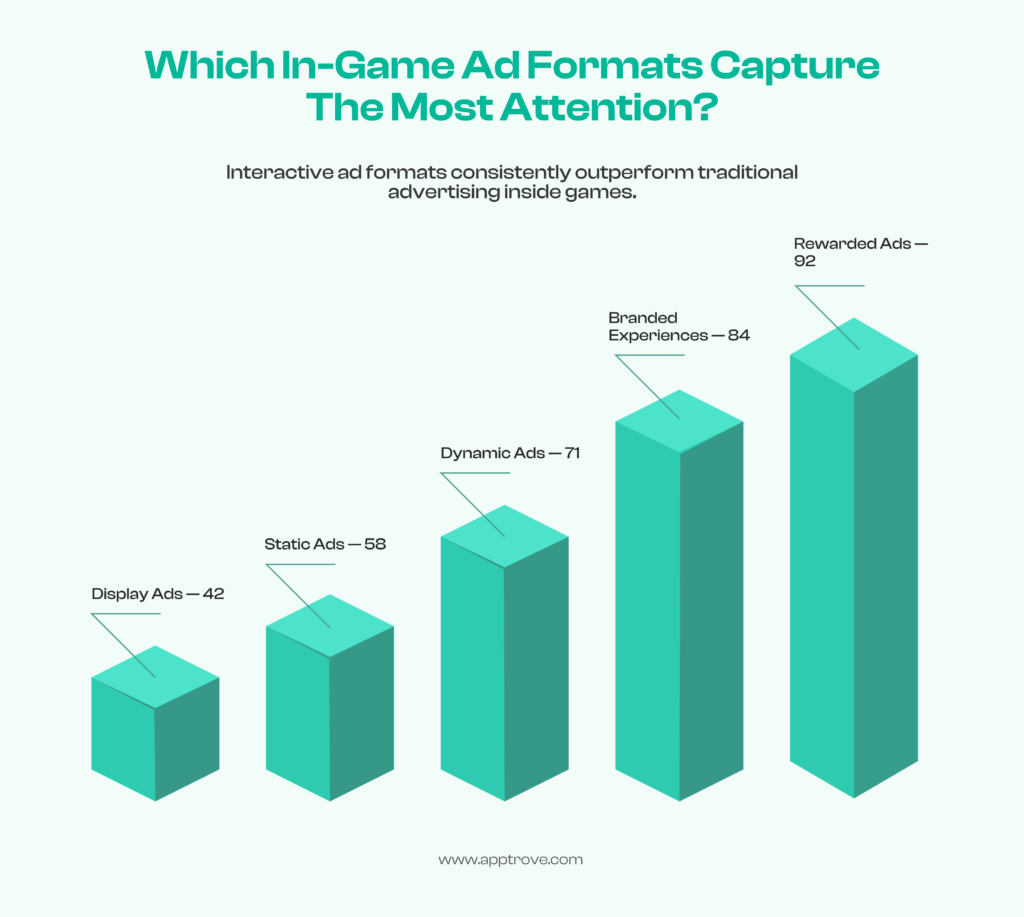
Static In-Game Advertising
Static advertisements are built permanently in a video game.
This could include:
- Banners at stadiums
- Billboards along racing tracks
- Logos on virtual clothes
- Advertisements around in-game play spaces
Once added, they usually do not change from the time the game is released to when it is no longer supported by its publisher/developer. Tools common to static in-game advertising are those that allow brands to have a long-term presence in any major video game title.
Dynamic in-game advertising
This allows advertisers to change or add dynamic ads at any time through the Internet.
For example, the advertiser can change one ad for another ad without needing to touch the game itself.
Benefits of dynamic in-game advertising include:
- Management of real-time campaigns
- Ability to target ads geographically
- Ability to promote in specific seasons
- Better ability to measure how campaigns work
In general, advertisers find dynamic in-game advertising to be a way to have much more flexibility and control over their messaging.
Rewarded advertising
This has become one of the most effective ways to market through the use of in-game marketing, especially on mobile platforms.
Consumers (players) voluntarily view ads and receive rewards for watching, which can include:
- Additional life
- Virtual currencies
- Upgrades for characters
- Special items
- Bonus levels
Because players receive value in return, rewarded advertisements often generate stronger engagement than traditional ad formats.
Branded Content and Experiences
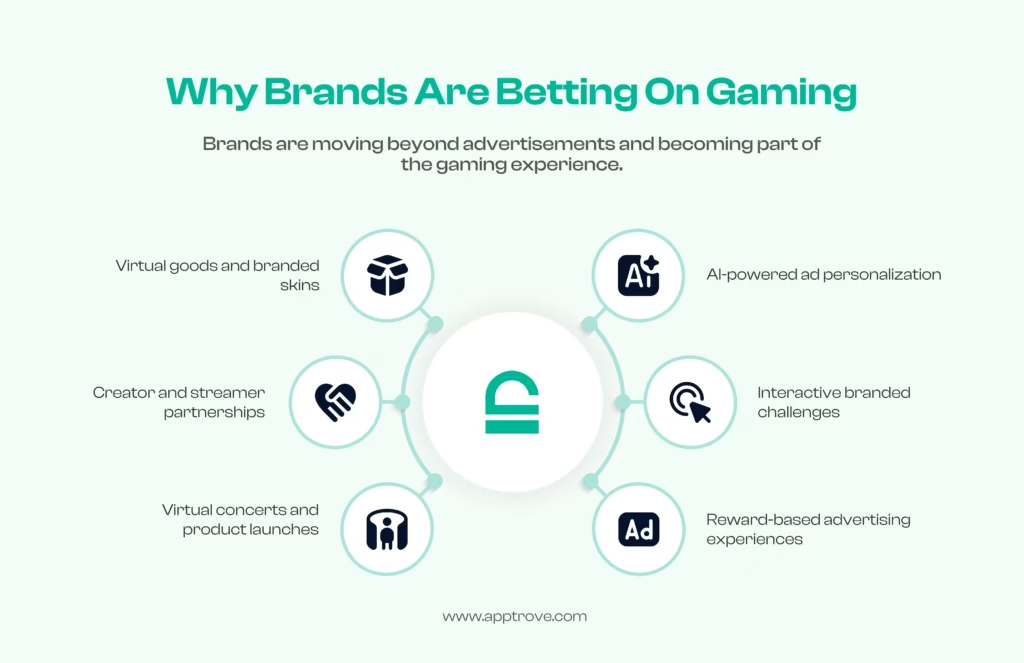
Brands are shifting away from traditional advertising towards creating experience-based products. Within that realm, some examples of branded experiences are: virtual worlds, sponsored events, limited-edition digital items, interactive challenges, and virtual concerts. By transforming in-game marketing from just being a way to promote a product to offering the end user a way for them to engage with that brand on a deeper level, game developers can provide greater interactivity and excitement to the gaming community.
There are several different ways that brands can connect with their gaming audiences through games, including sponsoring esports and gaming events and working closely with esports teams and other creators who stream gameplay to their viewers.
The many benefits of in-game marketing for businesses include access to a highly engaged audience, with the ability to expose in-game brands more effectively than through traditional media. A significant number of gaming audiences are engaged when playing video games, with many gamers actively engaging with and interacting with the games, as opposed to passively viewing content.
When in-game advertising is strategically placed in the game itself, it has a far more natural feel, as opposed to traditional forms of advertising, which are often viewed as interrupting the gaming experience. In-game marketing is able to dramatically increase brand recognition over time by having advertising integrated into gameplay.
Traditional advertising methods have been shown to interrupt the user experience. When in-game marketing is executed in a thoughtful way, it adds value to the gameplay experience, instead of detracting from and interrupting the gameplay experience. One way to accomplish this is through using a rewarded advertising method, in which the user selects when they want to participate in a rewarded advertisement.
Reaching Younger Audiences
The use of video games as a form of entertainment occupies a powerful position in younger audiences’ daily lives. Many people spend more hours playing games than watching standard television.
For businesses looking to reach Generation Z and future customer demographics, gaming provides direct access to the audience within the context of playing video games through in-game advertising. Games have worldwide appeal.
A single campaign could target multiple countries, multiple languages, or multiple demographic characteristics through a single campaign. This makes gaming a scalable platform for international businesses. Ad technology continues to provide valuable insights. Through the use of modern ad technology, businesses can measure a variety of KPIs from their ad campaigns.
Examples of KPIs include:
- Impressions
- Visibility
- Screen time
- Engagement
- Completion rate
- Brand lift
- Conversion
Using this data, businesses can analyze the ROI of their gaming ad campaigns.
Examples of Gaming Ads
Sports
Sports-based games often feature integrated brand placements. Examples of integrated placements include the following:
- Stadium signage
- Logos of sponsors
- Branded items used in sporting events
- Virtual items that represent physical items
These integrated placements mirror real-life environments, providing players with an authentic experience.
Racing Games
For decades, racing-based video games have used in-game advertising as a major form of advertising. Brands appear in video games in the following ways:
- Billboards along the side of the racing track
- Brand presence on racing vehicles
- Sponsoring racing events
- Product placements in racing games
Open-World Games
Open-world games provide countless opportunities for creative campaigns.
Brands can appear through:
- Digital billboards
- Storefronts
- Missions
- Sponsored experiences
This flexibility makes open-world environments attractive for in-game marketing initiatives.
Mobile Games
Mobile gaming represents one of the largest opportunities for in-game marketing.
Rewarded advertisements, playable ads, and sponsored content are commonly used to generate engagement while maintaining a positive user experience.
Challenges of In-Game Marketing
While the opportunities are significant, businesses should also understand the challenges.
Maintaining Authenticity
Players quickly recognize advertising that feels forced.
Successful in-game marketing should match the game’s environment and audience expectations.
Balancing User Experience
Too many advertisements can negatively impact gameplay.
Brands must ensure their presence enhances rather than distracts from the experience.
Measurement Complexity
Different gaming platforms use different technologies and metrics.
Businesses need reliable attribution and measurement frameworks to understand campaign performance.
Audience Alignment
Not every game audience is suitable for every brand.
A successful in-game marketing campaign requires careful audience research and targeting.
The Future of In-Game Marketing
The future of in-game marketing is likely to become more immersive, interactive, and personalized.
Several trends are already shaping the industry:
Virtual Goods
Brands are increasingly creating digital products that players can own and use.
Interactive Experiences
Campaigns are becoming more participatory rather than purely promotional.
Creator Partnerships
Gaming influencers continue to play an important role in brand communication.
AI-Powered Personalization
Future in-game marketing campaigns may adapt advertisements based on player preferences and behavior patterns.
Virtual Events
Brands are experimenting with concerts, product launches, and community experiences inside games.
These developments suggest that in-game marketing will continue expanding beyond traditional advertising formats.
How Businesses Can Get Started with In-Game Marketing
For companies interested in in-game marketing, follow these steps:
- Define your campaign objectives:
Decide if your campaign is about:
– Creating brand awareness
– Getting engagement
– Installs of your mobile app
– Creating leads
– Promoting a product
Know your audience:
Find out what games your customers are playing and where they are spending their time.
Choose the right ad format:
Pick an ad format that aligns with your campaign objectives, such as:
– Rewarded ads: reward your customers for completing an action
– Dynamic ads: show customers ads based on their behaviour or preferences
– Sponsorships: partner with a game to promote your company
– Branded experiences: create an experience around your brand
– Partnerships with creators: partner with a gaming influencer to promote your company
Measure your ad performance:
Keep track of how many people saw your ad, how many people engaged with your ad, how many people converted from your ad to become a customer and how your ad has impacted your overall business.
Create value with your ads:
The best in-game marketing campaigns provide something useful, fun or valuable to the player.
Conclusion
As it has become more challenging to grab consumers’ attention using traditional digital methods, advertisers are turning to interactive advertising in games, because players are not just watching, but interacting with the content.
This is one of the reasons businesses of all sizes continue to be interested in using in-game marketing – from rewarded ads to branded experiences, sponsoring esports and placing dynamic ads, brands have a way to connect with consumers when their attention is naturally closest. The best in-game marketing strategies do not interrupt the game; they form part of the gaming experience. Businesses that have learned how to successfully use in-game marketing will be well-positioned to engage with consumers around the world as gaming continues to gain momentum.