To evaluate how well a business performs with respect to KPI’s (key performance indicators), you should monitor the key metrics i.e. Customer Experience (CX), Customer Acquisition Cost (CAC), Lifetime Value (LTV) and Churn rate, among others, is one method of evaluating cross-channel marketing campaigns along with its impact on business performance and overall KPI’s. Furthermore, there is one more KPI to consider beyond those listed above, if after long-term and continuous growth is desired – Return On Experience. Explore the blog to learn ROX meaning.
ROX assesses how customers perceive their experiences with your brand and/or its associated products and/or services. While customer experience (CX) is related to ROI, ROX works at a more granular level by determining how the CX driven from both previous and current experiences with your brand ultimately drives a company’s long-term growth.
Return on Experience creates customer loyalty, and return on experience identifies the magnitude of the value of that relationship. In this article, we will define the meaning of ROX and suggest ways in which to embed it into your mobile application marketing funnel, ultimately contributing to the long-term growth of your company.
What Is Return on Experience (ROX)?
The return on experience (ROX) represents an important data point for marketers to use to gauge customer behavior toward their marketing efforts, as well as determine the influence that their investment into enhancing customer experience (CX) will have on the financial performance of their organization.
Rather than the traditional assessment of “money in vs. money out,” which measures how much money a business invests and how much money it earns back in a given timeframe, ROX measures the financial impact of experiences on marketing campaigns across multiple touch points, making it a more scalable, ongoing derivative of ROI.
Digital experience means your interactions with your brand, either online or via a mobile application, create long-term value.
Now that you know what ROX stands for, let’s take a look at why it is important.
Why is ROX Important?
Delivering superior UX is a necessity to acquire and retain customers and to grow your business—it’s proven that the weight given to flawless experiences in relation to product quality is the same,(90%) as well.
What’s more? Companies that prioritize customer experience see an 80% increase in ROI.
Here’s the explanation of return on experience. It allows brands to assess the potential value of their investments in customer engagement or brand experience initiatives, and describe recommended digital investments and the expected outcomes from these investments.
Unlike ROI, which measures the value from a specific event, return on experience shows how improving your customers’ experiences improves their LTV and contributes to your overall business performance.
Using the ROX score as a guide will help you build deeper, more meaningful relationships with your target customers.
How to Calculate ROX?
To determine your organization’s ROX score, measure all your users’ interactions with your brand and how much revenue was generated through those interactions.
The formula for determining your return on experience:
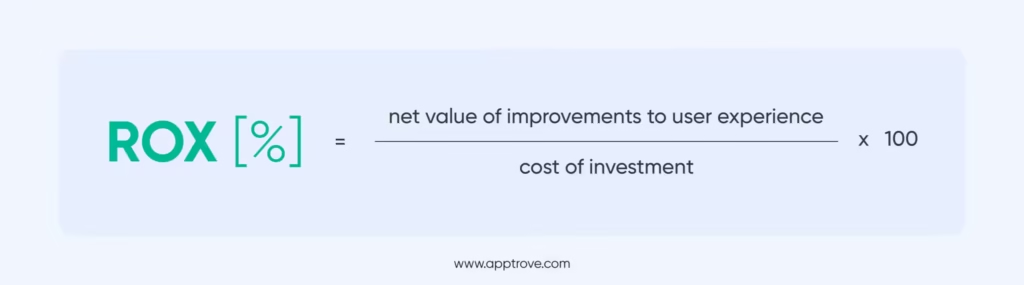
The net value of your improvements to the user experience can be calculated using a ROX formula that you develop, based on your customer touchpoints and the various elements of your product, service, company culture, and IT systems that add and enhance positive customer experiences.
When evaluating ROX, multiple metrics are often used. Here are some of the most common:
Customer Effort Score – Measures the extent and speed of your services. An example of this is the time it takes a mobile app to open or how seamless the process is to create an account.
Time to Market – Measures the speed at which a business can bring a new product, service or feature to the market. Speed and agility are critical for staying competitive as well as meeting customer needs. Therefore, determining what successful ROX looks like is dependent on how quickly you can deliver your product or service.
Acquisition Cost – What is the cost associated with acquiring new users? Customer experience can contribute to users recommending your mobile app to potential customers or, more importantly, to organically grow without having to invest in paid promotions.
Engagement – Measures how users engage with your brand. By measuring engagement, you will be able to identify potential pain points that may result in users disengaging with your brand.
Cost to Implement – Measures how much it costs to improve the customer experience, including the investment in new technologies, training, etc.
Customer Satisfaction – Measures how satisfied users are with your brand. Customer satisfaction should be measured across all channels and subsequently analyzed to determine where improvements can be made.
Click Through Rate – Measures how effective your Calls To Action (CTAs) are.
Conversion Rates – Measures the number of users who have taken the action you want them to take (e.g., making a purchase, creating an account, etc.)
Improvement in one area, such as customer effort, has a positive effect on other areas, including sales conversion rate. For example, if the experience of using your product is improved, it may make it easier for the user to navigate through your website and create an engaging user journey, therefore producing increased sales for you. This interrelationship shows that the way to improve your ROX is to create loyalty for your customers.
How Does Return on Experience Work?
As discussed, return on experience assesses how customer interactions with your brand influence key business outcomes, including revenue, customer loyalty, and long-term growth.
Unlike traditional metrics like ROI, which focus solely on the financial aspect, ROX offers a broader perspective by linking customer experience (CX) improvements to tangible and intangible benefits.
Here’s how it works.
1. Map Customer Touchpoints: Identify all of the key ways in which customers interact with your company, such as via your website, mobile application, social media, etc. to understand how customers are engaging with your business and your products /services.
2. Measure the Experience of the Touchpoints: You can develop KPIs that help determine if the touchpoints are successful by using customer satisfaction, customer effort, or engagement scores. Having this information will also show you friction areas where you could improve on your touchpoints.
3. Quantifying Impact on Business Growth: The ROX process will allow you to determine the impact of customer experience improvement on critical KPIs, such as customer lifetime value, sales conversion rates, and brand advocates.
4. Measuring Returns Against Investments: When you make investments in CX improvement by either adding new technology or optimizing processes, the cost of making the investment can be compared against the value created through those changes, such as revenue growth, or increased customer retention.
5. Creating Improved Satisfaction: Continuously optimizing experiences based on ROX insights can help create a cycle of improved satisfaction, loyalty, and financial performance.
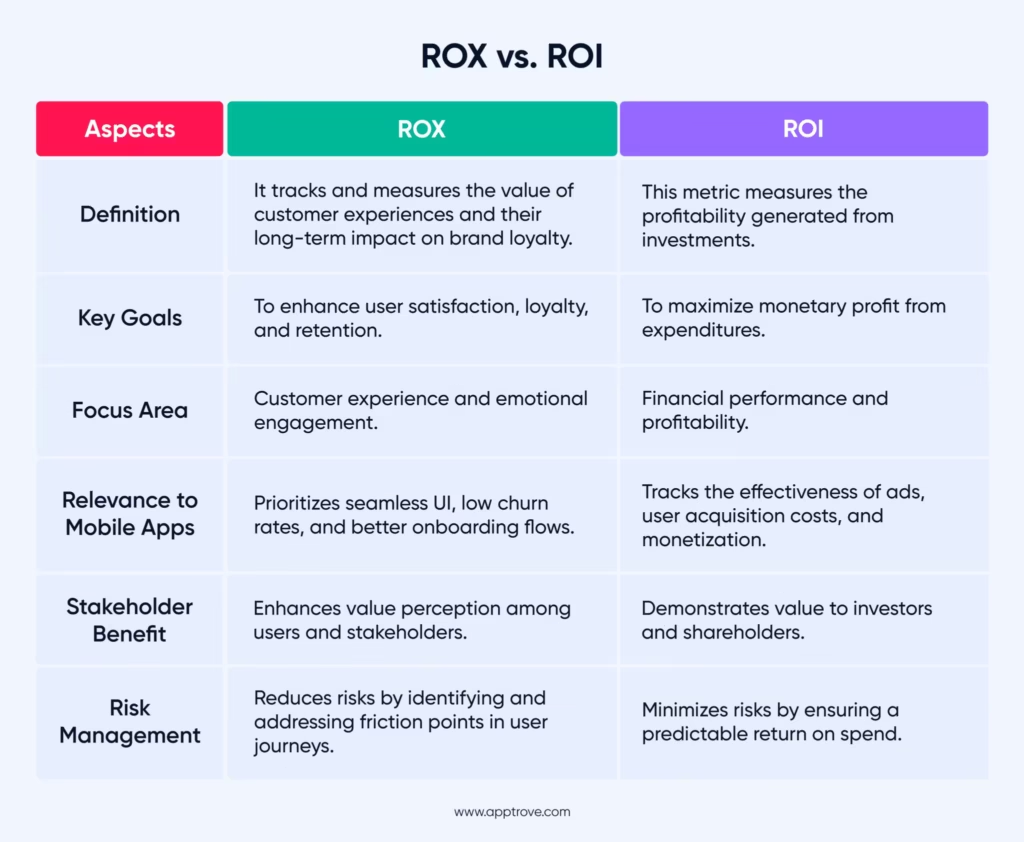
ROX vs. ROI
Below is a quick table of comparison so you can help you understand both, regarding ROX and how it differs from ROI.
Impact of Deep Linking on ROX
Customers want their brand experiences to be personalized and seamless across all channels, and when brands recognize and understand their customers’ shopping behaviors and preferences, they can turn their website browsers into brand-loyal app users. A loyal customer base ultimately drives the long-term growth of the brand and increases ROX.
Deep linking helps drive this outcome by linking users directly to the in-app experience that they want to see, while bypassing the unnecessary, undesired experiences. This will ultimately improve ROX by minimizing points of friction and delivering a more personalized user journey.
4 Quick Tips to Improve ROX for Your Mobile App
Here are a few crucial tips to improve ROX.
1. Understand Your Customers’ Needs
Understanding customers’ needs is the first step to reaching the goal of improving ROX. Get it right, and half of your job is done.
Here’s how –
Knowing your customers’ needs can help you create marketing strategies addressing their specific pain points. You can create contextual, relevant, and high-quality content across multiple touchpoints. Besides, it helps you make the interactions seamless.
The math is simple. If you know and offer what your customers want, you ensure acquisition while maintaining a great experience. This can translate into word-of-mouth, good ratings, and brand advocacy, leading to high ROX.
2. Offer Customization and Personalization
Personalization and customization are two crucial pillars of a brand’s success that can lead to long-term growth.
Here’s how to do it –
You can tailor the design of your mobile app based on the user’s preferences, such as showing specific themes, colors, or layouts that align with their interests. Moreover, you can implement an AI system that recommends products based on past purchases or predict items they might want next.
However, you don’t always require major changes for fueling mobile apps with CX.
Take small steps.
Personalization can be as simple as a pop-up message saying, “Hi Ron, how are you today?” or “Hey Ron, did you know we have a ‘buy 1, get 1 50% off’ deal in the winter accessories section?”
Addressing customers by their names is a great example of personalization. It makes them feel valued and special.
What’s more? You can tailor your messages to build customer loyalty and create a sense of exclusivity, thus improving ROX.
3. Encourage Referrals
People trust referrals because they come from reliable sources, and a well-executed referral marketing program can significantly contribute to your ROX.
Encouraging existing customers to refer others can help –
- Boost customer engagement.
- Expand your customer base.
- Strengthen relationships with existing customers.
This can ultimately increase conversions and better customer retention, driving a higher ROX.
4. Foster Customer Loyalty
A loyalty program lets customers earn points for actions and purchases on your mobile app. These reward points can be redeemed for discounts, free shipping, vouchers, and more.
For instance, a fitness app provider can offer loyalty points for completing daily workouts or achieving milestones. Customers can redeem them for premium features like personalized workout plans, exclusive training sessions, or more.
This can help nurture long-term relationships and improve customers’ lifetime value, retention, and ROX.
How Apptrove Can Help Enhance ROX
Our state-of-the-art mobile app analytics platform, Apptrove, offers a range of powerful features that can help drive customer engagement. It helps track and analyze crucial app attribution metrics and create strategies that boost customer loyalty and ROX.
Here’s how Apptrove can help –
- Granular Customer Insights: With Apptrove’s advanced analytics dashboard, you can gain deep insights into customer behavior, preferences, and engagement patterns. This can help make data-driven decisions that improve user experiences, retention, and ROX.
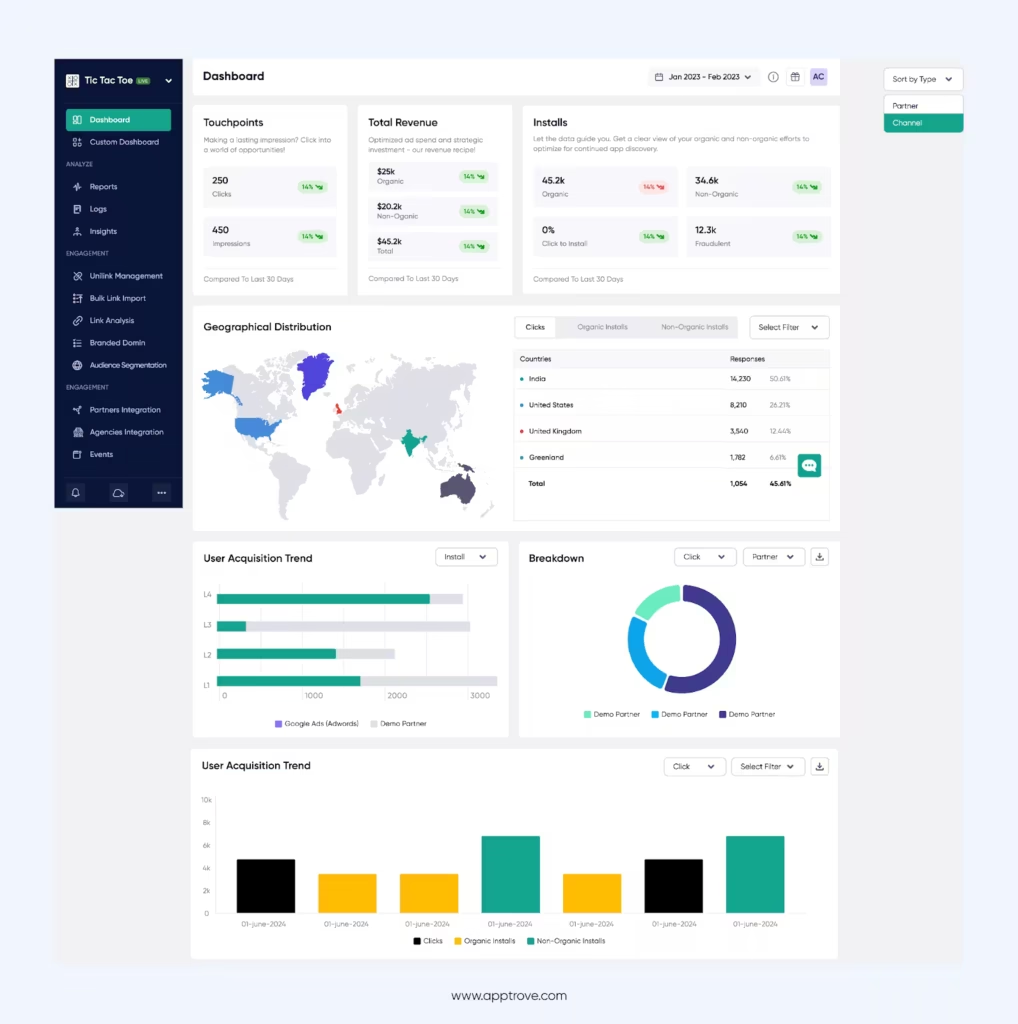
- Personalized Campaigns: Apptrove empowers you to create highly customized campaigns that cater to unique customer needs, thus boosting engagement and experience.
- Deep Linking Suite: Apptrove offers a deep linking suite that allows you to create unique experiences across platforms and channels. It helps direct users to the most relevant in-app content and reduces friction. This way, deep linking-charged CX drives ROX.
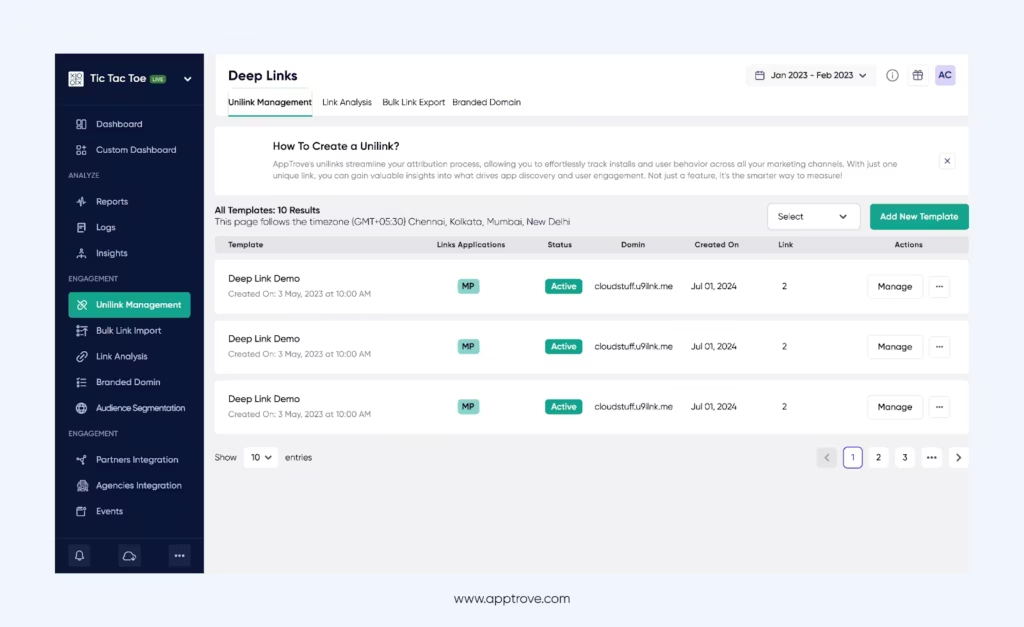
- Seamless Integration: You can integrate our MMP with your existing tech stack, thus ensuring smooth operations and customer experience. This supports ROX currency, as improving customer interactions directly boosts long-term business growth.
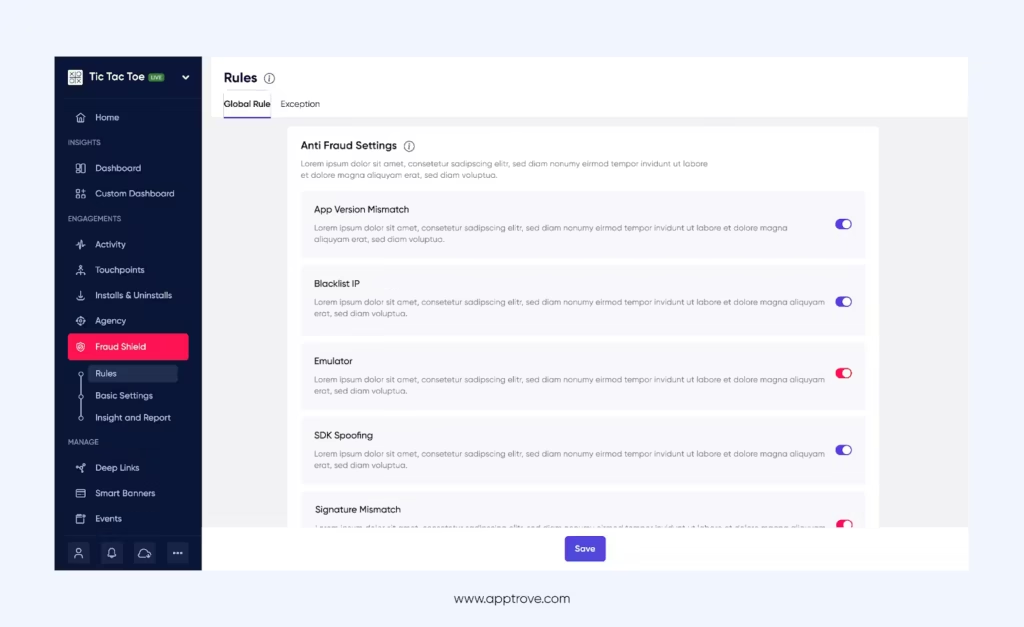
- Fraud Prevention: Apptrove has built-in fraud protection tools to safeguard your business against cyber threats, ensure a secure customer environment, and maintain trust. This can ultimately enhance customer experience and ROX.
Summing Up
ROX is a vital metric that reflects how satisfied customers are with your brand. It tracks the impact of your efforts on their overall experience.
Although understanding the meaning of ROX and tracking it may not yield immediate outcomes, it is crucial for long-term success. Tracking ROX and improving marketing strategies across touchpoints can strengthen your brand’s value over time.
Furthermore, with Apptrove, you can gain valuable insights to optimize campaigns and enhance CX. It can prove an important tool for driving ROX.
Connect with our team to learn how Apptrove can help you achieve the best business outcomes.
FAQs
1. What does ROX mean in marketing?
ROX (return on experience) measures what is produced through the interactions between clients and your firm; your product(s) or service(s); and the long-term effects of those interactions in creating growth for your business. Unlike ROI (return on investment), which quantifies your total financial return from interactions with customers, ROX includes measures of how engaged, loyal, and satisfied clients are with your style and “brand.”
2. Why is ROX important for business growth?
ROX has a close correlation to revenue, loyalty, and lifetime value. Businesses that invest in creating exceptional customer experiences will see their retention rates, number of referrals, and ultimately ROI increase over time.
3. How do you calculate ROX?
There are several metrics that can be used to calculate ROX. Metrics such as customer satisfaction and customer engagement, as well as customer effort score (CES), conversion rate, and customer acquisition cost can all be used to track the performance of your customer experience initiatives. At its most basic level, ROX can be calculated by comparing the investment required to enhance the customer experience against the returns generated from those same customer experience improvements.
4. What is the difference between ROX and ROI?
ROX differs from ROI in that ROX is focused on quantifying the total monetary value of customer experiences relative to developing client loyalty, advocacy, and long-term growth. Therefore, ROX is an extension of the traditional measure of ROI, but is based more broadly upon the individual customer experience.
5. How can brands improve ROX?
To improve your ROX, brands need to develop strategies and tactics that focus on personalizing the customer experience along the entire customer journey, improving mobile experience, developing and encouraging client referrals, developing loyalty programs, and utilizing tools such as deep linking, that reduce costs to both the customer and brand and increase client engagement overall.